Second-class should describe coaches, not passengers: Supreme Court tells railways
The Supreme Court has suggested that the Indian Railways discontinue the use of the term "second-class passenger" in its manuals and official terminology, observing that
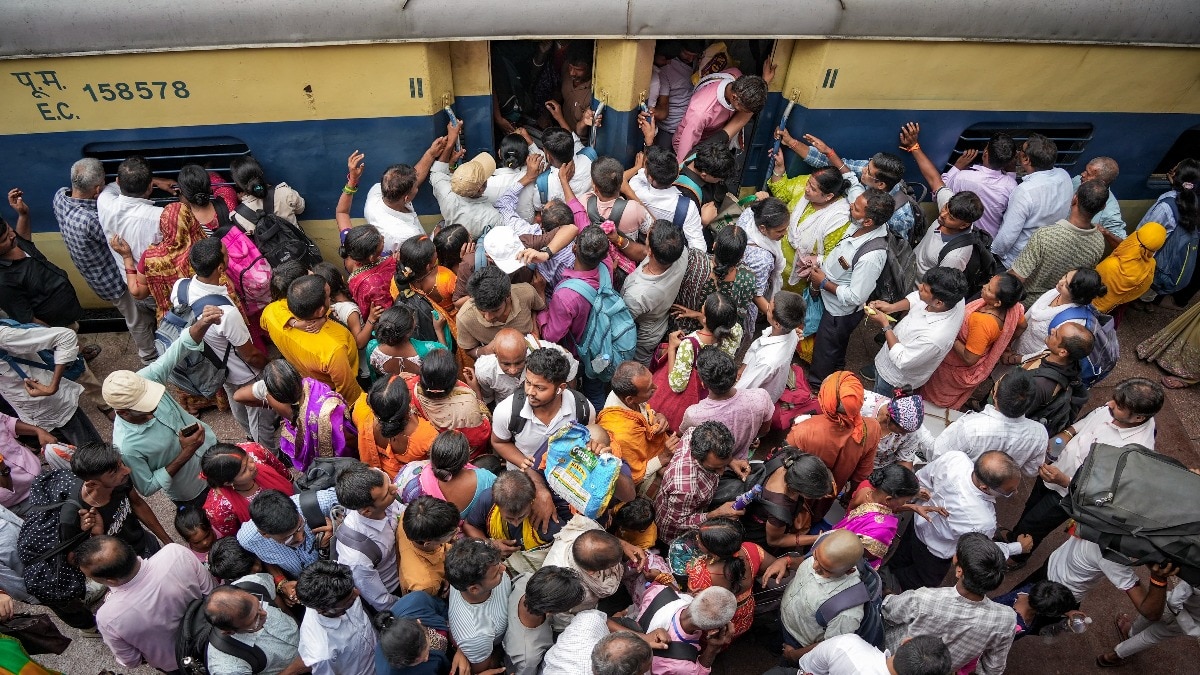
The Supreme Court has suggested that the Indian Railways discontinue the use of the term "second-class passenger" in its manuals and official terminology, observing that the class distinction should be attached to the coach rather than the traveller, in keeping with the constitutional ethos of equality and dignity. The observation was made by a bench of Justices Sanjay Karol and Nongmeikapam Kotiswar Singh while deciding a compensation case involving the death of a passenger who fell from a train in 2015. Read Full Story In its judgment, the court said the expression "second class" should describe the category of the coach and not the individual travelling in it.
"One aspect that caught our attention while perusing the manual and other related documents was the use of the term “second class passenger”. While it is ostensibly linked to the expenditure incurred by the passenger to travel, we may suggest that the class connotation be attached to the coach and not to the passenger, in recognition of the history of class divisions in our country and the same being offensive to the spirit of the Constitution of India," the court observed. The Supreme Court's remarks came while examining the scope of compensation under the Railways Act, 1989, which provides for compensation without the victim having to prove negligence or fault on the part of the Railways.
The case concerned was of one Chandrakant Thakkar, who died after falling from the Ahmedabad-Howrah Mail in November 2015. The Railway Claims Tribunal and the Madhya Pradesh High Court had denied compensation to his family on the ground that his ticket was not recovered after the accident. The Supreme Court overturned those decisions and awarded compensation of Rs 8 lakh to the widow. In its judgment, the bench said that as an instrumentality of the State, the Railways is governed by the constitutional principle of a welfare state under Article 38 and should not adopt a narrow or technical approach while dealing with compensation claims.
Technical lapses and procedural shortcomings, it said, should not defeat the welfare objective of the law. Describing the Railways as the backbone of the nation, the court noted that the organisation, despite its colonial origins, has evolved into one of the country's most important public institutions and is among the largest employers in India. The judgment recorded that Indian Railways employs around 12.3 lakh people, operates nearly 13,940 passenger trains across more than 69,000 km of track and carried over 7.2 billion passengers in 2024-25. Ends
 The BriefWire