Mexico Earthquake: What Is The Pacific Ring Of Fire And How Do Tectonic Plates Trigger Quakes?
Mexico Earthquake: What Is The Pacific Ring Of Fire And How Do Tectonic Plates Trigger Quakes? Published By, Last Updated: July 17, 2026, 21:30 IST
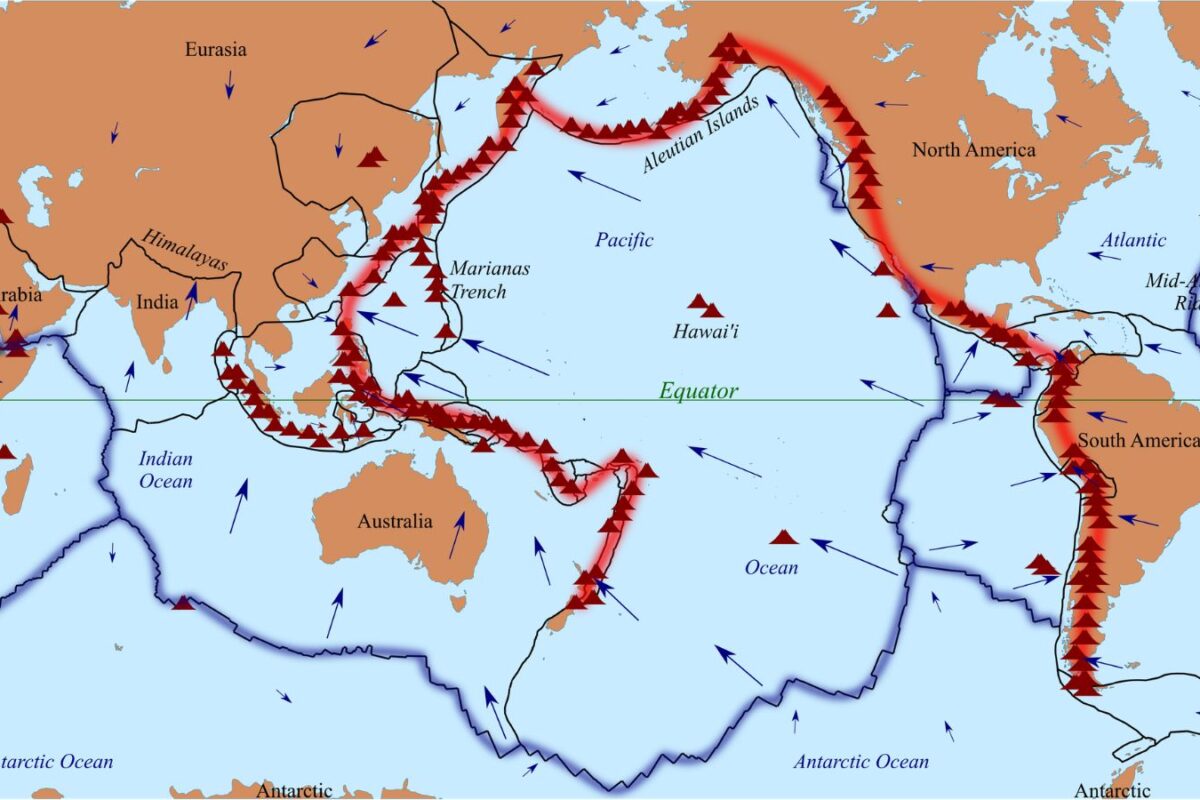
Mexico Earthquake: What Is The Pacific Ring Of Fire And How Do Tectonic Plates Trigger Quakes? Published By, Last Updated: July 17, 2026, 21:30 IST A powerful 7.3 quake off Mexico–Guatemala highlights the hidden tectonic clash beneath the Pacific. Know how slow-moving plates trigger sudden, violent shocks. Rapid Read The Pacific Ring of Fire gets these sudden yet frequent quakes because of tectonic movements, know how. (Source: Wikimedia commons) A powerful 7.3 magnitude earthquake has struck off the Pacific coast near Mexico and Guatemala, with its epicentre believed to lie beneath the ocean floor. Tremors were felt across coastal regions, once again drawing attention to the intense seismic activity that defines this part of the world—one of the most earthquake-prone zones on the planet. This region sits along the so-called “Ring of Fire," where tectonic plates constantly interact.
The Pacific coastline of Central America is especially vulnerable because it lies at the boundary of major plates that are in continuous motion. When stress builds up beneath the Earth’s surface and is suddenly released, it results in earthquakes like the one just recorded. While such events can feel sudden and unpredictable, they are the result of a slow but powerful geological process unfolding deep below the ocean. What’s happening beneath the surface? Off the coasts of Mexico and Guatemala, an oceanic tectonic plate—specifically the Cocos Plate—is slowly moving towards and sliding beneath the Caribbean Plate. This process is called subduction. As the denser oceanic plate dives under the lighter continental plate, it doesn’t move smoothly. Instead, the plates often get stuck due to friction, causing stress to build up over time. When this stress becomes too great, it is suddenly released in the form of seismic waves—what we experience as an earthquake.
How mountains are formed This same process is also responsible for shaping the landscape over millions of years. As the oceanic plate sinks, it partially melts in the Earth’s mantle. This molten material rises upward, feeding volcanoes and pushing the continental crust upward. Over long periods, this leads to the formation of mountain ranges and volcanic arcs. A classic example is the Andes in South America, created by the Nazca Plate subducting beneath the South American Plate. Similar processes are at work along Central America, giving rise to its chain of volcanoes and rugged terrain. News18 Newsletter Handpicked stories, in your inbox A newsletter with the best of our journalism submit Key Questions Answered Could a similar earthquake happen in other Ring of Fire areas? Yes, similar earthquakes can happen in other Ring of Fire areas because it is a vast belt of volcanoes and fault lines that circles the Pacific Ocean.
 The BriefWire