Kerala nuclear plant plan to go ahead only after public talks, says minister
Kerala Electricity Minister Sunny Joseph on Friday said any decision on setting up a nuclear power plant in the state would be taken only after
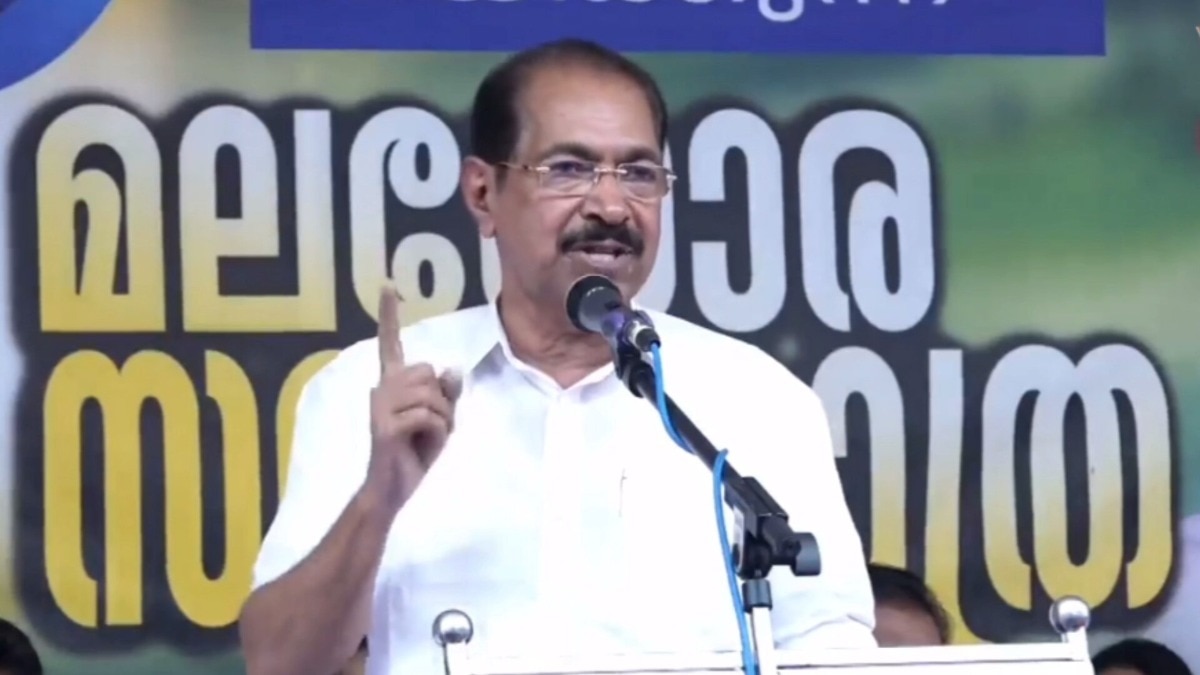
Kerala Electricity Minister Sunny Joseph on Friday said any decision on setting up a nuclear power plant in the state would be taken only after extensive consultations with the public, political parties and elected representatives. He also assured football fans that there would be no power disruption during the FIFA Club World Cup final to be played on Saturday night and early Sunday morning. Read Full Story Responding to questions on the ongoing power shortage caused by weak monsoon rains, Joseph said the proposal for a nuclear power plant at Cheemeni in Kasaragod was only one of several options being considered to meet Kerala's growing energy demand. He said the government was exploring all possible ways to overcome the crisis by increasing power generation, improving energy efficiency and trying to procure additional electricity despite the high cost. "I have never said it would be imposed. I have only said the matter will be discussed with the public, public representatives and political parties. We have to listen to public opinion on this issue," the minister said, welcoming Congress MP Rajmohan Unnithan's statement that such a project could not be forced on the people.
Joseph said Kerala was facing a severe power crisis as electricity demand had risen sharply. "Last year our peak requirement was around 3,500-3,600 MW. This year it has gone up to 4,700-4,800 MW, an increase of about 1,100 MW in a single year. Kerala generates only about 17 per cent of its electricity requirement through hydel, solar and wind sources," he said. He said storage in the state's hydel reservoirs had fallen sharply because of poor rainfall. "Last year the storage was around 60 per cent. This year it has dropped to 28 per cent. Rainfall has declined across the country, affecting power generation, while electricity consumption has risen because of increasing temperatures, more households, electric vehicles, air-conditioners and other appliances," he said. Appealing to consumers to conserve electricity, Joseph urged people to avoid unnecessary lighting, minimise power-intensive activities during peak hours and use air-conditioners at higher temperature settings. He said the Union government was proposing to standardise air-conditioner temperatures at 27 degrees Celsius, while Kerala had suggested fixing them at 25 degrees Celsius to achieve substantial power savings. Referring to the present shortage, Joseph blamed the cancellation of a long-term power purchase agreement signed during the Oommen Chandy government.
"A long-term agreement for power at Rs 4.29 per unit was cancelled by the subsequent government. Kerala is suffering the consequences of that decision now. The Kerala State Electricity Board is pursuing the matter in the Supreme Court and senior advocate Kapil Sibal is appearing for the state," he said. The minister also pointed to the difficulty of using solar power more effectively, saying Kerala did not have enough storage infrastructure. "Solar power is generated only during the day. There is no mechanism to store it for use at night. Electricity that costs almost one paisa per unit during the day can cost around Rs 10 per unit at night because demand increases and supply falls," he said. On the FIFA Club World Cup final, Joseph said, "We have made special arrangements to ensure an uninterrupted power supply during the final. We are purchasing electricity for both day and night because the supplier states prefer to sell power together rather than only during the night." He also said Kerala was currently returning electricity borrowed from other states during March and April to meet summer peak demand.
 The BriefWire