Over 100 People, Mostly Children, Tested HIV Positive. How A Pakistani Hospital Became A Hotspot
Over 100 People, Mostly Children, Tested HIV Positive. How A Pakistani Hospital Became A Hotspot Published By, Last Updated: July 17, 2026, 16:46 IST A
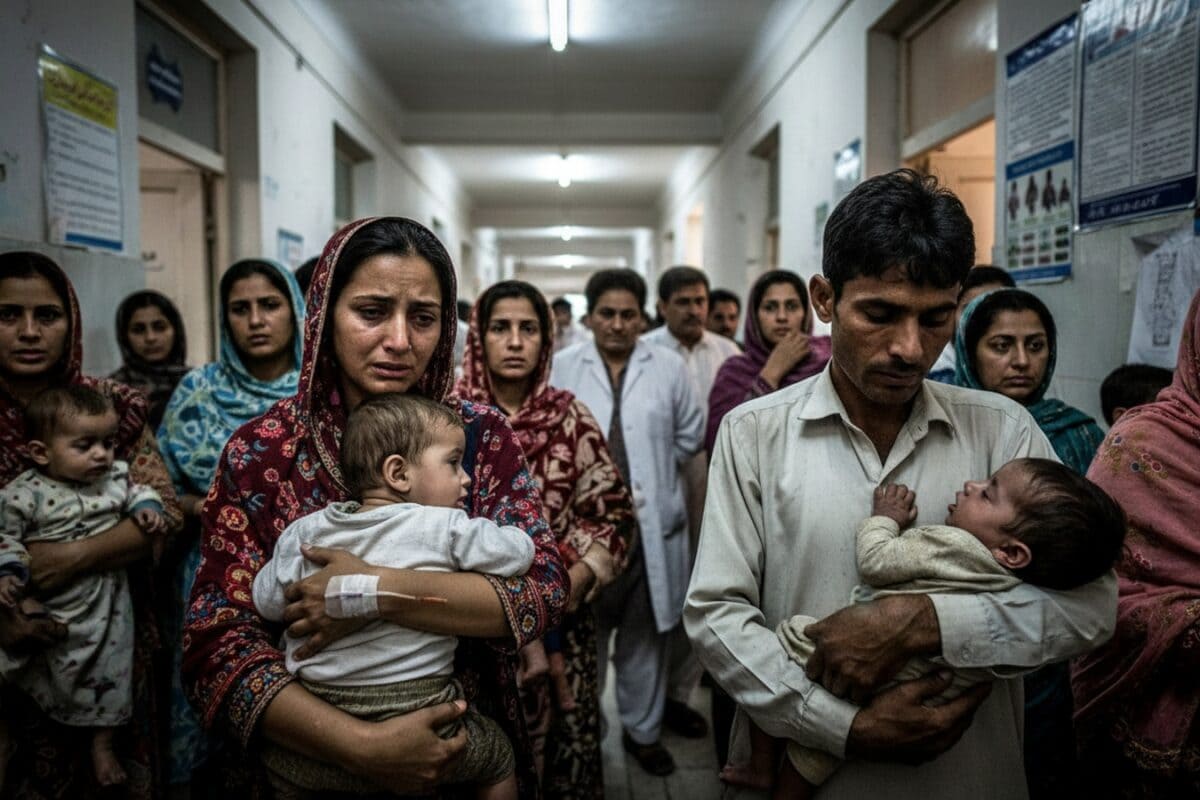
Over 100 People, Mostly Children, Tested HIV Positive. How A Pakistani Hospital Became A Hotspot Published By, Last Updated: July 17, 2026, 16:46 IST A hospital-linked HIV outbreak in Karachi has infected over 130, mostly children. Investigations point to serious lapses—but key questions remain unanswered. Rapid Read A government hospital in Pakistan's Sindh has caused an outbreak of HIV among children with negligence in handling syringes. (Representational image generated using AI) At least 130 people, most of them children, have tested HIV-positive in an outbreak linked to a government hospital in Karachi. Officials say the number has risen quickly in recent weeks. Sindh Labour Minister Saeed Ghani said over 10,500 people were screened earlier this week in and around Kulsum Bai Valika (KBV) Hospital, Al Jazeera reported. Out of those screened here, 120 tested positive. Another screening drive at a SESSI facility in Karachi’s Landhi area found 10 more cases. SESSI, Sindh Employees Social Security Institution, is a provincial body.
It provides healthcare and financial support to workers and their families across Sindh. The issue first came to light in November 2025. Residents of Karachi’s SITE Town noticed many infections among children treated at KBV Hospital. However, officials later informed that the outbreak began earlier. The first six HIV cases were reported in October 2025. What Caused The Outbreak? On July 14, Chief Minister Murad Ali Shah informed reporters about two internal inquiries. They found serious failures in safety practices. These included poor infection control, weak use of protective gear, and unsafe handling of single-use syringes. The first inquiry, submitted in November, found 16 HIV-positive children. All were linked to the hospital’s paediatrics department. A second inquiry was submitted on June 19. It confirmed 78 infections and six deaths. It blamed hospital staff for administrative and supervisory failures. The number has since gone up. New cases were also found at other SESSI facilities. Ghani said all infections were linked to exposure before October 2025.
He added that screening will continue, even as more cases may emerge. Authorities’ Response On July 3, 37 doctors and staff were given show-cause notices. They were asked to respond within 14 days. Ghani said those found responsible could face criminal charges and dismissal. He added that he accepts indirect responsibility and would not resist resigning if needed. Last December, WHO and UNAIDS flagged Pakistan’s HIV crisis as one of the fastest growing in the region. Annual infections rose from 16,000 in 2010 to 48,000 in 2024. The Sindh High Court has asked the government to respond by July 20. The case concerns alleged violations in syringe regulation and disposal. At the federal level, Prime Minister Shehbaz Sharif ordered a nationwide ban on substandard syringes on July 3. The Drug Regulatory Authority later said reusable syringes will be banned from retail sale by January 2027. News18 Newsletter Handpicked stories, in your inbox A newsletter with the best of our journalism submit Key Questions Answered What measures are being taken to prevent future outbreaks?
 The BriefWire