Cheaper Than A Platform Ticket: India's First Hydrogen Train Fare Starts At Just Rs 5
Cheaper Than A Platform Ticket: India's First Hydrogen Train Fare Starts At Just Rs 5 Published By, Last Updated: July 17, 2026, 14:19 IST India's
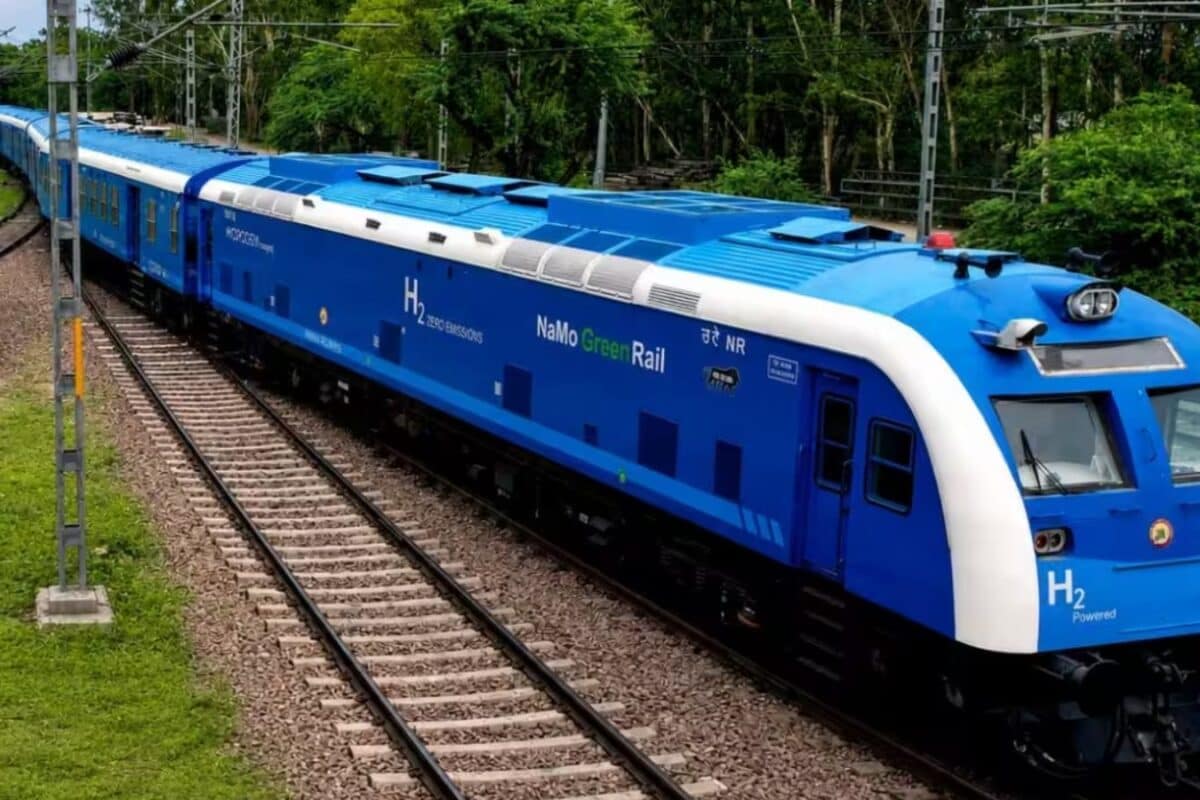
Cheaper Than A Platform Ticket: India's First Hydrogen Train Fare Starts At Just Rs 5 Published By, Last Updated: July 17, 2026, 14:19 IST India's first hydrogen-powered train begins service on the Jind-Sonipat route with fares from just Rs 5, offering zero-emission travel powered by hydrogen fuel cells. Rapid Read India's first hydrogen train to run at fares from Rs 5, cheaper than platform ticket (Photo: PTI) India has entered a new phase of green rail transport with the launch of its first hydrogen-powered passenger train. Prime Minister Narendra Modi flagged off the country’s maiden hydrogen train from Jind railway station in Haryana on Friday, July 17, introducing a service that combines clean-energy technology with one of the most affordable ticket prices on the Indian Railways network. Running on the Jind-Sonipat section of Northern Railway, the train marks India’s entry into a select group of nations that have introduced hydrogen-powered passenger rail services. Developed using indigenous hydrogen fuel cell technology, the project is aimed at promoting cleaner transportation while reducing dependence on conventional fossil fuels. #WATCH | Jind, Haryana: Prime Minister Narendra Modi flags off the country’s first hydrogen-powered train from Jind to Sonipat(Video source: DD) pic.twitter.com/kMQv2nBhOZ — ANI (@ANI) July 17, 2026 Ticket Price Starts At Just Rs 5 One of the biggest talking points after the launch is the train’s fare. The minimum ticket price has been fixed at Rs 5, while the highest fare is Rs 25, depending on the distance travelled. Passengers travelling on the inaugural service also purchased tickets priced at Rs 5. The starting fare is even lower than the platform ticket charged at many railway stations, making the service both futuristic and affordable.
Ticket Fare At A Glance • Minimum fare: Rs 5 • Maximum fare: Rs 25 • Fare depends on: Distance travelled Route, Stops And Passenger Capacity The hydrogen-powered train will operate between Jind Junction and Sonipat, covering nearly 90 kilometres in around two hours. Approved to run at a maximum operational speed of 75 kmph, the train has a design speed of 110 kmph. Stations On The Route •Jind Junction •Jind City •Pandu Pindara •Lalit Khera Halt •Bhambhewa •Isapur Kheri Halt •Butana Halt •Khandrai Halt •Rabrah Halt •Lath •Mohana •Barwasni Halt •Sonipat The 10-coach train can carry around 2,600 passengers and is expected to serve daily commuters on the route. What Makes This Train Different? Unlike conventional trains that depend on diesel engines or electricity supplied through overhead wires, this train produces electricity onboard using hydrogen fuel cells. Inside the fuel cell, hydrogen reacts with oxygen to generate electricity. The process releases only water vapour and heat as by-products, making it a zero-emission mode of transport. The hydrogen required for operations will be supplied through a dedicated plant established at Jind. Key Features Of India’s First Hydrogen Train •10-coach hydrogen fuel cell-based trainset •Two hydrogen-powered Driving Power Cars •Eight trailer coaches1,200 kW hydrogen fuel cell propulsion system •Passenger capacity of around 2,600Maximum operational speed of 75 kmph •Design speed of 110 kmph •Advanced systems to detect hydrogen leaks, smoke, flames and overheating •Operates without conventional overhead electric wires India’s Largest Railway Hydrogen Facility The project has also led to the creation of India’s largest railway hydrogen storage and refuelling facility at Jind.
 The BriefWire