From folding laundry to boxing in ring, AI robots are growing smarter and more agile
If 2025 was the year AI learned to chat like humans, 2026 is becoming the year robots are starting to act like them. Over the
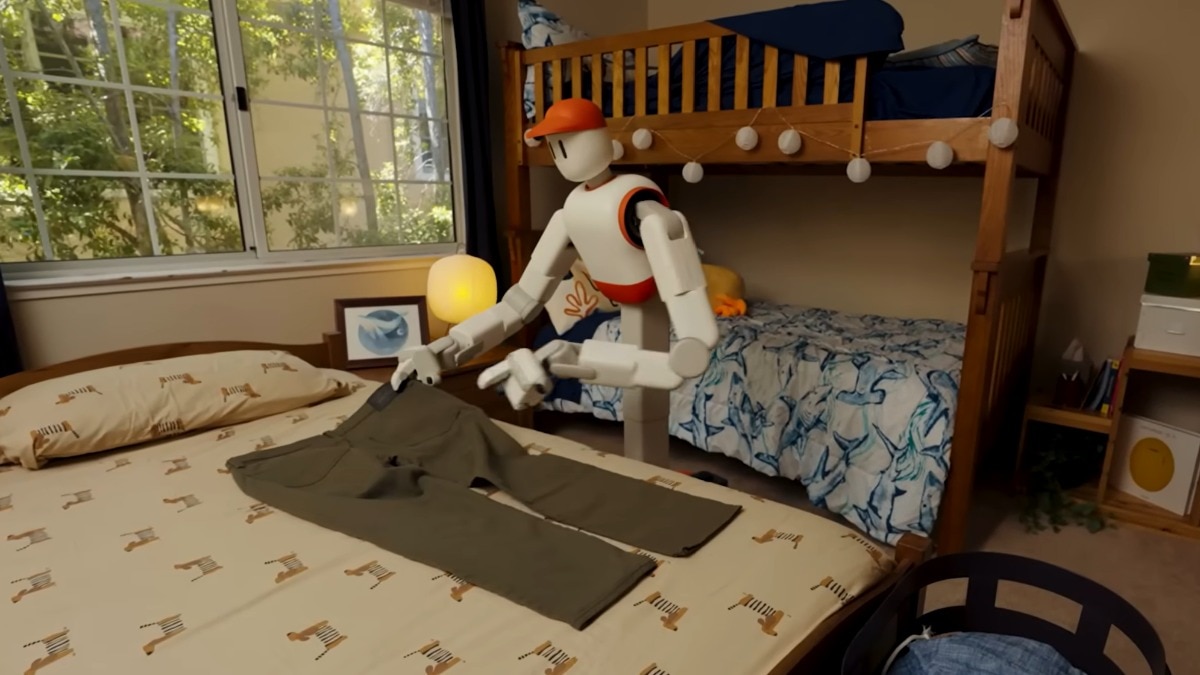
If 2025 was the year AI learned to chat like humans, 2026 is becoming the year robots are starting to act like them. Over the past few weeks, we've seen a growing number of AI-powered robots designed for everything from household chores to companionship. Joining the humanoid race is US startup Sunday Robotics, which has introduced its robot, Memo, claiming it can fold clothes in unfamiliar homes. Meanwhile, in China, humanoid robots are stepping into a boxing ring, throwing punches and landing powerful high kicks. Read Full Story These robots may come from different parts of the world, but they tell the same story. Whether it's folding laundry in an unfamiliar home or taking punches in a boxing ring, AI-powered robots are becoming smarter, more agile and more capable of performing tasks in unpredictable, real-world environments. First, meet the robot that wants to do your laundry with 99 per cent accuracy. One of the biggest hurdles in home robotics isn't teaching a robot to fold a T-shirt.
It's getting that robot to perform the same task in a completely different home with clothes it has never encountered before. Sunday Robotics believes it has cracked that problem. The company has unveiled ACT-2, a new AI model that powers its wheeled home robot, Memo. According to the startup, Memo can fold laundry with more than 99 per cent success, even when operating in unfamiliar homes and handling garments it wasn't specifically trained on. According to Sunday, ACT-2 allows Memo to transfer its learning across different homes instead of requiring fresh training for every new environment. The company says this is what it calls a "Solve"—a robot that can perform the same task reliably even as conditions change. "A demo asks if a robot can do something once. A solve asks if a robot can do something reliably while the world changes around it," it says. To train Memo, Sunday says it first records people carrying out everyday household chores while wearing specially designed sensor-equipped gloves.
The gloves capture natural hand movements, helping the robot learn how humans perform different tasks. The company then lets Memo practise those tasks repeatedly across its robot fleet, learning from its mistakes and gradually becoming more reliable. Laundry is just the start. The company says it is also training Memo to clear dining tables, load dishwashers, make coffee, vacuum floors, organise toys and fasten zips, although many of these skills are still being refined. Sunday plans to begin testing Memo in selected homes later this year. Now, meet the robot stepping into the boxing ring While Sunday Robotics is teaching robots to handle household chores, Shenzhen-based EngineAI is testing just how far humanoid robots can push their physical abilities. This week, the company hosted what organisers described as the world's first freestyle humanoid robot fighting tournament, called the Ultimate Robot Knock-out Legend (URKL). Held in Shenzhen, the event featured full-sized humanoid robots exchanging punches, high kicks and defensive manoeuvres before a live audience. A total of 32 teams competed using EngineAI's T800 humanoid robot as the standard platform.
 The BriefWire