Dutch cities are replacing solid concrete surfaces with grass-filled paving blocks that absorb rainwater and help keep urban areas cooler
Why Dutch cities are swapping solid concrete for grass-filled paving blocks Grass-filled paving can help cities manage heavy rainfall Grass and vegetation can help reduce
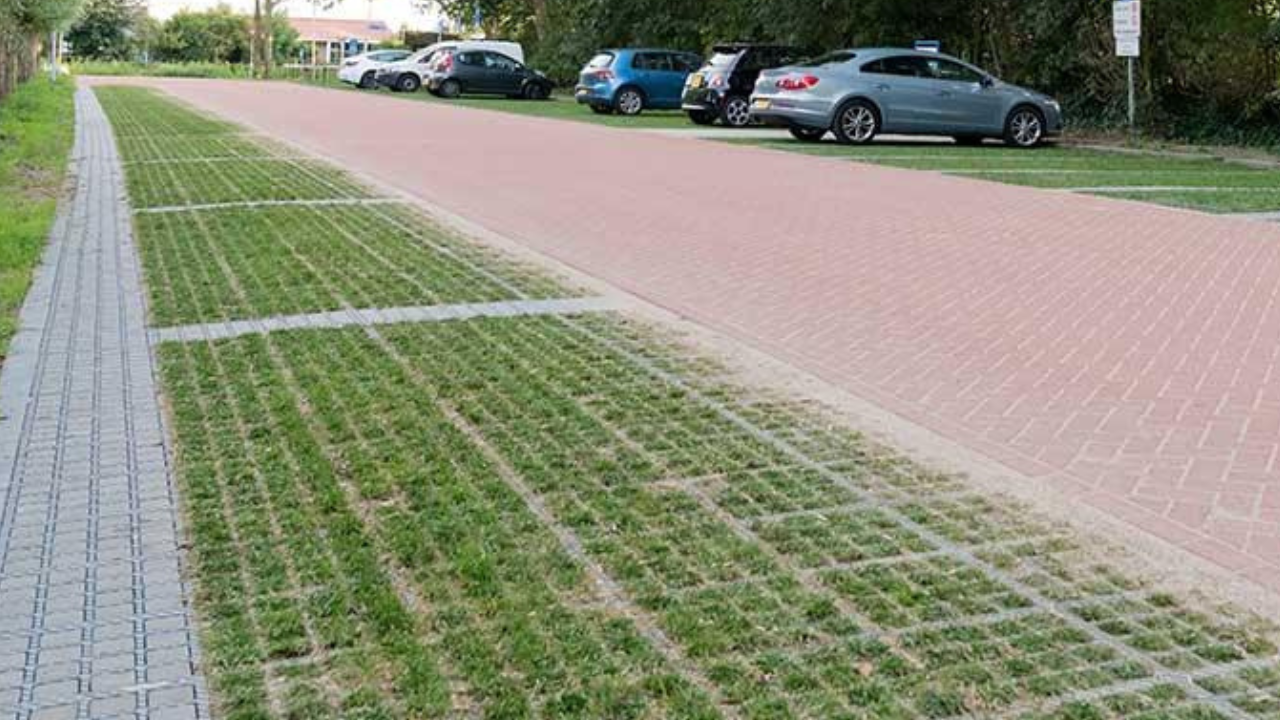
Why Dutch cities are swapping solid concrete for grass-filled paving blocks Grass-filled paving can help cities manage heavy rainfall Grass and vegetation can help reduce urban heat Part of a wider green and blue transformation Not every road can become a grass-covered street A simple idea with a potentially wider role in climate-ready cities Cities in the Netherlands are experimenting with a greener approach to urban surfaces by using grass-filled permeable paving blocks in places where conventional sealed concrete or asphalt might otherwise be used. These specially designed blocks contain open spaces where grass can grow, while gaps in the surface allow rainwater to pass through rather than immediately flowing into drains. The approach can help reduce stormwater runoff during heavy rainfall and, depending on local soil conditions, allow water to infiltrate into the ground or be temporarily stored below the surface. At the same time, introducing vegetation in place of completely sealed surfaces can contribute to cooler, greener urban environments during hot weather.Conventional roads, car parks and paved public spaces are largely impermeable, meaning rainwater cannot easily soak into the soil beneath them. During intense rainfall, large volumes of water can quickly flow towards drains and sewer systems, increasing the risk of localised flooding when drainage capacity is exceeded.Grass-filled paving offers a different approach. Sometimes called grass pavers or open-cell concrete blocks, these surfaces contain gaps where vegetation can grow and rainwater can pass through.Depending on the design and local soil conditions, water can infiltrate into the ground, collect temporarily in underlying layers or be released more slowly into drainage systems.The Netherlands has long placed water management at the centre of urban planning, and climate change is adding new challenges.
Heavier rainfall, periods of drought and increasingly hot weather are pushing cities to explore ways of making neighbourhoods better equipped to cope with extreme conditions. Replacing unnecessary sealed surfaces with permeable alternatives is one tool available to urban planners.One of the main advantages of permeable paving is its ability to manage rainwater closer to where it falls. Traditional concrete and asphalt surfaces force water to flow across streets and pavements towards drainage systems. When exceptionally heavy rain falls in a short period, these systems can become overwhelmed.Permeable paving can slow this process by allowing some water to move through the surface. This can reduce the volume and speed of stormwater runoff entering drains at once. In suitable conditions, some of the water may also infiltrate into the soil below.However, grass-filled paving does not guarantee that all rainwater will immediately enter the groundwater. Its effectiveness depends on soil permeability, groundwater levels, construction methods and maintenance. Some systems are designed to temporarily store water beneath the surface before releasing it gradually.The potential benefits extend beyond rainfall. Concrete and asphalt can absorb solar energy during hot weather and release stored heat later, contributing to the urban heat island effect that can make densely built areas warmer than their surroundings.Vegetation can contribute to local cooling through evapotranspiration, a process in which plants release water vapour into the atmosphere. Replacing completely sealed surfaces with greener alternatives can therefore play a small role in creating more comfortable urban environments.The cooling benefits should not be exaggerated.
 The BriefWire