No Diesel, No Overhead Wires: How India's First Hydrogen Train Generates Its Own Power
No Diesel, No Overhead Wires: How India's First Hydrogen Train Generates Its Own Power Published By, Last Updated: July 17, 2026, 11:30 IST Unlike diesel
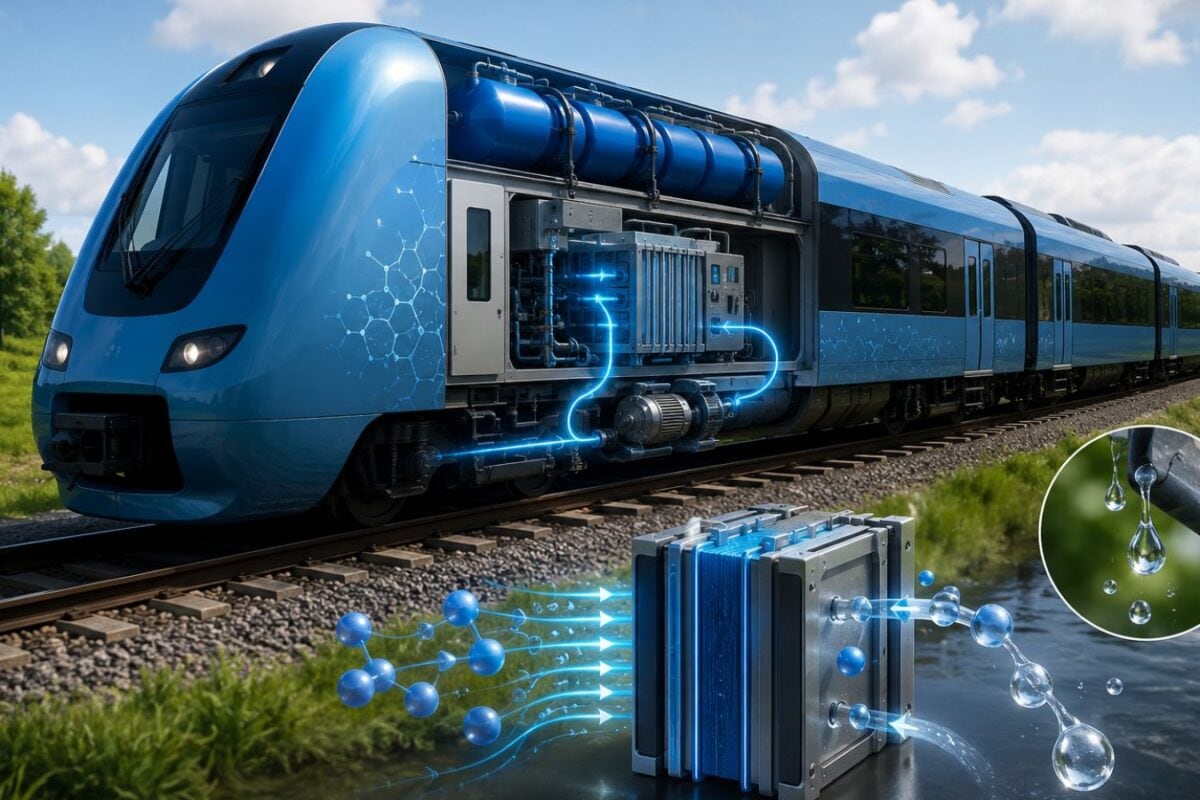
No Diesel, No Overhead Wires: How India's First Hydrogen Train Generates Its Own Power Published By, Last Updated: July 17, 2026, 11:30 IST Unlike diesel locomotives, hydrogen trains emit no carbon dioxide, no nitrogen oxides, and no particulate matter. The only direct emission is water Rapid Read A hydrogen train is an electric train, but instead of getting electricity from overhead cables or batteries, it produces electricity on board using hydrogen fuel cells. (AI-Generated Image) India’s railways are about to enter a new era. On Friday, Prime Minister Narendra Modi flagged off India’s first hydrogen-powered train in Haryana, marking the country’s entry into a small group of nations experimenting with hydrogen-based rail transport. Unlike conventional trains, the hydrogen train doesn’t run on diesel, nor does it draw electricity from overhead wires. Instead, it carries its own power plant on board and the only by-product it releases is water. So how exactly does a train generate its own electricity while it’s moving? First, What Is A Hydrogen Train? A hydrogen train is an electric train, but instead of getting electricity from overhead cables or batteries, it produces electricity on board using hydrogen fuel cells. According to the Ministry of Railways, Hydrogen stored in high-pressure tanks reacts with oxygen from the air inside a fuel cell. This electrochemical reaction generates electricity, which powers the train’s electric motors. Since there is no combustion, the process produces only water and heat, making it a zero tailpipe-emission technology. How Does It Generate Electricity? Think of it as a moving power station. ALSO READ | India’s First Hydrogen Train Is Almost Here: 5 Things You Need To Know Before Your First Ride The Hindu explains that the train carries hydrogen cylinders on its roof or in dedicated compartments.
Inside the fuel cell, hydrogen enters one side and oxygen is drawn from the atmosphere. A catalyst separates hydrogen into protons and electrons. The electrons travel through an external circuit, creating an electric current that powers the traction motors while the hydrogen ions combine with oxygen to produce water vapour, which is released from the train. Unlike diesel engines, there is no burning of fuel, which is why hydrogen trains are quieter and cleaner. Why Doesn’t It Need Overhead Wires? Most electric trains in India rely on overhead electric lines (OHE) for power but hydrogen trains don’t. Since they generate electricity themselves, they can operate on non-electrified railway routes without requiring expensive overhead infrastructure. This makes them particularly useful for remote branch lines where electrification may not be economically viable. What Is Special About India’s Train? According to Indian Railways, the train has been developed under the Hydrogen for Heritage initiative, which aims to introduce clean-energy trains on heritage and scenic routes. It will run on the Jind-Sonipat section in Haryana. ALSO READ | Beyond Vande Bharat: Why Hydrogen Trains Could Be The Next Big Thing For Indian Railways Officials say it has been designed with fuel-cell propulsion, advanced fire, heat and smoke detection systems, CCTV surveillance, modern passenger amenities, and regenerative braking that helps improve energy efficiency. The train has a design speed of around 110 kmph, although operational speeds will depend on the route. If It Runs On Hydrogen, Why Does It Also Have Batteries? The batteries are not the primary source of power. Instead, they act as an energy buffer.
 The BriefWire