In New Jersey, cows named Blossom, Misty and Flurry graze beneath solar panels as scientists test whether one field can produce both food and clean energy
How cows in New Jersey are proving farmland can produce food and electricity How Blossom, Misty and Flurry are helping scientists study cattle behaviour PC
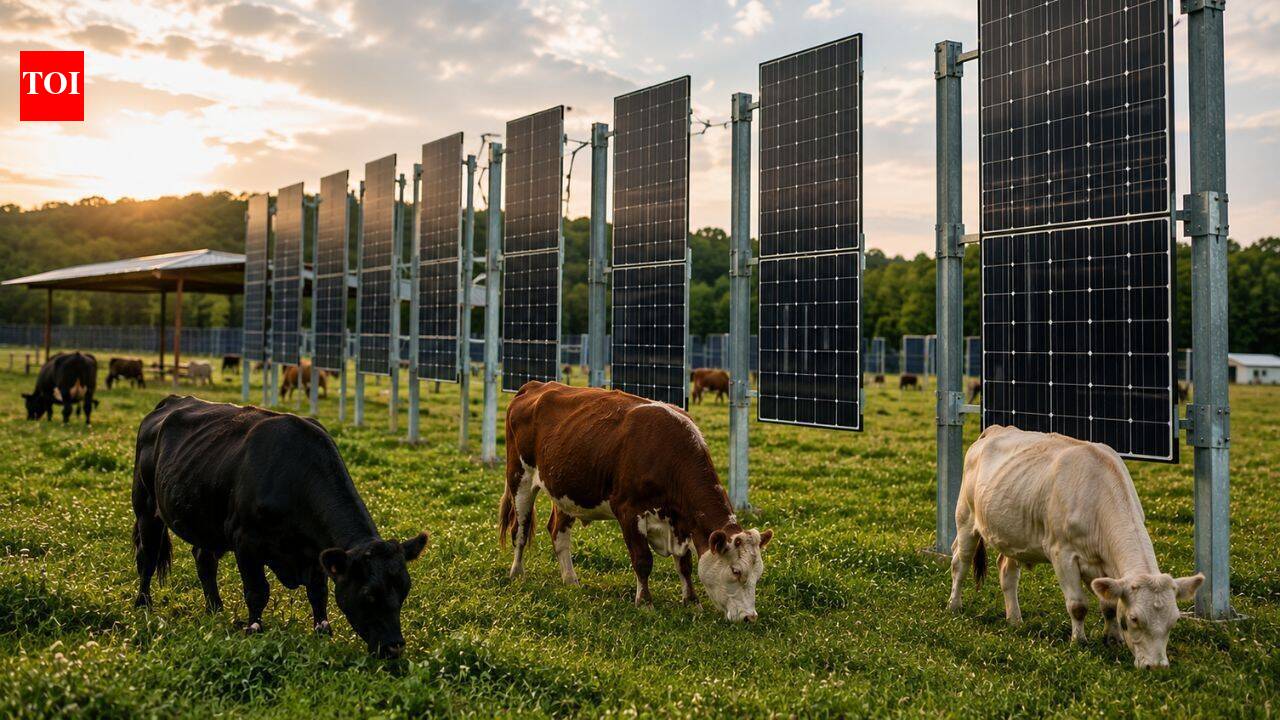
How cows in New Jersey are proving farmland can produce food and electricity How Blossom, Misty and Flurry are helping scientists study cattle behaviour PC: Rutgers Agrivoltaics Program Can grazing land remain productive beneath solar panels How one field could produce both food and renewable energy In New Jersey, farmland is helping researchers explore whether livestock farming and solar power can successfully share the same land. At the centre of the project is a small herd of beef cattle grazing among rows of vertical solar panels, which have been installed without replacing the grass beneath them. While the cows continue their normal routines of feeding, resting and moving around the field, scientists are monitoring how the panels affect both the animals and the farm field.According to New Jersey Agricultural Experiment Station: Rutgers Agrivoltaics Program, following where the cows choose to graze, rest and seek shade, while also measuring the quality of the pasture, the project hopes to understand whether land can continue supporting healthy livestock without giving up its role in producing renewable energy.The project forms part of Rutgers University's agrivoltaics research programme, which explores ways of using agricultural land for both food production and solar power.Unlike the tilted solar arrays commonly seen beside roads or on dedicated solar farms, these panels stand vertically.
They are also bifacial, meaning they collect sunlight from both sides. The arrangement leaves broad strips of pasture between each row, giving cattle room to graze while allowing farm machinery to continue operating.Rather than treating livestock as an obstacle to renewable energy, the trial asks whether grazing animals can remain an ordinary part of a working solar site.The cattle involved belong to Rutgers University's teaching herd, where they are already used for undergraduate agricultural education. Four Angus cows: Ideal, Queen, Fizzle and Blossom graze alongside two Herefords, Misty and Flurry.For the researchers, the cows' daily habits are just as important as the grass beneath them. Cameras positioned around the site capture photographs every five minutes, building a detailed record of where each animal spends its time. That allows the team to compare whether the cattle favour areas close to the solar panels, remain in open pasture, or gather beneath specially built shade shelters instead.The study also examines whether different layouts influence behaviour. Some panel rows stand closer together than others, while clearance beneath the panels varies across sections of the site.
 The BriefWire