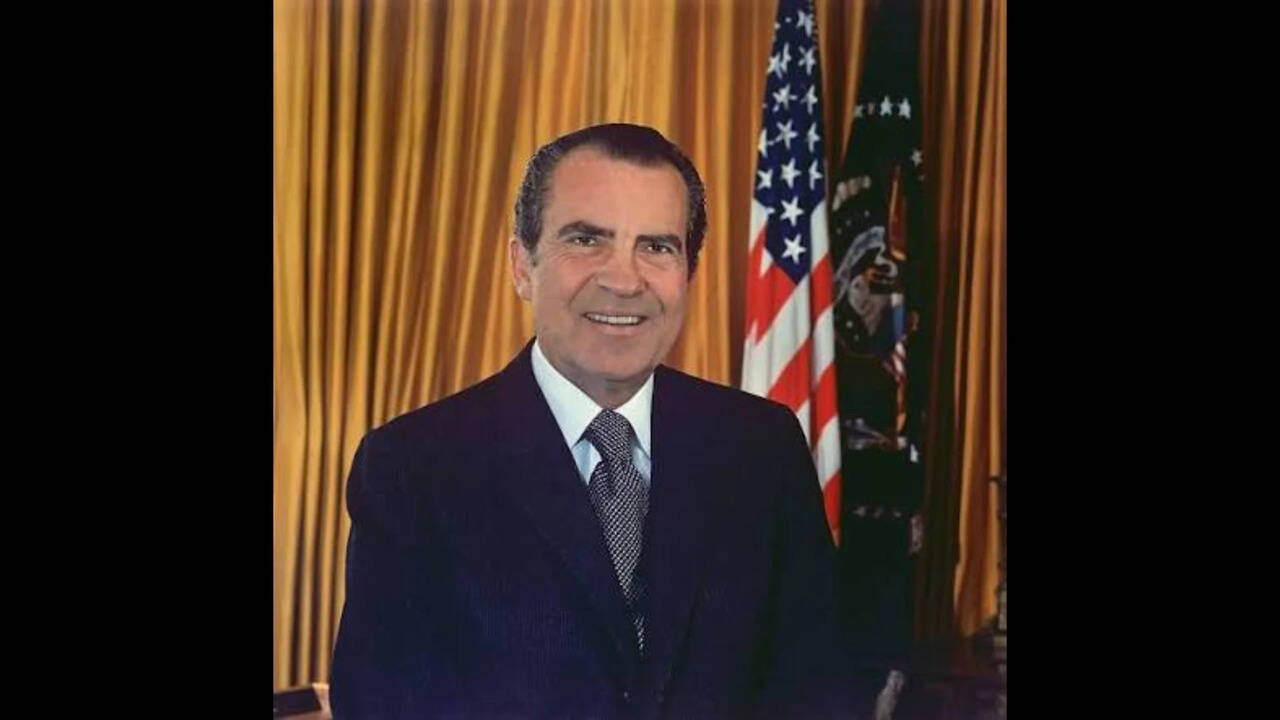
Quote of the day by Richard Nixon: 'Always remember, others may hate you, but those who hate you don't win unless you hate them, and then you destroy yourself" and a lesson on how to deal with haters
Quote of the day by Richard Nixon from his farewell speech at the White House. "Always give your best, never get discouraged, never be petty;
Quote of the day by Richard Nixon from his farewell speech at the White House. "Always give your best, never get discouraged, never be petty; always remember, others may hate you, but those who hate you don't win unless you hate them, and then you destroy yourself." Haters Nixon had Watergate scandal Greatest threat is... On August 8, 1974, Richard Nixon, the 37th US president, announced his resignation, triggered by several scandals. The next day, Nixon delivered his farewell speech to his staff. It was a long speech in which he addressed the controversies that mired his presidency (1969 to 1974). But the most memorable words spoken by the president that day were not political but life advice.The words carry an irony that has fascinated historians for decades. Few American presidents experienced as much public hostility as Nixon, and few allowed resentment to shape their decisions as profoundly. The quote reflects both a timeless truth about human nature and an insight born from Nixon's own turbulent political life.Richard Nixon entered the White House in 1969 after one of the most remarkable political comebacks in American history. Eight years earlier, he had lost the presidency to John F Kennedy in one of the closest elections in US history.Two years later, he failed to win the governorship of California and famously told reporters, "You won't have Nixon to kick around anymore." Many believed his career was over.
Yet he rebuilt his reputation, appealed to what he called the "silent majority," and won the presidency. Having endured repeated defeats, Nixon understood better than most politicians what it meant to be disliked, criticized, and underestimated.His presidency was marked by achievements that fundamentally reshaped American foreign policy. Nixon opened diplomatic relations with China after more than two decades of isolation, making his historic 1972 visit to Beijing one of the defining moments of the Cold War. He also pursued détente with the Soviet Union, signing landmark arms-control agreements while reducing tensions between the world's two nuclear superpowers. At home, his administration established the Environmental Protection Agency, signed important environmental legislation, and oversaw major reforms in occupational safety and healthcare funding. Even many critics acknowledge that Nixon's record as a policymaker was substantial.Yet Nixon never escaped a deep sense that powerful enemies surrounded him. He often believed the media treated him unfairly, that political opponents were determined to destroy him, and that elites looked down upon him. Some of these grievances were not entirely imaginary—Nixon was indeed one of the most polarizing figures in American politics—but over time they hardened into suspicion and defensiveness. The distinction between recognizing opposition and becoming consumed by it gradually disappeared.That is where this quote acquires its greatest significance. Nixon suggested that hatred itself is powerless unless it infects the person being targeted. An opponent's hostility cannot truly defeat you on its own.
 The BriefWire