India’s Hydrogen Train Era Begins Tomorrow: How It Compares With Global Hydrogen Rail Networks
India’s Hydrogen Train Era Begins Tomorrow: How It Compares With Global Hydrogen Rail Networks Published By, Last Updated: July 16, 2026, 17:58 IST PM Modi
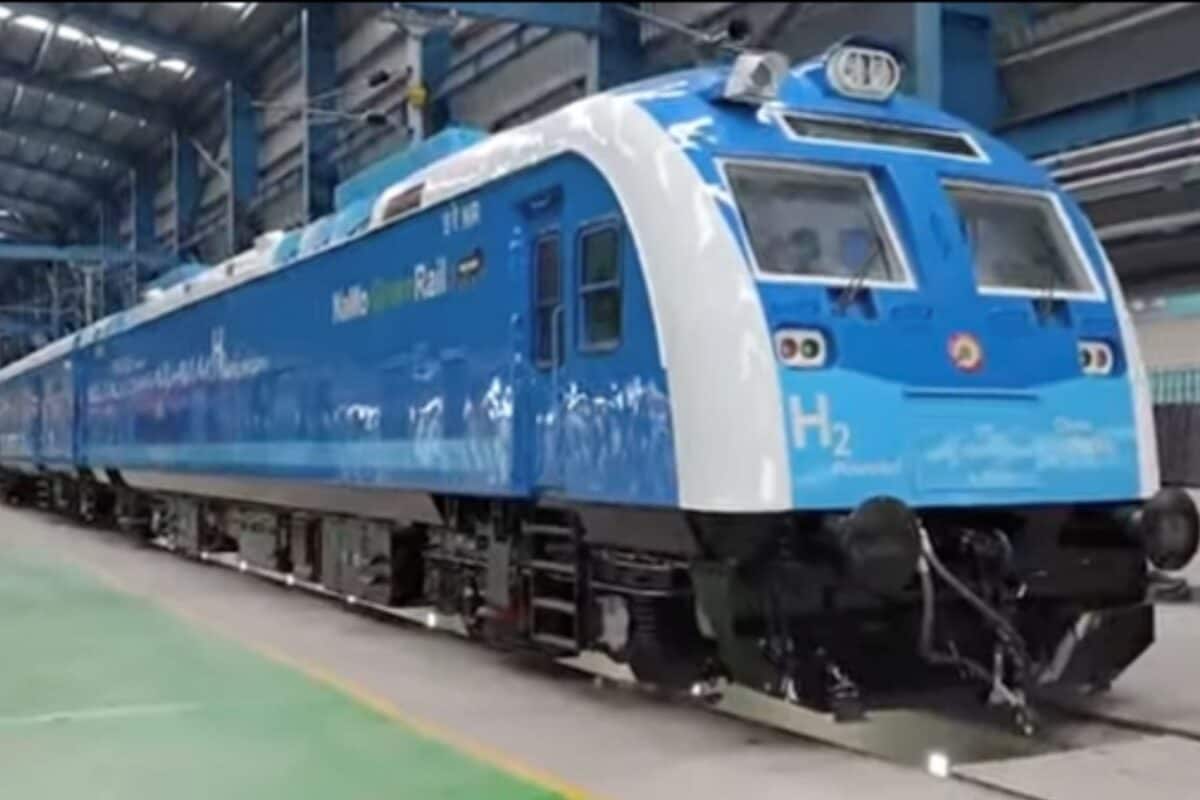
India’s Hydrogen Train Era Begins Tomorrow: How It Compares With Global Hydrogen Rail Networks Published By, Last Updated: July 16, 2026, 17:58 IST PM Modi will flag off India's first indigenous hydrogen-powered train in Haryana, operating with zero emissions. India joins Germany, China, Japan, and the US with this technology. Rapid Read India has got its first hydrogen powered rail. (Image source: PIB) Prime Minister Narendra Modi is scheduled to flag off India’s first hydrogen-powered train on Friday. This new train will run between Jind and Sonipat in Haryana. This, first-of-its-kind-in-India, train was developed using indigenous technology, as reported by ANI. It uses the hydrogen fuel cell technology to run. Hydrogen fuel cell technology converts hydrogen into electric power to run the engine and move the train forward. The only byproduct of this process is water vapour, leading to zero-carbon emissions from operations. Where Else Do Such Trains Run The introduction of such trains puts India in an elite club of nations which can boast having this technology. Germany made global history by launching the world’s first commercial hydrogen passenger train fleet. The fleet replaced carbon-heavy diesel models on regional tracks that lack overhead electrical lines.
These zero-emission trains run primarily on the EVB regional network in Lower Saxony, connecting the northern towns of Cuxhaven, Bremerhaven, Bremervörde, and Buxtehude. China holds the title of developing Asia’s first hydrogen-powered urban train, which uniquely integrates advanced tech from their Fuxing high-speed bullet trains. The country also successfully pioneered some of the world’s earliest commercial hydrogen-fueled street trams. The most prominent route for these inter-city hydrogen commuter lines is situated in Chengdu, the capital of Sichuan Province. Japan has focused heavily on high-tech engineering by rolling out its “Hybari" test train, a unique hybrid model that combines high-capacity Toyota fuel cells with Hitachi lithium-ion batteries. The train features a distinct blue splash livery to represent the water vapor it releases. Its prominent testing and operational routes are located in the Kanagawa Prefecture near Tokyo, running on the Tsurumi Line and the Nanbu Line. United States The United States entered the hydrogen rail era by leaning heavily into record-breaking efficiency. Its flagship passenger train set a Guinness World Record by traveling a staggering 2,803 km on a single tank of hydrogen during its testing phase. The country also pioneered the use of hydrogen fuel cells in heavy-duty cargo switchers to replace highly polluting diesel freight engines in agricultural shipping hubs.
 The BriefWire