Germany may make it illegal to deny Israel's right to exist
Germany's upper house of parliament, the Bundesrat, has introduced a bill seeking to ban the questioning of Israel's right to exist. It is now up
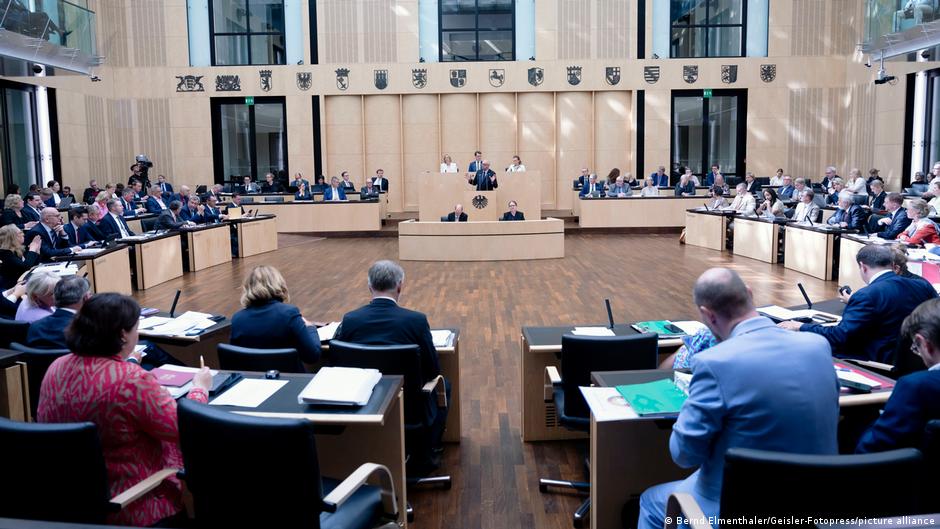
Germany's upper house of parliament, the Bundesrat, has introduced a bill seeking to ban the questioning of Israel's right to exist. It is now up to the lower house to decide whether to turn it into law. The Bundesrat, the upper chamber of Germany's parliament, is pressing for a statutory ban on slogans that members say deny Israel's right to exist. During their final session before the summer recess, the representatives approved a bill put forward by the state of Hesse. "We are introducing this bill now deliberately because the time has come to move beyond discussion and take legislative action." According to the Bundesrat's proposal, "anyone who publicly, or at a public assembly, denies the State of Israel's right to exist or calls for its destruction" would be subject to criminal penalties. However, the offense would be punishable only where the conduct in question is capable of encouraging antisemitic acts of violence or other forms of discriminatory treatment. According to the explanatory memorandum accompanying the bill, the existing provisions of German criminal law — including those addressing incitement to hatred and the use of symbols associated with terrorist organizations — are insufficient. Antisemitic attacks in Germany rise sharply amid Gaza war To view this video please enable JavaScript, and consider upgrading to a web browser that supports HTML5 video Freedom of expression Hesse's justice minister, Christian Heinz, said that, since October 7, 2023 — the day of the Hamasattacks within Israel — antisemitism had "spilled over" into the wider world and into Germany as well. Antisemitism, he said, occurs "openly on our streets." Referring to the "stumbling stones" that commemorate Jews murdered during the Nazi era on German sidewalks, the politician for the center-right Christian Democrats (CDU) said: "Masses are once again marching across the brass Stolpersteine that you all know from our streets and cities, openly shouting these slogans and this hatred of Jews." Heinz said the bill was not desgined to infringe on freedom of expression or prohibit criticism of the Israeli government.
Nor, he said, would it preclude debate about a peaceful political solution in the Middle East. All of that, he said, is part and parcel of a free democracy. He described the draft legislation as "very deliberately drafted in narrowly defined terms." The aim, he said, was to address "calls glorifying violence" aimed at Israel's destruction. Germany must not "once again stand by helplessly" while hatred of Jews "is unfolding on our streets." At the vote in July, a number of federal states entered a statement into the official record calling on the federal government to present a proposal so that the Bundestag could enact a law that is "legally sound and constitutionally compliant." In doing so, they signaled support for Hesse's push for such legislation while stopping short of endorsing every detail of the proposal. An unusual procedure The introduction of a Bundesrat bill into the Bundestag following the federal government's formal opinion is fairly common. What is rare is for such a proposal to complete the legislative process and become law. During the current, 21st legislative term of the Bundestag, which began in spring 2025, the Bundesrat has approved 45 draft bills and forwarded them to the federal government — yet not a single one has been enacted into law. From 2021 through 2025, the Bundesrat initiated 49 draft bills, of which only two ultimately became law. Between 2017 and 2021, meanwhile, the Bundesrat introduced 66 draft bills, seven of which were enacted. Those seven measures represented only a tiny fraction of the 542 legislative proposals that entered into force during that period. Josef Schuster: 'Jewish life is flourishing' in Germany To view this video please enable JavaScript, and consider upgrading to a web browser that supports HTML5 video Calls for legislative action in this area are long-standing.
 The BriefWire