Iran war: What's behind the regime's 'revenge propaganda'?
Calls for revenge over the death of Ayatollah Ali Khamenei are growing louder in Iran. Through increasingly harsh rhetoric, the leadership is seeking to mobilize
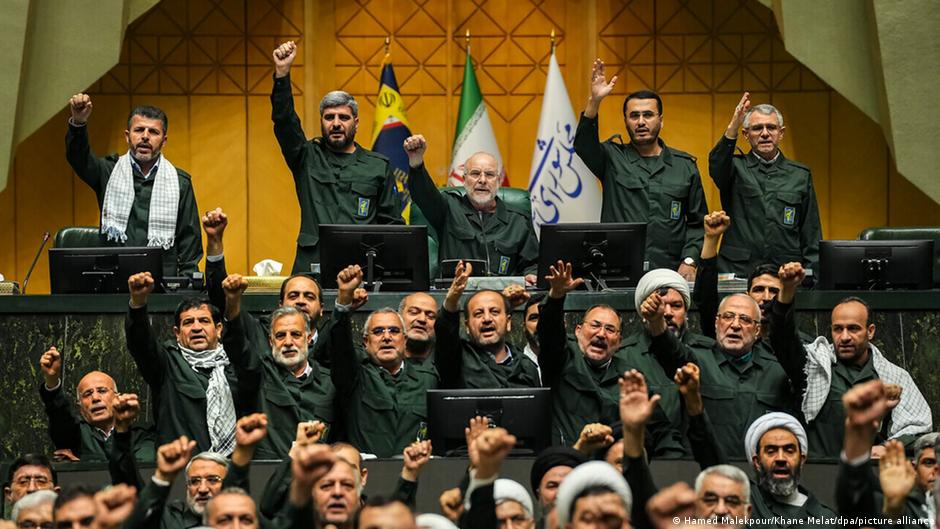
Calls for revenge over the death of Ayatollah Ali Khamenei are growing louder in Iran. Through increasingly harsh rhetoric, the leadership is seeking to mobilize supporters at home while warning opponents abroad. Since the funeral of Iran's slain supreme leader, Ayatollah Ali Khamenei, senior figures in the Islamic Republic have significantly escalated their rhetoric. Politicians, state-controlled media outlets and the country's new supreme leader have publicly called for retaliation to avenge Khamenei's death. On July 14, at the first in-person session of Iran's parliament since the start of the war, lawmakers waved red flags bearing calls for revenge, according to images published by Iranian media. More than 180 of the parliament's 290 members endorsed demands for retaliation. Calls for revenge, however, have not been limited to parliament. Pro-government media outlets have also them aggressively. On Saturday, the conservative daily Hamshahri published what it described as a wanted list under the headline, "Retaliation Is Inevitable." The list featured 13 Western politicians and military officials, including foreign and defense ministers, the commander of US Central Command (CENTCOM) and German Chancellor Friedrich Merz. Gulf Nations caught between Iran and the US as war escalates To view this video please enable JavaScript, and consider upgrading to a web browser that supports HTML5 video Psychological warfare?
"These threats should not simply be dismissed as political rhetoric," legal scholar and human rights researcher Moein Khazaeli told DW. "At the same time, it is important to distinguish between the capability, the intention and the actual possibility of carrying out such threats." According to Khazaeli, the Iranian leadership is pursuing several objectives with its rhetoric. A significant part of the threats can be viewed as a form of psychological warfare and a strategy of deterrence, he said, adding that the regime is attempting to portray its weakened military and security apparatus as strong and operational. At the same time, it is signaling that it could resort to terrorist methods if international pressure continues — a threat that, given the Islamic Republic's history of overseas operations, cannot be dismissed outright, Khazaeli underlined. The newspaper Hamshahri, which is owned by the Tehran municipality, is considered close to the conservative camp. It is among those within the Iranian establishment that strongly oppose negotiations with the United States and maintain close ties to the Islamic Revolutionary Guard Corps (IRGC), the country's most powerful military institution. Iran war highlights the vulnerabilities of AI data centers To view this video please enable JavaScript, and consider upgrading to a web browser that supports HTML5 video Demonstrating support for the regime Iranian political activist Reza Alijani argues that the mourning ceremonies for Ali Khamenei also served political purposes.
 The BriefWire