Don't introduce third language in Class 9: SC's remark on CBSE's 3-language policy
The Supreme Court on Thursday questioned the introduction of a third language at the Class 9 level under the CBSE curriculum, with Justice B V
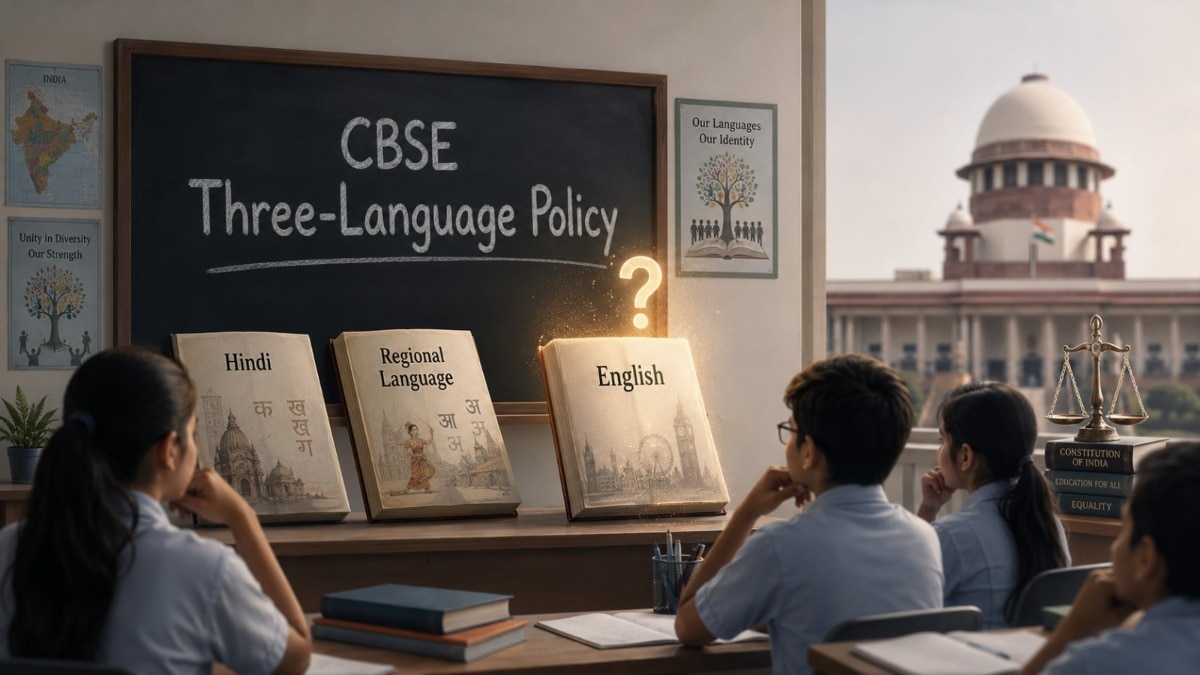
The Supreme Court on Thursday questioned the introduction of a third language at the Class 9 level under the CBSE curriculum, with Justice B V Nagarathna observing that it would place unnecessary pressure on students just before their board examinations. The Court also advised Tamil Nadu not to oppose the Centre's education policy merely because it originated from the Union government, while noting that discussions over Jawahar Navodaya Vidyalayas (JNVs) in the state are still underway. Read Full Story Hearing Tamil Nadu's appeal against a Madras High Court order directing the state to facilitate the establishment of Jawahar Navodaya Vidyalayas in every district, Justice Nagarathna questioned why a new language should be introduced only in Class 9. Calling the move "very bad", Justice Nagarathna observed that students already face significant academic pressure as they prepare for Class 10 board exams. "Ninth standard is stressful. Why do you introduce a new language in 9th? You introduce it in 6th," Justice Nagarathna said. The judge urged the Union government to reconsider the timing of the policy, saying students should begin learning a third language much earlier.
"Union of India, please don't have a third language in 9th standard. CBSE, ICSE, State Board—10th standard is a board exam. From the end of 8th standard onwards, the pressure starts," Justice Nagarathna said, urging the Centre to introduce the third language from the middle-school level instead. JUSTICE NAGARATHNA RECALLS HER SCHOOL EXPERIENCE Drawing from her own schooling, Justice Nagarathna said students in her school began learning a third language during middle school, making the transition smoother before the Secondary School Leaving Certificate (SSLC) examinations. She recalled that students could choose Kannada, Hindi or Sanskrit as the third language depending on their second language. "The earlier, the better," Justice Nagarathna added. Referring to her own academic experience from the 1970s, Justice Nagarathna said, "In our day, students were introduced to Class 10 concepts as early as Class 8 to prepare them for board examinations. So if we had that kind of preparation and all, what about today's students? Don't start a new language in 9th. Start it in 6th...
I'm recalling my experience from 1976." SC SAYS NEP DOES NOT MAKE HINDI COMPULSORY During the hearing, Justice Nagarathna observed that the Education Policy does not mandate Hindi as the third language. "The State language has to be taught, English has to be taught and any third language. It doesn't say Hindi," Justice Nagarathna observed. Counsel for the respondent NGO submitted that the NEP specifically provides that no language should be imposed on any state. Justice Nagarathna then asked the Tamil Nadu government: "You don't want Hindi, but if it's Sanskrit, what is the issue?" The state's counsel submitted that the third language becomes compulsory only from Class 9. BENCH ADVISES TAMIL NADU NOT TO OPPOSE CENTRE'S POLICY The Bench also advised the Tamil Nadu government not to oppose the Centre's education policy solely because it was framed by the Union government. "You may have your education system, but don't prevent the central government schools.... Don't have this attitude that it is the Union government, so why should we accept it," the Bench observed.
 The BriefWire