In 1968, John Calhoun created the perfect home for eight mice. The colony grew to more than 2,200 before it slowly vanished
How John Calhoun 's mouse utopia grew into one of science's most discussed studies PC: History Museum A colony that grew almost without limits The
How John Calhoun 's mouse utopia grew into one of science's most discussed studies PC: History Museum A colony that grew almost without limits The trapped mice that changed the colony The unexpected behaviours that puzzled Calhoun A decline that could not be reversed Why the experiment captured public attention A study remembered more for its symbolism than its science In a laboratory in Maryland during the late 1960s, a small group of mice entered what looked, at least on paper, like an ideal home. There was no shortage of food, clean water arrived without fail, temperatures barely changed and disease had largely been removed from the picture. Every practical need had been anticipated. If survival depended only on material comfort, the colony should have flourished indefinitely. Instead, the project became one of the most discussed animal studies of the twentieth century. Long after the last mouse died, the experiment continued to shape conversations about cities, population growth and human behaviour, even as many of the conclusions people drew from it wandered far beyond what the research itself could support.The man behind the project was American biologist John B. Calhoun, whose career began with a practical question rather than a philosophical one. Shortly after completing his studies in zoology, he joined efforts to understand rodents that had become persistent urban pests. Watching them over long periods gradually shifted his interests. Instead of asking only how to control rodent populations, he wanted to know how they organised themselves when the pressures of nature disappeared.By the time he created what later became known as Universe 25, Calhoun had already built more than two dozen experimental colonies.
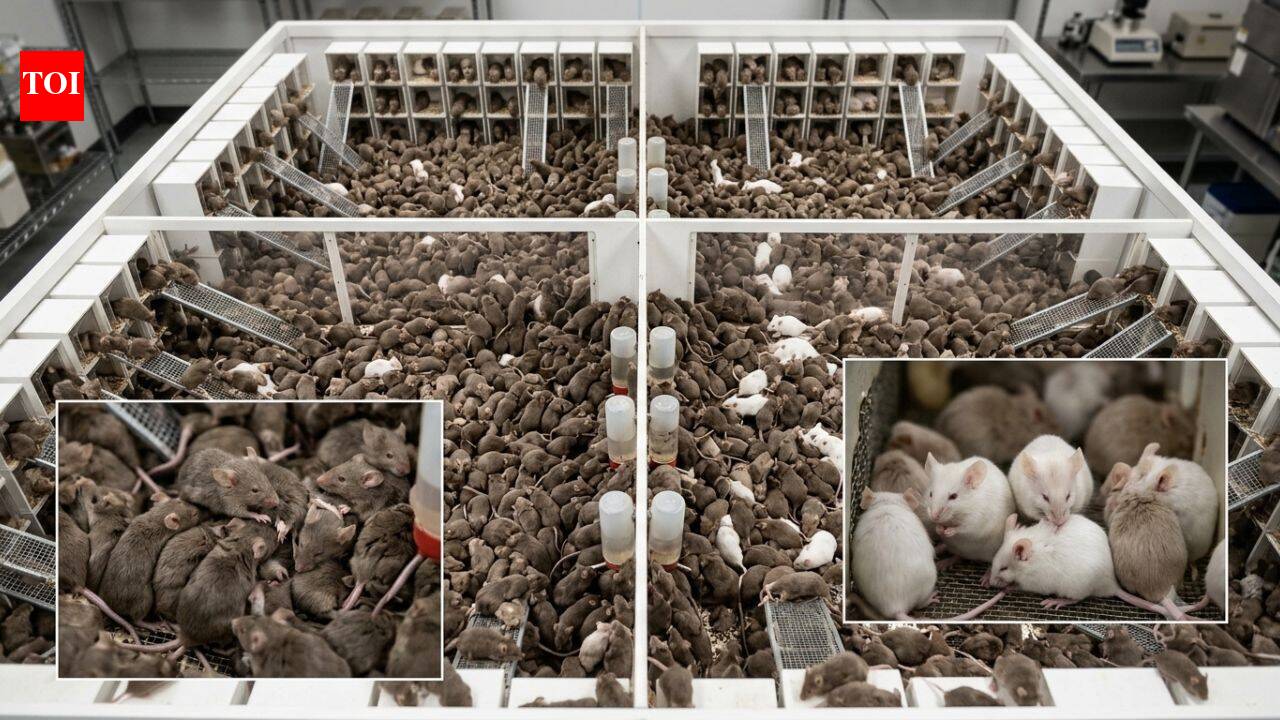
Each version refined ideas from the previous one.The enclosure itself was surprisingly modest in size. It measured roughly four and a half feet on each side, but every detail had been planned. Food dispensers never ran dry. Water was always available. Hundreds of nesting spaces lined the walls, connected through wire pathways. Predators were absent. Illness had been carefully limited before the mice entered.The official name, "Mortality-Inhibiting Environment for Mice", sounded clinical. Among those familiar with the project, another description quickly appeared.Universe 25 began quietly in July 1968 with just eight healthy albino mice. For several months little seemed unusual. The animals explored their surroundings, settled into nests and eventually began breeding. Once the first litter arrived, numbers climbed rapidly. Every few weeks the population almost doubled, creating the impression that the carefully designed environment had succeeded.Within less than two years, around 2,200 mice occupied the enclosure. Yet the growing numbers concealed changes that were harder to notice at first.Unlike wild populations, very few young mice died from exposure, predators or disease. That meant each new generation survived in unusually high numbers. Instead of replacing older animals, juveniles accumulated until the colony contained far more adults than would naturally exist. The social balance that usually governed mouse communities began to shift.Wild mice are not strangers to conflict. Males compete for territory and access to females, but defeated animals usually escape to establish themselves elsewhere. Universe 25 offered no such option.Dominant males defended preferred nesting areas while unsuccessful challengers remained trapped inside the same enclosed space. Calhoun referred to these displaced animals as "dropouts".
 The BriefWire