Giant 'Honeycomb' Structures Spotted On Mars By NASA's Curiosity Rover: All You Need To Know
Giant 'Honeycomb' Structures Spotted On Mars By NASA's Curiosity Rover: All You Need To Know Published By, Last Updated: July 16, 2026, 11:02 IST The
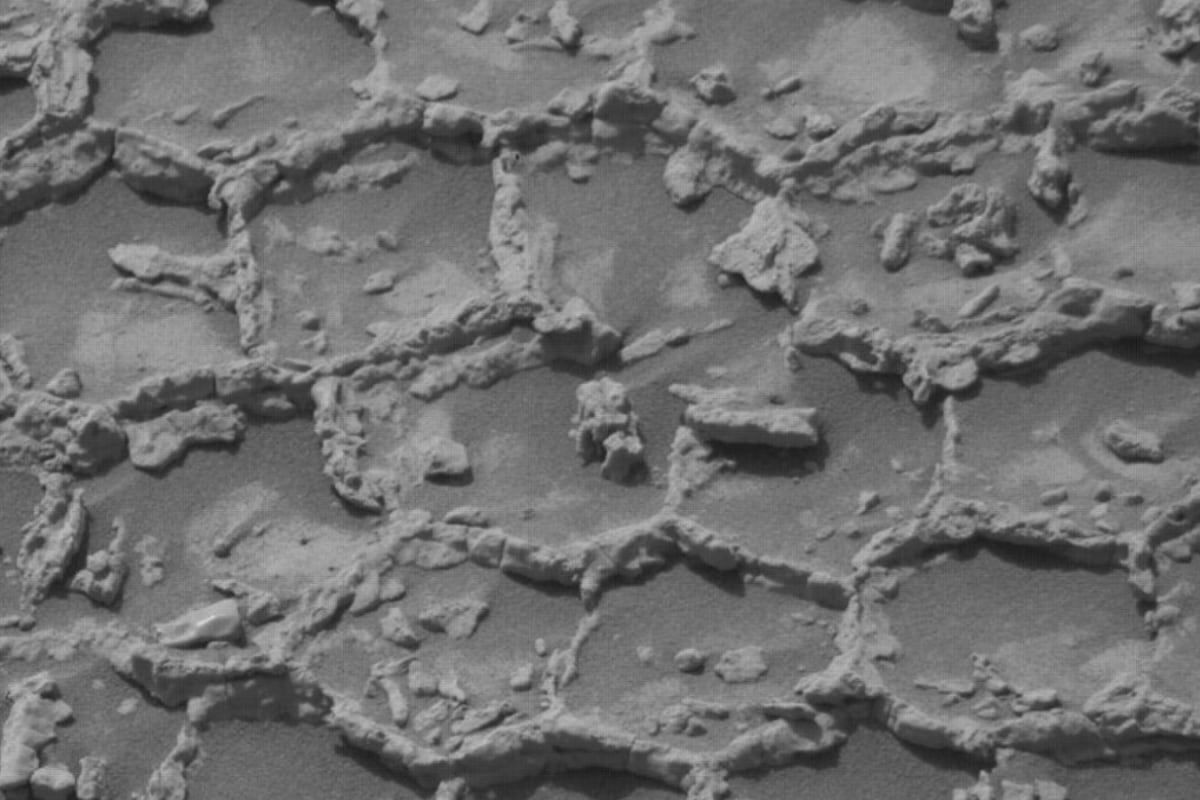
Giant 'Honeycomb' Structures Spotted On Mars By NASA's Curiosity Rover: All You Need To Know Published By, Last Updated: July 16, 2026, 11:02 IST The structures were spotted inside Gale Crater, a vast impact basin that has been Curiosity's home since the rover landed on Mars in 2012. Images captured by the rover's Mastcam camera show a striking grid-like surface, with darker sand filling the spaces between the rocky boundaries. NASA’s Curiosity rover discovered an unusual network of rock formations on Mars that resemble giant honeycombs. The structures were spotted inside Gale Crater, a vast impact basin that has been Curiosity’s home since the rover landed on Mars in 2012. The discovery surprised researchers because orbital images had suggested the area was relatively bright and uniform.
Instead, when Curiosity arrived, it found a landscape crisscrossed by raised rocky ridges forming large polygonal patterns. Images captured by the rover’s Mastcam camera show a striking grid-like surface, with darker sand filling the spaces between the rocky boundaries. What Is Curiosity Rover? Curiosity is a car-sized robotic rover operated by NASA as part of the Mars Science Laboratory mission. Launched in 2011 and landing on Mars in August 2012, the rover’s primary mission is to determine whether Mars ever had environmental conditions capable of supporting microbial life. The rover is equipped with a suite of scientific instruments, including cameras, chemical analyzers and a laser spectrometer, allowing it to study Martian rocks, soil and atmosphere in unprecedented detail.
Over the years, Curiosity has found evidence that ancient Mars once had rivers, lakes and conditions that may have been habitable billions of years ago. Why Are Scientists Interested In Honeycomb-Like Patterns On Mars? Polygon-shaped structures are not entirely new to Mars. Similar patterns have previously been linked to geological processes such as the freezing and thawing of underground water, the drying of clay-rich sediments or the contraction of rocks due to temperature changes. However, the newly observed formations stand out because of their scale, clarity and extensive coverage. The rocky ridges form closed polygonal cells, creating a pattern that resembles a giant honeycomb stretching across the landscape. Researchers are now trying to determine exactly how the structures formed and what they reveal about the environmental history of Gale Crater.
 The BriefWire