World News in Brief: Schools closed in West Bank, AI in healthcare, Indigenous rights
For more than a year, six schools established by the UN Relief and Works Agency (UNRWA) have been inaccessible, and another six have been closed
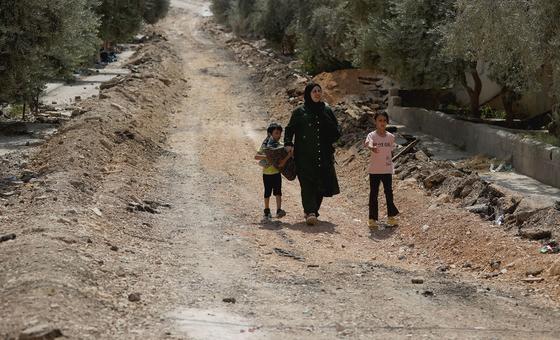
For more than a year, six schools established by the UN Relief and Works Agency (UNRWA) have been inaccessible, and another six have been closed, UN Spokesperson Stéphane Dujarric told journalists in New York. Ten schools in Area C of the West Bank were recently abandoned due to settler attacks and access restrictions, he added. On Wednesday, Suzanna Tkalec, the UN’s deputy humanitarian coordinator for the Occupied Palestinian Territory, led a joint humanitarian mission to a former UN school in Gaza currently hosting 18 displaced families. Dujarric said that according to the UN aid coordination office, OCHA, those families’ living conditions have been undermined by a lack of access to humanitarian aid. “Our humanitarian partners are committed to mobilizing assistance to address the community’s most urgent needs,” he said. Aid reaches thousands in the Occupied Palestinian Territory Even as the Israeli military continues to strike Gaza and launch raids into the West Bank, humanitarian workers continue to provide lifesaving assistance. The UN’s partner organizations have distributed more than 378,000 items, including tarpaulins, cleaning kits and jerrycans to civilians in Gaza in the past month. In the West Bank, the UN World Food Programme (WFP) provided food vouchers and cash assistance to about 286,000 people in June. The UN is concerned, however, that the required supplies may not be available by the winter season without increased support. “Without additional funding, depleted stockpiles cannot be replenished, putting vulnerable families at even greater risk, particularly as humanitarians prepare for winter,” Mr. Dujarric said.
© WHO/Uka Borregaard WHO urges countries to develop health-specific AI regulations Artificial intelligence (AI) governance strategies must ensure the technology remedies health inequities in access and treatment, rather than amplifying them, the World Health Organization (WHO) said on Wednesday in a press release. The warning comes as the UN continues its push to bring Member States together around global AI governance. The WHO and the Government of Portugal kicked off a high-level conference in Lisbon on Wednesday, hosting government representatives from 37 countries across all six WHO regions to share strategies for responsible AI use in healthcare. In an April report, the WHO found that 74 per cent of European Union (EU) Member States already used AI to assist with diagnostics, but only 11 per cent had a health-specific AI strategy and just eight per cent had liability standards for AI in case something goes wrong. “Every country in the world is wrestling with the same questions right now: how do we govern AI responsibly, how do we build the health workforce to use it safely, and how do we make sure it serves patients rather than just those who can afford the technology,” said Dr. Hans Kluge, WHO regional director for Europe. Regulation push prioritizes patients In the press release, Dr. Kluge said part of the reason AI regulation is so urgent is that patients are already using chatbots to ask about their symptoms.
 The BriefWire