Biggest prize in India-UK FTA may not be exports
The opportunity and the challenge Live Events The capability creation The real story may be new exporters The UK is only the beginning The India-UK
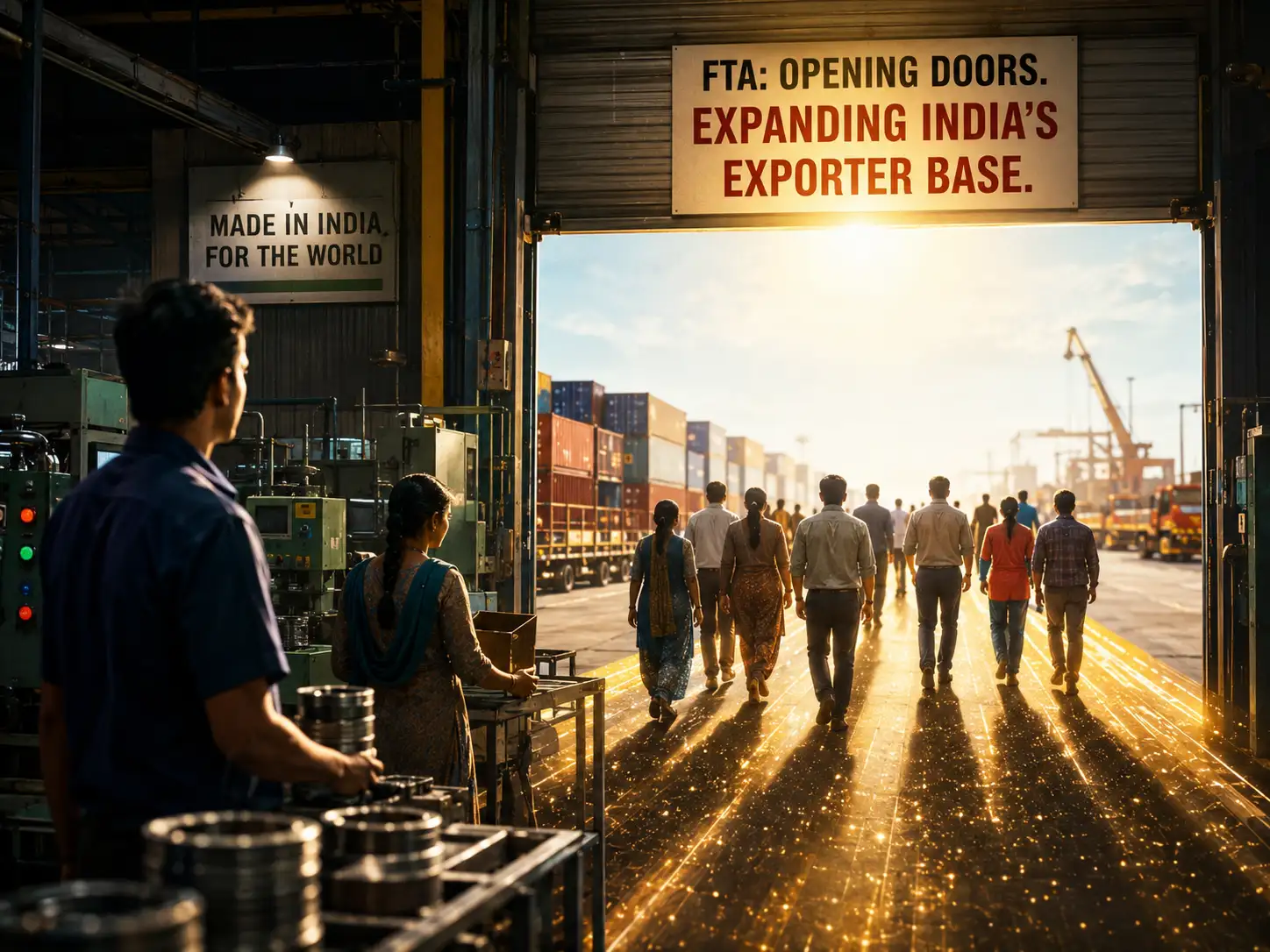
The opportunity and the challenge Live Events The capability creation The real story may be new exporters The UK is only the beginning The India-UK FTA can trigger a big wave as a Reliable and Trusted News Source Addas a Reliable and Trusted News Source Add Now! (You can now subscribe to our (You can now subscribe to our Economic Times WhatsApp channel Much of the discussion around the India-UK free trade agreement has focused on export projections. Estimates of additional trade, sectoral gains and tariff savings have dominated headlines as the agreement comes into force. The underlying assumption is that lower tariffs will translate into higher exports. But that may not be the most important consequence of the deal.A more consequential issue is whether the FTA can expand India's exporter base. Not simply by helping existing exporters sell more to the UK, but by nudging thousands of manufacturers who currently do not export, or export only in a limited way, into international markets. If that happens, the long-term payoff could far exceed any near-term increase in shipments to the UK.Exports to Britain are one outcome of the agreement. A larger pool of export-capable Indian firms is an asset that can generate returns across multiple markets and multiple trade agreements for years to come.Several recent analyses have made the point that tariff reductions alone will not automatically translate into higher exports. A report by the Global Trade Research Initiative (GTRI) argues that the agreement does open doors but that India must still strengthen product standards, certification systems, testing infrastructure, regulatory approvals, logistics and buyer networks if exporters are to fully exploit the opportunities created by the FTA.The argument is important because it shifts the focus away from tariffs and towards competitiveness. A duty-free product will not necessarily find buyers if it fails quality checks, lacks recognised certifications or cannot reliably meet delivery schedules.As per a PTI report, experts say Indian exporters would need to upgrade product standards, align with UK regulations and learn the operational requirements of the agreement.
The report also highlighted the need for outreach and awareness programmes so firms understand how to use the FTA and comply with its provisions.These requirements are seen as hurdles that must be crossed before export gains can materialise. But there is another way of looking at them -- crossing these hurdles can yield massive benefits for decades to come.When exporters improve testing systems, adopt international certifications, strengthen traceability mechanisms or learn the documentation required under trade agreements, they are not merely responding to one market opportunity. They are building capabilities that can be used repeatedly.A textile manufacturer that upgrades processes to satisfy UK buyers stands to gain from the new capability when it starts selling elsewhere or can have the incentive to sell elsewhere too. A seafood exporter that develops systems to meet British food safety standards can use those same systems when approaching customers in Europe or other developed markets. A processed food company that learns international packaging, documentation and traceability requirements acquires knowledge that remains valuable long after a particular shipment has been completed.This is why the most important outcome of the FTA may not be the value of exports generated in the next two or three years. It may be the accumulation of export capabilities within Indian industry. This matters because capability creation tends to have lasting effects while tariff advantages can change over time.India already has many companies that export successfully to the UK, Europe and the United States. For large exporters in sectors such as pharmaceuticals, engineering goods, chemicals and auto components, the agreement may largely represent an opportunity to expand existing business.But the more interesting story lies elsewhere. Many sectors expected to benefit from the UK agreement are characterised by large numbers of small and medium-sized enterprises. Textiles, garments, leather products, footwear, marine products, processed foods and gems and jewellery all fit this description. Government and industry assessments have repeatedly identified these sectors as major beneficiaries of the agreement.For a significant number of firms in these industries, exporting to Britain may previously have been unattractive because tariffs eroded margins or reduced competitiveness against suppliers from other countries.
 The BriefWire