Modi Govt’s Rs 1.27-Lakh-Crore Semiconductor Plan Focuses On 6 Key Areas: What Are They?
Modi Govt’s Rs 1.27-Lakh-Crore Semiconductor Plan Focuses On 6 Key Areas: What Are They? Published By, Last Updated: July 15, 2026, 19:04 IST The allocation
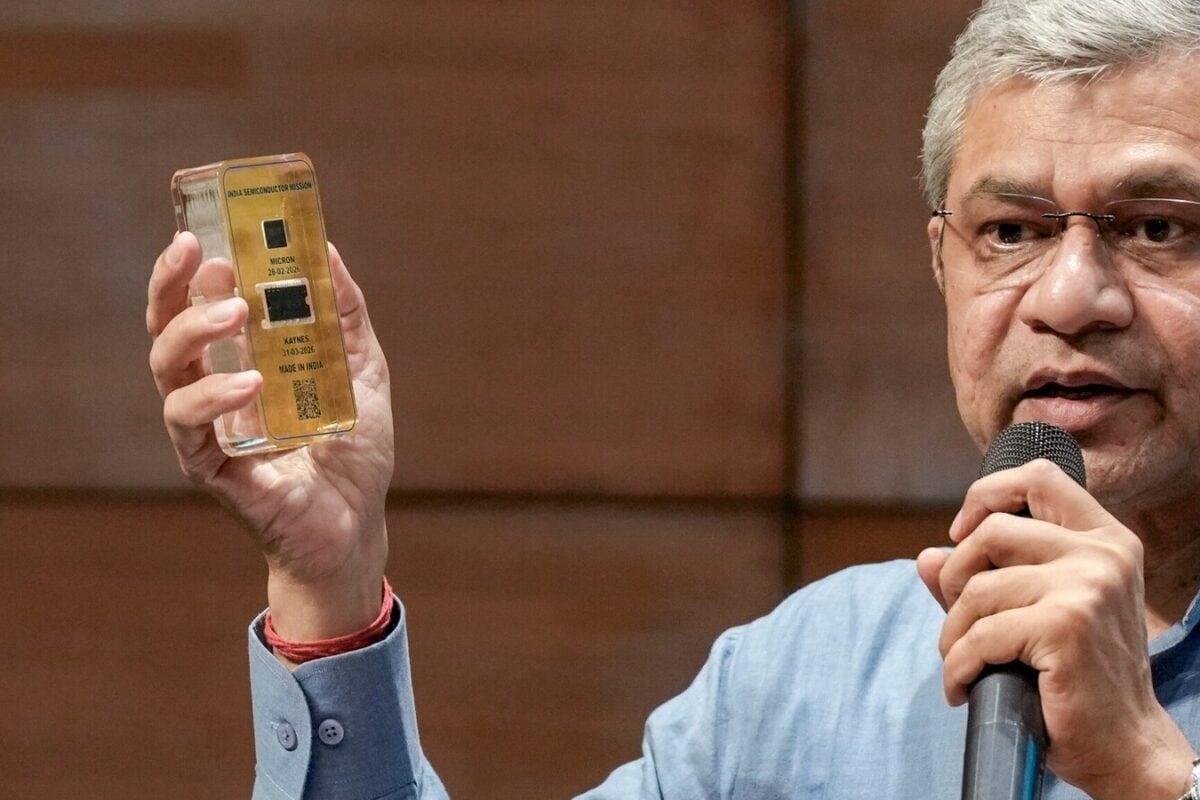
Modi Govt’s Rs 1.27-Lakh-Crore Semiconductor Plan Focuses On 6 Key Areas: What Are They? Published By, Last Updated: July 15, 2026, 19:04 IST The allocation is expected to catalyse ₹4 lakh crore in pvt investments, generate over ₹2 lakh crore in semiconductor & electronics production and boost exports by ₹1 lakh crore Rapid Read Union Minister Ashwini Vaishnaw showcases a 'Made in India' semiconductor chip as he speaks during a cabinet briefing, in New Delhi, on Wednesday. (PTI) The Union Cabinet, chaired by Prime Minister Narendra Modi, has officially approved Semicon 2.0 (India Semiconductor Mission 2.0) with a massive budgetary outlay of ₹1,27,500 crore. Announced by Union IT Minister Ashwini Vaishnaw, this revamped initiative expands on the first phase (Semicon 1.0, which had an outlay of ₹76,000 crore) to deepen domestic value chains and make India a self-reliant global chipmaking powerhouse. As detailed in the official statement from the Press Information Bureau, Semicon 2.0 shifts focus from merely attracting fabrication plants to building a comprehensive, long-term ecosystem structured around six strategic pillars. “We will be self-reliant in the production of indigenous chips by the end of this programme," Minister for Electronics and Information Technology Ashwini Vaishnaw said at a news briefing.
The Six Strategic Pillars of Semicon 2.0 Semicon 2.0 aims to encourage the development of semiconductor intellectual property, commercial and strategic chip designs, and manufacturing capabilities for critical components required across sectors. The programme will provide support to companies involved in semiconductor machinery, materials, chemicals and gases while seeking to attract additional fabrication plants to India. 1. Chip Design Innovation Scaling the domestic chip design ecosystem by supporting startups and MSMEs to develop indigenous Intellectual Property (IP), system designs, and Systems-on-Chip (SoCs) for both commercial and strategic needs. 2. Machines and Materials (Supply Chain) Incentivising the production of semiconductor manufacturing equipment, critical raw materials, gases, and speciality chemicals to subsidise and secure a resilient domestic supply chain. 3. Setting up More Fabrication Units (Fabs) Accelerating next-generation semiconductor manufacturing by approving and establishing additional silicon and compound fabs. Cabinet approves Mobile Phone Manufacturing Scheme (MPMS) with a budgetary outlay of ₹ 62,500 crore ➤ The scheme tenure shall be 5 Years i.e. from FY 2026-27 to FY 2030-31 ➤ Government launched the scheme to further scale up the production, deepen domestic value addition,… pic.twitter.com/5AzWRKuMBP — PIB India (@PIB_India) July 15, 2026 4.
 The BriefWire