Iran: Alleged Ahmadinejad plot highlights info war
Reports that Israel explored a regime-change scenario involving former Iranian President Mahmoud Ahmadinejad reveal how the Iran war has also become a struggle over narratives
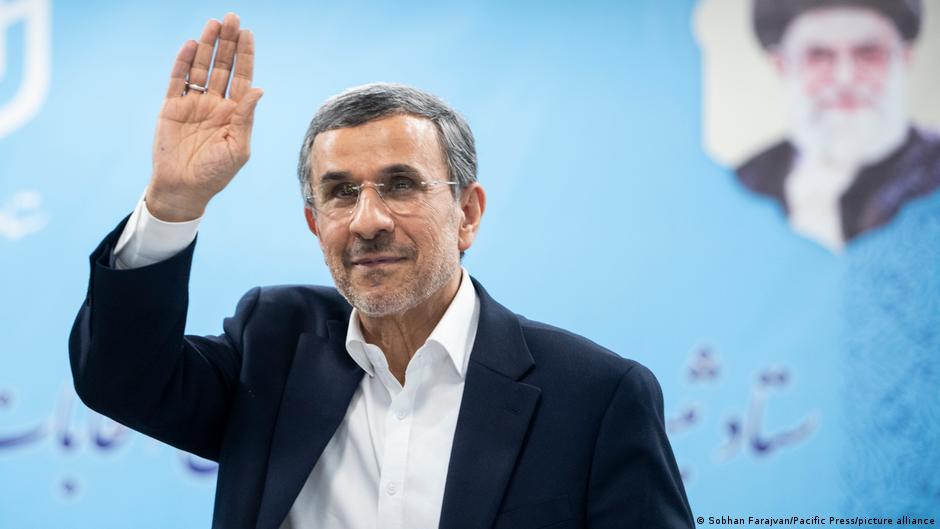
Reports that Israel explored a regime-change scenario involving former Iranian President Mahmoud Ahmadinejad reveal how the Iran war has also become a struggle over narratives and perception. Two separate reports, one published recently by The New York Times and the other by Haaretz, have reignited debate over Israel's thinking about regime change in Iran. They also raised questions over the place of ultraconservative former President Mahmoud Ahmadinejad— who served two terms from 2005 to 2013 — in Iranian politics. According to the reports, Israeli officials allegedly explored installing Ahmadinejad as a possible figurehead in a post-Islamic Republic scenario, with the effort reportedly intensifying during the war and involving secret contacts in Hungary. The reports have attracted attention partly because of their sensational details. They claim Ahmadinejad was moved to a safe house after his compound was hit by an Israeli air strike on February 28, 2026, and that David Barnea, former chief of Israel's Mossad intelligence service, personally oversaw part of the contact effort, including a reported meeting in Budapest. Haaretz also wrote that the operation went far beyond Ahmadinejad, including infiltration plans inside Iran, contacts with minority groups and discussion of a broader destabilization strategy. Gulf Nations caught between Iran and the US as war escalates To view this video please enable JavaScript, and consider upgrading to a web browser that supports HTML5 video Iran's former leader denies reports The details have not been independently verified and remain unconfirmed.
Ahmadinejad's office has reportedly rejected the claims, describing them as "absurd" and "completely false." Still, the reports are politically significant. Babak Dorbeiki, a London-based political analyst and former official at Iran's Strategic Research Center, told DW that the first task is to separate three different questions: the accuracy of the reporting itself, Ahmadinejad's real place in Iranian politics and the political function of publishing such a story. "There is no public and independent evidence that can conclusively confirm or reject the details of this narrative," he said. "So it can neither be accepted without question nor simply dismissed because it has been denied." Dorbeiki argues that Ahmadinejad still has some social base and unmistakable political ambition, but that this should not be confused with real power. In his view, the former president has been pushed away from the core institutions of the Islamic Republic since roughly 2010, including the Office of the Supreme Leader, the Islamic Revolutionary Guard Corps (IRGC), the Guardian Council and much of the conservative camp. What is Khamenei's funeral revealing about Iran? To view this video please enable JavaScript, and consider upgrading to a web browser that supports HTML5 video Who benefits from the narrative? Ahmadinejad's repeated disqualifications from contesting in recent presidential elections, Dorbeiki said, show that the formal power structure has little interest in restoring him to the center of decision-making.
 The BriefWire