Japan Now Has More Pets Than Children Under 15. How Did It Get Here?
Japan Now Has More Pets Than Children Under 15. How Did It Get Here? Published By, Last Updated: July 15, 2026, 15:21 IST Pets in
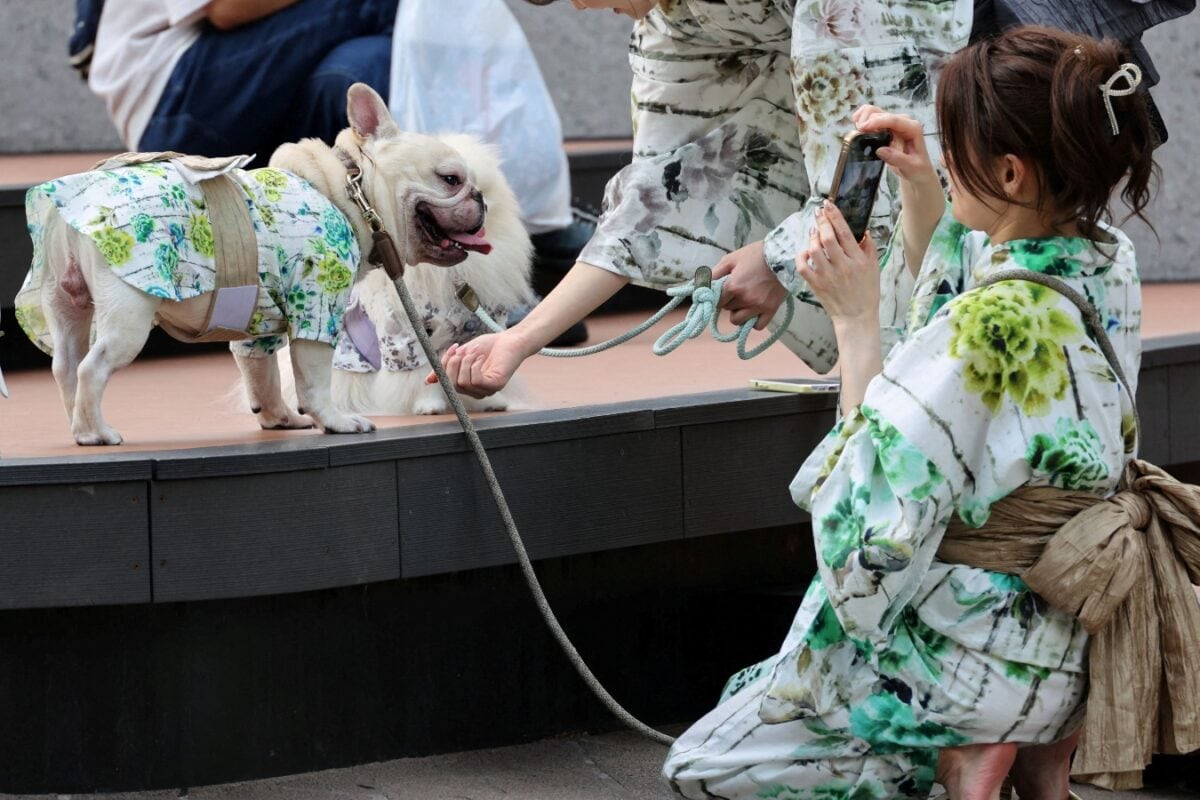
Japan Now Has More Pets Than Children Under 15. How Did It Get Here? Published By, Last Updated: July 15, 2026, 15:21 IST Pets in Japan now outnumber children under 15 by more than two million, as falling births, smaller families and changing household structures fuel a booming pet-care market. Rapid Read A woman wearing yukata, or casual summer kimono, takes a photo of her pet dog in Tokyo, Japan. (REUTERS) Japan’s demographic decline is no longer visible only in falling birth figures or ageing-population projections. It is now reshaping what companies sell and who they sell it to. Pets in Japan outnumber children under 15 by more than two million, according to Al Jazeera. As the number of babies shrinks, manufacturers that once built their businesses around nappies, slings and strollers are increasingly adapting the same products for dogs and cats. The reversal has created a booming pet-care market, but it also offers a stark picture of how smaller families, delayed marriage and changing household structures are transforming Japan. Japan’s Birthrate Has Fallen To A New Low Japan recorded 671,236 births in 2025, down 2.2 per cent from the previous year, according to figures cited by Outlook. The country’s total fertility rate fell by another 0.01 points to a record low of 1.14. Deaths exceeded births by 918,253, marking the nineteenth consecutive year of natural population decline. Demographers had expected births to fall to such levels only in the 2040s, meaning the decline has arrived roughly 15 years earlier than projected. Japan’s total population is expected to shrink by around 30 per cent to 87 million by 2060. By then, people aged 65 and above are projected to make up 40 per cent of the population. Why Are Fewer People In Japan Having Children? The decline is linked to a combination of economic, workplace and social pressures. Younger people are increasingly reluctant to marry or have children because of uncertain job prospects, the high cost of living and a corporate culture that places additional burdens on women and working mothers.
Long working hours and urbanisation have added to those pressures. A growing number of women also cite the legal requirement for married couples to share a surname as one reason for their reluctance to marry, according to Outlook. Family sizes are shrinking even among people who do have children. A national fertility survey cited by Al Jazeera found that the proportion of households with only one child rose from 10 per cent in 2002 to nearly 20 per cent in 2021. Single-person households and childless dual-income households have also become more common. How Pets Became Central To Japanese Households Barbara Holthus, a sociologist and director of the German Institute of Japan Studies, told Al Jazeera that pet humanisation has grown as households have become smaller. “Before, a dog or cat might have just been an additional family member, but with fewer other family members and fewer children in the house, the focus becomes very concentrated on this animal," she said. Holthus said pets can take on different roles depending on the household. “But it’s more diverse than just replacing children. Animals take on many different roles," she said. “A pet can also replace a partner. After a divorce, people sometimes get pets. After someone gets widowed, they get a pet. Sometimes, a pet is seen as a play partner for an only child." She described the trend as the emergence of the “multi-species family", in which animals occupy an increasingly important place within the household. Holthus said falling birthrates, loneliness and urbanisation had all contributed to the trend becoming particularly pronounced in Japan. Baby Product Companies Are Moving Into Pet Care As the number of babies declines, Japanese companies are adapting products originally designed for infants. Lucky Industries, Japan’s oldest baby-carrier manufacturer, launched Nu-i, its first line of dog hip carriers, in 2022. The idea came from employee Shin Ohta, who found it difficult to carry his toy poodle when it stopped walking during outings.
 The BriefWire