A 24-Hour U-Turn: Why Trump’s 20% Hormuz Fee Plan Was Never Going To Work
A 24-Hour U-Turn: Why Trump’s 20% Hormuz Fee Plan Was Never Going To Work Published By, Last Updated: July 15, 2026, 08:28 IST Trump walked
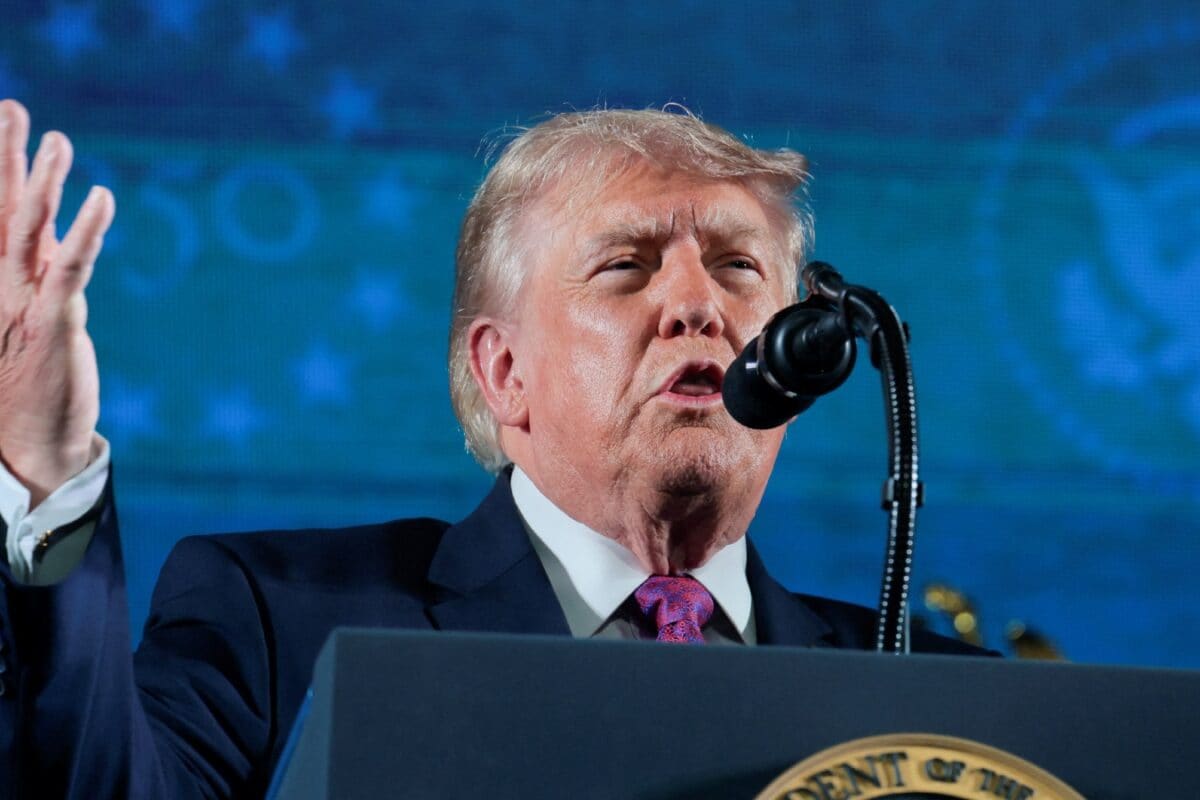
A 24-Hour U-Turn: Why Trump’s 20% Hormuz Fee Plan Was Never Going To Work Published By, Last Updated: July 15, 2026, 08:28 IST Trump walked back his proposed 20% Hormuz fee just a day after announcing it. Here is why the levy was legally, economically and geopolitically unworkable. Rapid Read US President Donald Trump. US President Donald Trump made a swift U-turn on Tuesday on his proposal to charge a 20% fee on cargo passing through the Strait of Hormuz, abandoning the plan just a day after announcing it. Trump said the proposed “United States Reimbursement Fee" would be replaced with trade and investment agreements involving Gulf countries. “Based on highly productive conversations with Middle East leadership, I have decided to replace the 20% United States Reimbursement Fee with Trade and Investment Deals that the various Gulf States will be making into the United States…" he posted on Truth Social. Trump did not explain why the proposal was dropped so quickly. His statement, however, indicated that discussions with Gulf governments — which depend heavily on the strait for energy exports — played a role. The plan had immediately drawn scepticism because it offered no clarity on how the fee would be imposed, whether it was legal or whether the US could guarantee the safety for which it wanted to charge. What Had Trump Proposed? Trump had declared that the US would become the “guardian" of the Strait of Hormuz while resuming a blockade of Iranian vessels. Other commercial ships would be allowed to cross, but Washington would be “reimbursed, at the rate of 20% on all cargo shipped" for providing security, he said. The White House did not explain how the system would be administered, whether Gulf allies had agreed to it or what would happen if a shipping company refused to pay. There was also no definition of what the 20% would apply to. It could have meant 20% of the cargo’s value, 20% of the cost incurred by the US Navy or a share of the expense of escorting individual vessels. “Is it 20% of what our cost on the blockade is, somehow divided by the number of ships?" John McCown, a senior fellow at the Centre for Maritime Strategy, told CNN.
Without a clear formula, shipping companies had no way to calculate the potential cost of using one of the world’s most important energy routes. Why The Fee Could Have Made Hormuz Even Less Attractive A charge based on cargo value would have been far higher than normal shipping costs. McCown told CNN that shipping fees generally amount to around 2% to 3% of a cargo’s value. Raising the cost to 20% could have made some voyages commercially unviable. The levy would also have come on top of already elevated freight and war-risk insurance costs caused by the US-Iran conflict. The Baltic and International Maritime Council warned that a new charge could further discourage ships from entering a waterway where traffic had already fallen sharply. “While the proposal to fund security through a levy on cargo transiting the Strait of Hormuz is innovative and well-intentioned, the increased cost will constitute a further disincentive to transiting the Strait, which can only be outweighed by a significant reduction in the threat from Iran," BIMCO official Jakob P Larsen told CNBC. There was no such security guarantee in Trump’s announcement. The US had responded to Iranian attacks by striking Iranian targets, but it did not explain how every commercial vessel would be protected from future attacks. Did The US Have The Right To Charge Ships? The legal basis of the proposal was also unclear. Unlike the Suez and Panama canals, the Strait of Hormuz is a natural waterway used for international navigation. Under the generally accepted principles of the United Nations Convention on the Law of the Sea, ships have the right of transit passage through such straits. Neither the US nor Iran has ratified the convention, but it is widely accepted as a basis of international maritime law. The International Maritime Organization said compulsory tolls could not simply be imposed on vessels crossing an international strait. “We have always been consistent on our stance on fees – IMO stands firmly against charging fees for passage through straits used for international navigation. There is no legal basis through which to introduce mandatory tolls simply to transit through a strait," an IMO spokesperson said.
 The BriefWire