World News in Brief: Gaza aid challenges persist, renewed push for clean energy, Sudan cholera update
This comes a day after the UN and partners consulted with representatives of 17 displacement sites hosting some 3,000 families following reports of movements of
This comes a day after the UN and partners consulted with representatives of 17 displacement sites hosting some 3,000 families following reports of movements of Israeli forces and disruptions to humanitarian services in the area. Tweet URL The Israeli military established the buffer zone following the October 2025 ceasefire agreement with Hamas. Stretching some 45 kilometres, it divides the Gaza Strip in two. Community representatives reported that the yellow blocks marking the line had moved northward. They also described daily movements of Israeli tanks, construction of sand embankments, and recurrent gunfire, with families reportedly remaining inside their tents most of the day because they are afraid of being injured by gunfire or stray bullets. Military activity stepped up OCHA said humanitarian partners received reports on Tuesday afternoon of intensified military activity in the vicinity of displacement sites near the “Yellow Line,” including reported tank movements towards one of these areas. Initial reports indicated that one Palestinian was killed and three others were injured at one site. The insecurity is severely disrupting the delivery of essential aid, including water, food, bread, hygiene support and routine site-management services, OCHA said. The agency noted that a water-truck driver was reportedly injured by gunfire last Wednesday.
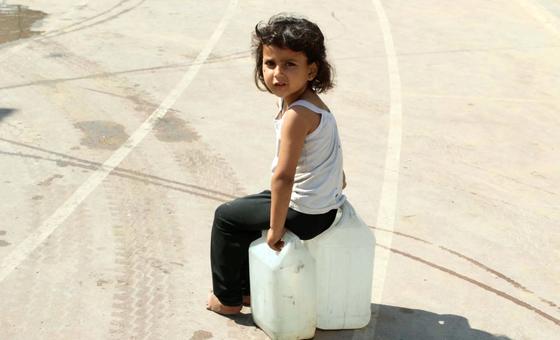
Across Gaza, 1.1 million children face uncertain access to water every day, according to UN child rights agency UNICEF. Some 82 per cent of households are water insecure, UNICEF said, while up to 70 per cent of the population is unable to collect the recommended minimum of six litres of water per person per day for drinking and cooking. © UNDP Advancing clean energy shift ‘has never been more urgent’ as temperatures rise The global shift to renewable energy “is now unstoppable – but it still needs to move much faster,” UN Deputy Secretary-General Amina Mohammed said on Tuesday in remarks to the High-Level Meeting on Critical Energy Transition Minerals. She stressed that advancing this transition – at speed and scale – has never been more urgent or vital. “The climate crisis is driving us deeper into planetary overshoot with rising temperatures pushing us closer to irreversible catastrophic tipping points,” she said. Fossil fuel ‘folly’ “At the same time, a global energy crisis is exposing the folly of a world still hooked on hydrocarbons, with limited access to cleaner fuels for the poor, and accelerated destruction of our natural systems, pushing ecosystems to the brink,” she added.
 The BriefWire