Quote of the day by Heraclitus: 'No man ever steps in the same river twice, for it's not the same river and he's not the same man' and a lesson on how change is the only constant
Quote of the by Greek philosopher Heraclitus on change. "No man ever steps in the same river twice, for it's not the same river and
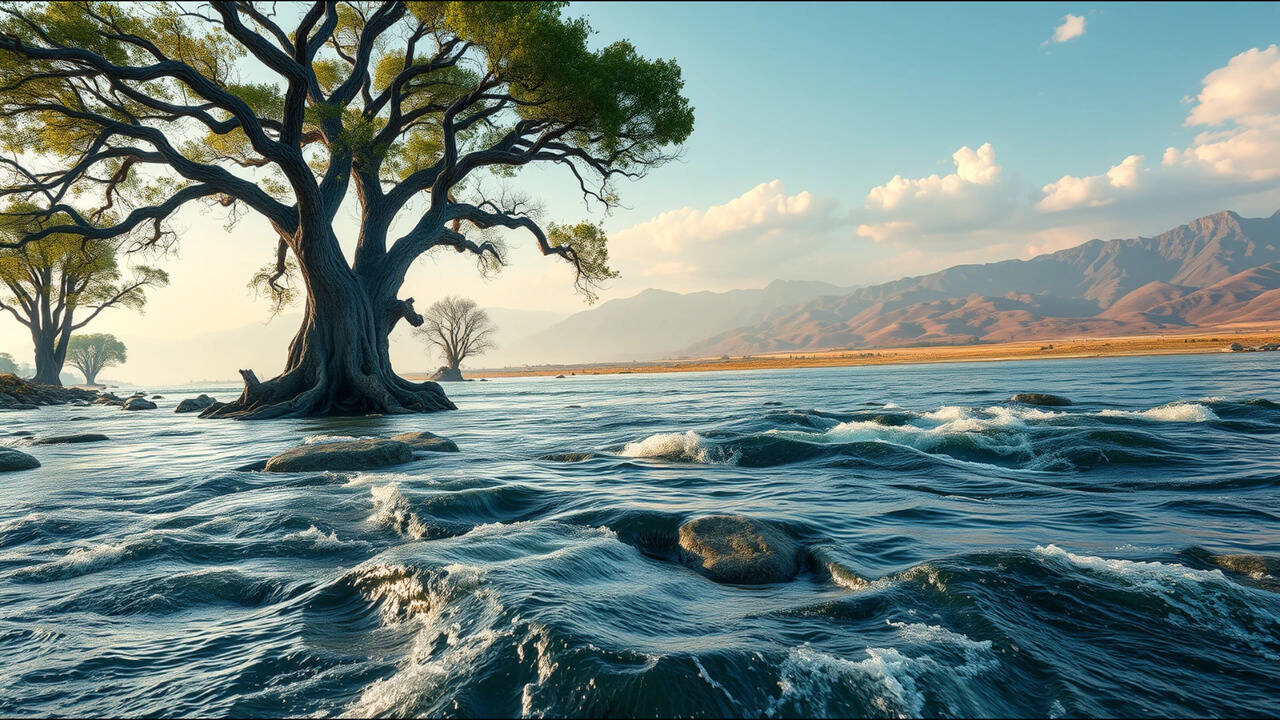
Quote of the by Greek philosopher Heraclitus on change. "No man ever steps in the same river twice, for it's not the same river and he's not the same man," Nothing remains fixed: not the world around us, not the people we meet, and not even our own thoughts, emotions, or identities. Metaphor of river Change is the only constant: in relationships, in society Practice mindfulness If everything changes, how can we still recognize anything as the same? Why do we still call it the same river? Quote of the day: Heraclitus was a Greek philosopher who lived around 500 BCE in the city of Ephesus. Unlike philosophers who searched for stability or permanence, Heraclitus believed that the universe is defined by continuous motion. He is often associated with the phrase panta rhei "everything flows" although those exact words do not appear in his surviving writings. His philosophy revolved around the idea that reality is like a river: always moving, always transforming. To him, fire symbolized this eternal process of change because fire is never static; it exists only by constantly consuming and transforming what it touches.His famous saying,is one of the most enduring observations in the history of philosophy. Though only a single sentence, it captures a profound truth about life: everything is in a constant state of change.The quote is not merely about rivers. It is about existence itself. Heraclitus invites us to recognize that permanence is an illusion and that change is the only true constant.The river in Heraclitus' quote is a powerful metaphor because a river appears to be the same from day to day.
We call it by the same name, we recognize its banks, and we think of it as a permanent feature of the landscape. Yet the water flowing through it is never the same. Every second, new water replaces the old. The river's depth changes with rainfall, its current shifts, sediment is carried downstream, fish migrate, plants grow along its banks, and erosion subtly reshapes its course. The river preserves its identity while constantly changing its substance.Human beings are much the same. We think of ourselves as the same person we were five or ten years ago because we retain our name, memories, and sense of identity. But in reality, we are constantly changing. Our bodies replace cells, our experiences alter our beliefs, our relationships reshape our personalities, and our successes and failures influence our outlook on life. Even if we return to the exact same place years later, we experience it differently because we ourselves are no longer the person who first stood there.Picture someone revisiting their childhood home after twenty years. The house may look nearly identical. The trees may still stand in the yard, and the familiar streets may evoke old memories. Yet the experience is entirely different because the visitor has accumulated decades of life—education, heartbreaks, achievements, disappointments, friendships, perhaps parenthood. The house has also changed in subtle ways. Paint has faded, neighbors have moved away, new families have arrived, and time has left its marks. The encounter is between two transformed realities: a changed place and a changed person.This insight explains why memories often feel different when revisited.
 The BriefWire