US-Iraq relations: Can Iran-allied militias be disarmed?
When Donald Trump meets Iraq's new PM today, they are likely to discuss disarming Iran's allies in Iraq. Some have already pledged to give up
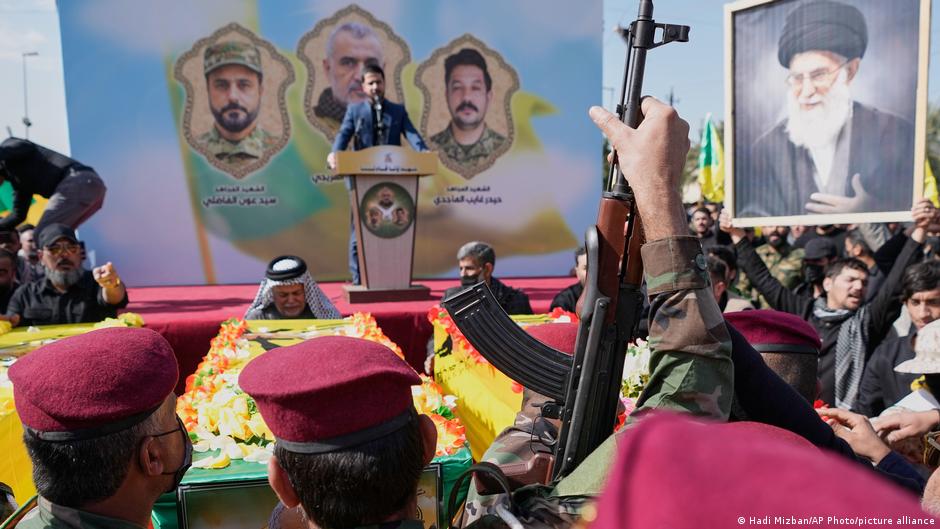
When Donald Trump meets Iraq's new PM today, they are likely to discuss disarming Iran's allies in Iraq. Some have already pledged to give up their guns. But is that likely? And will it influence the US-Iran war? When Iraq's new Prime Minister Ali al-Zaidi has talks in the White House on Tuesday, it is highly likely he'll discuss more than one uncomfortable topic. On the table is what is potentially the most uncomfortable subject of all, given the US-Iran war: the role that Iran-affiliated paramilitaries play in Iraq. Most of the paramilitaries, often grouped together as the Popular Mobilization Front, or PMF, were first formed in 2014 when religious leaders called upon able-bodied men to fight the extremist group known as the "Islamic State." They now number around 240,000 fighters and have an annual budget of about $3.5 billion (€3 billion). Some — but not all — PMF factions are considered part of Iran's so-called "Axis of Resistance," which also includes Hezbollah in Lebanon, the Houthis in Yemen and Hamas in Gaza. During the ongoing conflict between Iran and the US, certain PMF groups are thought to be behind attacks on US bases in Iraq, Kuwait and Jordan. Which is why the US wants to see them disarmed. US Secretary of State Marco Rubio addressed the issue while in the United Arab Emirates last month. "You can't have the end of hostilities and conflicts in the region as long as Iranian proxies are launching missiles and drones from Iraq and are participating in terrorism," Rubio told reporters. Pressuring Iraq, withholding oil revenues Over the past year, the US has increased pressure on the Iraqi government to tackle this issue, including by designating several more PMF factions "foreign terrorist organizations," imposing sanctions on businesses associated with the PMF, threatening to block Iraq's oil revenues via US banks, and by withholding foreign currency shipments.
The Iraqi government has responded by saying that, by the end of September, all arms should be brought under the control of the state and that any groups that don't agree will be prosecuted. In late May, influential cleric Muqtada al-Sadr ordered his armed faction, Saraya al-Salam (in English, peace brigades), to hand over weapons to the state. Around a week later, the Iraqi government said it had received information on personnel, weapons and equipment. In early June, two other Iraqi paramilitaries — Asaib Ahl al-Haq (in English, league of the righteous) and Kataib Imam Ali (the Imam Ali brigades) — also agreed to end organizational ties to the PMF and to eventually transfer weapons and personnel to the state. Long term enemies: In 2019, during a Baghdad rally organized by Asaib Ahl al-Haq, one of the groups that has promised to disarm, protesters burned images of Donald Trump Image: Nasser Nasser/AP Photo/picture alliance But just as quickly as the announcements came, so did the doubts. Asaib Ahl al-Haq, or AAH, has been active since 2006 and was well known for attacking US troops occupying Iraq after their 2003 invasion of the country. Even after most American soldiers left the country, AAH retained a reputation for criminal activities, including theft, violence, kidnappings and murder. AAH and its proxies, which often go by another name, have also been accused of targeting US bases and US allies inside Iraq, during the current US-Iran war. This promise to disarm means "moving what you hold in your right hand to your left," sources close to the PMF told London-based, pan-Arab newspaper Asharq Al-Awsat. It made sense for the groups to give their weapons to the state because they virtually are the state, other commentators argued. Some described the move as "rebranding." From violence to politics Many PMF groups also have political representation and altogether their parties in the Iraqi parliament currently hold a majority.
 The BriefWire