Cheaper cars & whisky: India-UK trade effective from July 15 - How India will benefit
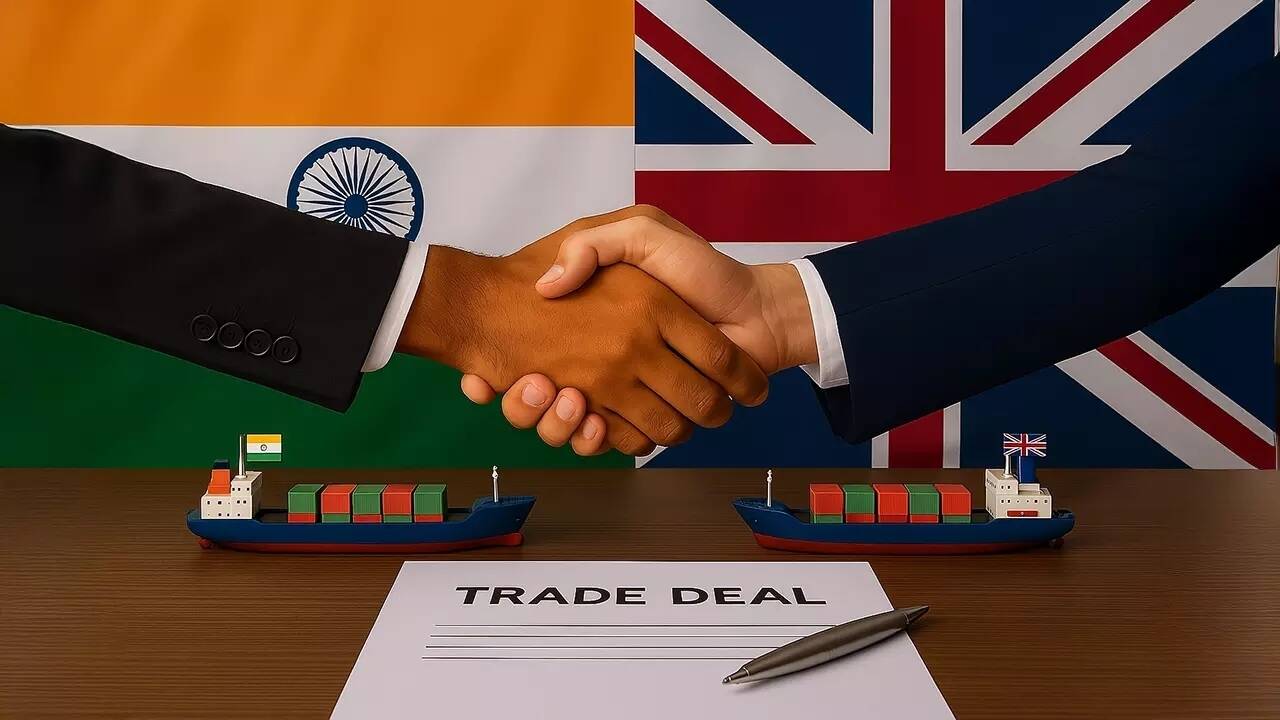
Considered one of India’s most significant trade agreements in recent years, CETA will provide duty-free market access for almost 99% of Indian exports. (AI image)
Considered one of India’s most significant trade agreements in recent years, CETA will provide duty-free market access for almost 99% of Indian exports. (AI image) How trade deal benefits India & UK Nine Trade Deals in Last Few Years Labour-intensive industries, including garments, textiles, footwear, carpets, processed food, cereals, vegetables, fruits, spices, fish, meat and processed food products, will receive duty-free access to the UK market. At present, these products attract import duties ranging from 4% to 16%. The agreement is also expected to benefit sectors such as automobiles, motorcycles and auto components, machinery, electronics, fabricated metal products, and products related to ceramics, glass, stone and cement. On the import side, lower tariffs on British products—including salmon, lamb, machinery, electronics, chocolates, soft drinks, cosmetics, cosmetic soaps, perfumes, shaving creams and nail polish—could result in lower prices for consumers in India. Under the agreement, India will gradually reduce the import tariff on silver, its largest import from the UK, to zero over a period of 10 years. India has excluded several products from tariff concessions under the agreement. These include fresh apples, walnuts, whey and modified whey, blue-veined cheese, specified categories of seeds, gold bars and smartphones. On the other hand, the UK's exclusion list covers meat items, egg-based products, semi-milled and fully milled rice, as well as solid-form cane and beet sugar among others. According to GTRI, UK's main gains are concentrated in sectors such as precious metals, aerospace, premium automobiles and alcoholic beverages. Among the biggest beneficiaries are high-purity silver bars. The agreement also provides significant benefits to Britain's aerospace sector. Sectoral impact Auto - cheaper Jaguars! Alcohol Scotch whisky gets cheaper Government procurement Intellectual property rights Double Contribution Convention Steel safeguard India-UK FTA: The India-UK Comprehensive Economic and Trade Agreement or CETA comes into effect from July 15, 2026. The landmark trade deal is set to deliver several benefits to Indian exporters and consumers in terms of greater access to UK markets and imported goods at cheaper costs respectively.With its implementation, the trade deal will become the sixth free trade agreement brought into force during the Narendra Modi government's tenure.
India has previously implemented similar agreements with Mauritius, the UAE, Australia, the European Free Trade Association (EFTA) and Oman.Considered one of India’s most significant trade agreements in recent years, CETA will provide duty-free market access for almost 99% of Indian exports.Trade between India and the UK increased by 8.62% to $25.12 billion in 2025-26, compared with $23.13 billion in 2024-25. During the same period, India's exports declined 7.6% to $13.44 billion, while imports from the UK rose 36.11% to $11.68 billion.India received foreign direct investment (FDI) worth $1 billion during 2025-26, up from $795 million in 2024-25.Agneshwar Sen, Trade Policy Leader, EY India says that as the India–UK FTA comes into effect, businesses on both sides stand to benefit from improved market access, lower trade costs and greater certainty across goods and services trade.“The opportunities are particularly significant for sectors such as textiles and apparel, leather and footwear, gems and jewellery, engineering goods, auto components, chemicals, agriculture and marine products, as well as IT, financial and professional services,” he says.Notably, the agreement marks one of India's first major trade agreements with a developed economy to enter into force in recent years, helping Indian businesses become more familiar with advanced regulatory standards, compliance requirements and trade facilitation processes that characterise developed markets.“However, the realisation of these benefits will depend on effective implementation, adherence to rules of origin requirements and the ability of businesses to align their supply chains and compliance frameworks. The agreement is also significant in a broader context, reflecting India's increasingly proactive trade strategy and its ambition to deepen participation in global value chains and strengthen economic partnerships with key markets,” he adds.For the first time under a free trade agreement, India has agreed to significantly lower import duties on fully built cars and trucks manufactured in the UK. The tariff on these vehicles will be reduced in phases from 110% to 10%.Concessional treatment for petrol and diesel vehicles will begin immediately.
 The BriefWire