'Threats Come From Israel, Not Tehran': Oman Calls War On Iran A 'Disaster'
'Threats Come From Israel, Not Tehran': Oman Calls War On Iran A 'Disaster' Published By, Last Updated: July 14, 2026, 20:10 IST The Omani minister
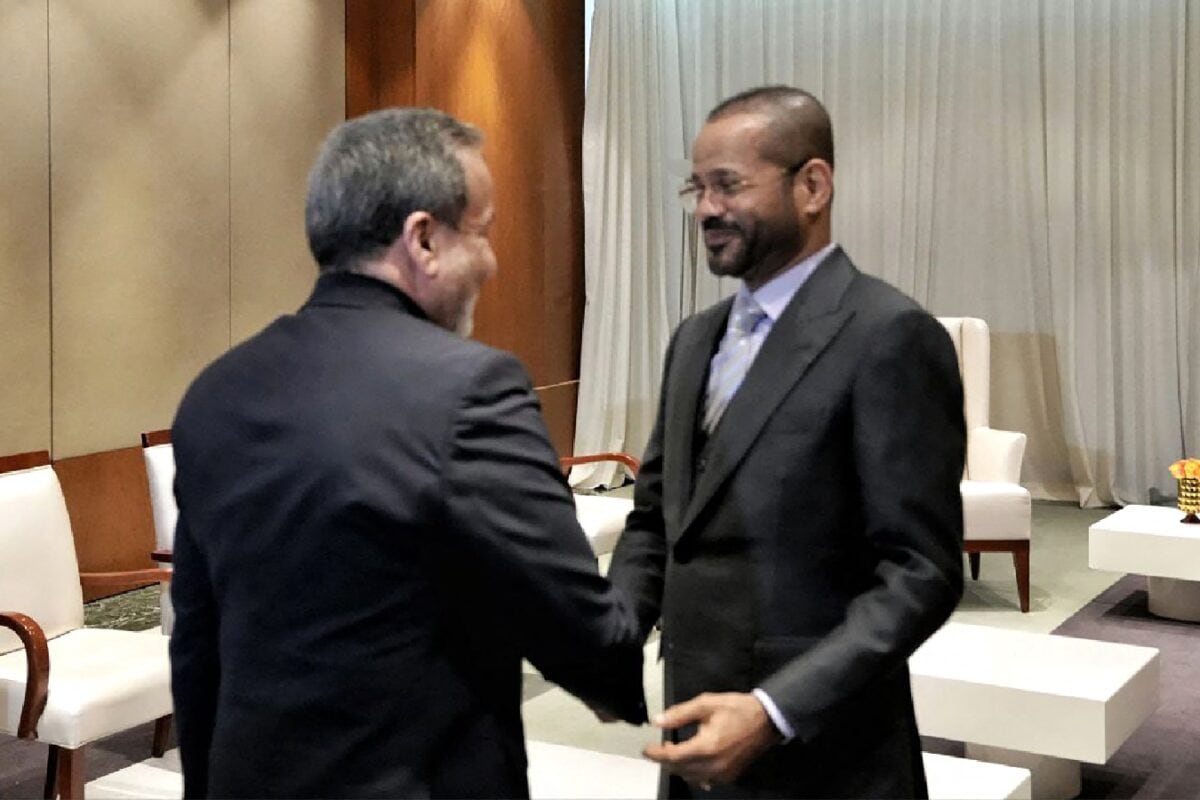
'Threats Come From Israel, Not Tehran': Oman Calls War On Iran A 'Disaster' Published By, Last Updated: July 14, 2026, 20:10 IST The Omani minister argued that West Asia's gravest security threats stem not from Iran, but from Israel. Iranian Foreign Minister Abbas Araghchi (L) meeting with Oman’s Foreign Minister Badr bin Hamad al-Busaidi in Geneva. (IMAGE: AFP) Oman’s Foreign Minister Badr bin Hamad Al Busaidi this week described the war on Iran as “a disaster", arguing that the conflict failed to achieve its stated objectives and that the biggest threats to Gulf security now come from Israel, not Tehran. Writing in an opinion piece for the French newspaper Le Monde, Al Busaidi said the war “achieved none of its officially assigned objectives" and argued that it lacked a United Nations mandate. He said the conflict should prompt a broader reassessment of West Asia’s security architecture, adding that nearly half a century of regional strategy had failed.
“Nevertheless, if it finally buries the myth of containment in the Gulf, then there is reason for hope: the emergence of a fairer, more realistic and more effective system, thus correcting nearly half a century of strategic errors," he wrote. The Omani minister also argued that the region’s gravest security threats stem not from Iran, but from Israel. “Decisions made outside the Gulf, above all in Tel Aviv, have become a major source of instability," he wrote. Al Busaidi called for a new regional security framework that includes all Gulf states, as well as Iran and Iraq. He also underlined Oman’s responsibility as one of the countries bordering the Strait of Hormuz to help safeguard freedom of navigation through the strategic waterway. Oman has repeatedly offered to mediate between the United States and Iran, maintaining open channels with both sides even as tensions in the region have escalated.
The Strait of Hormuz, through which around one-fifth of the world’s oil passed before the conflict erupted in February, remains at the centre of the US-Iran standoff. His remarks come as security concerns in the Gulf continue to mount. On Tuesday, the UK Maritime Trade Operations (UKMTO) agency said a missile struck a tanker near the Omani fishing port of Limah, while crisis response firm MTI Network reported that a Norwegian tanker operated by Stolt Tankers had also come under attack off Oman’s coast. News18 Newsletter Handpicked stories, in your inbox A newsletter with the best of our journalism submit Key Questions Answered How could Israel's actions destabilize the Middle East further? Israel's actions could destabilize the Middle East by potentially escalating proxy conflicts, such as Hezbollah expanding rocket attacks against Israel. About the Author Shankhyaneel Sarkar Shankhyaneel Sarkar is a senior subeditor at News18.
 The BriefWire