Nigeria offers clues to new US Africa strategy
The withdrawal of US troops from Nigeria after the killing of an Islamic State leader may be less about leaving Africa than redefining how Washington
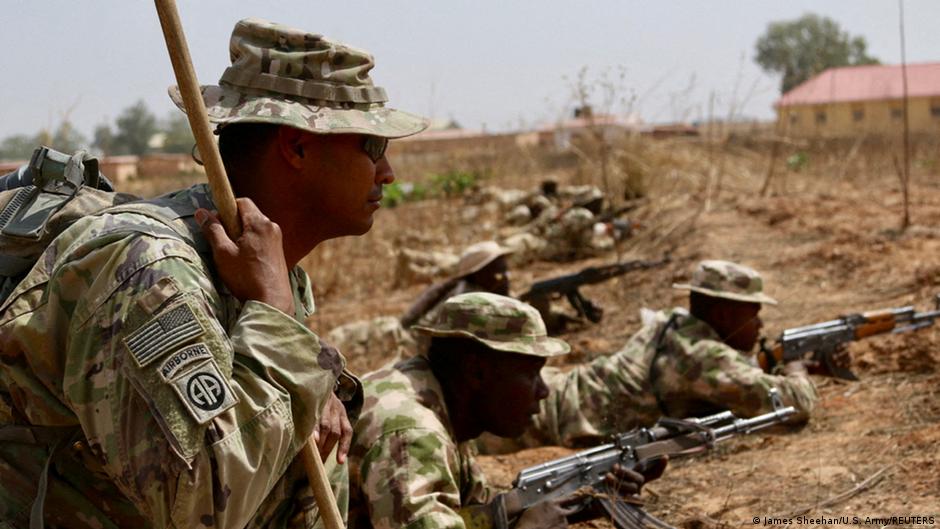
The withdrawal of US troops from Nigeria after the killing of an Islamic State leader may be less about leaving Africa than redefining how Washington fights terrorism on the continent. The United States earlier this month withdrew most of its troops deployed for a joint counterterrorism operation in northeastern Nigeria. The area has long been a hotbed for the Boko Haram Islamist militant group and its splinter factions — particularly the Islamic State West African Province (ISWAP), one of Islamic State's most active affiliates globally. US Africa Command's General Dagvin Anderson described the joint operation as a model for future security cooperation on the continent. "We have withdrawn much of our forces that were just there for that operation," Anderson told reporters at a conference of African defense chiefs in Luanda, Angola. "But [we] are continuing the partnership that Nigeria has asked for to help continue with the intelligence sharing and the understanding that's necessary to be able to prosecute these difficult tasks," he said. US troops were deployed alongside Nigerian forces (pictured) in an operation against IS fighters Image: Reuters In February, the United States sent a small contingent to support local forces with intelligence, logistics, and training. The deployment followed tensions between Washington and Abuja after US President Donald Trump accused Nigeria of failing to stop killings against Christians and threatened military intervention.
However, the partnership soon evolved beyond advisory roles. The joint operation, which led to the killing of Abu Bilal al-Minuki, a senior Islamic State (IS) leader, also eliminated 175 fighters while destroying checkpoints, weapon caches, logistics hubs, military equipment, and financing networks used by the group. A new model or a one-off operation? Now, the drawdown comes amid significant changes in the US security posture and Washington's broader push for burden sharing among its partners and allies. In Africa, the security landscape is changing more rapidly than its armed forces are resourced to handle as jihadist armed groups spread across the Sahel, Somalia, and northeastern Nigeria. With the joint mission in Nigeria, the United States appears, according to analysts, to be putting its strategy into practice by providing specialized training, surveillance capabilities, and support for African-led operations rather than maintaining large troop deployments — even as Western forces are being pruned back amid increasing Russian and Chinese influence on the continent. James Barnett, a research fellow with the Hudson Institute who specializes in conflict and militancy in Nigeria and Africa, said the overall US approach to counterterrorism in Africa is not changing much. "The US military always talks about assisting capable African partners who lead, which is the general philosophy, but the Trump administration has shown it is willing if not often eager to flex US military muscle with airstrikes or raids, particularly against the Islamic State's networks," Barnett said.
 The BriefWire