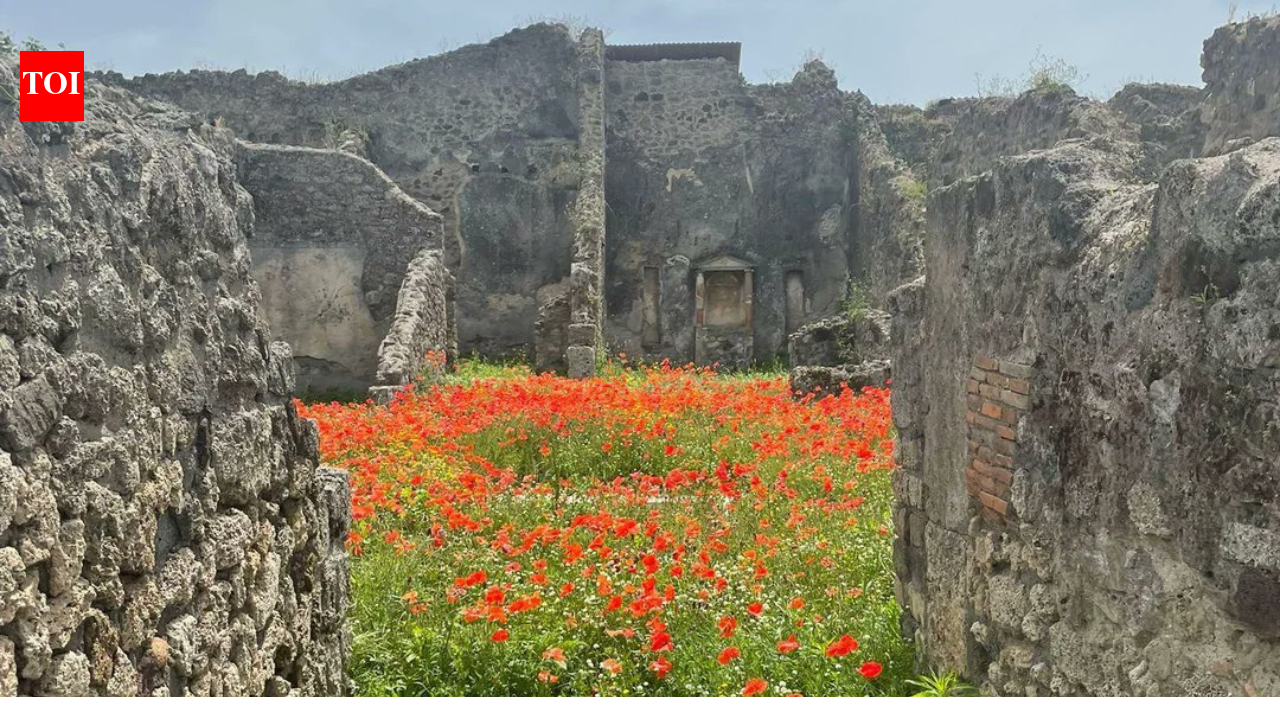
2,000 years after Pompeii vanished beneath volcanic ash in one of history's deadliest volcanic disasters, the ancient Roman street is blooming with flowers, offering a symbol of nature's renewal
An ancient Roman street blooms once again Why flowers grow among the ruins The story behind Pompeii's destruction Streets that reveal everyday Roman life Nature
An ancient Roman street blooms once again Why flowers grow among the ruins The story behind Pompeii's destruction Streets that reveal everyday Roman life Nature and archaeology now exist side by side Pompeii is also restoring its ancient gardens Why Pompeii continues to fascinate scientists Nearly 2,000 years after Mount Vesuvius buried the thriving Roman city of Pompeii beneath volcanic ash, one of its ancient streets has become an unlikely symbol of renewal. Every spring, vibrant red poppies and other wildflowers bloom between the worn basalt paving stones that once carried Roman chariots and pedestrians, creating a striking contrast between the city's tragic past and the resilience of nature. The breathtaking scene, recently shared widely on social media, has captivated history enthusiasts and travellers alike, offering a reminder that even places marked by catastrophe can be transformed by the quiet rhythms of the natural world.The flower-covered street is part of the Archaeological Park of Pompeii in southern Italy, where much of the ancient city remains remarkably preserved. The road itself dates back nearly 2,000 years to the Roman Empire and was in daily use until the catastrophic eruption of Mount Vesuvius in AD 79 buried Pompeii under metres of volcanic ash and pumice.Today, bright red poppies and seasonal wildflowers emerge naturally between the cobblestones, creating a vivid display that attracts visitors from around the world.
While the street is ancient, the flowers are not. They bloom each spring as part of the region's natural Mediterranean vegetation.The flowering landscape is largely a result of Pompeii's climate and volcanic soil. The ash deposited by Mount Vesuvius over centuries has produced mineral-rich ground that supports a wide variety of plants, including the iconic red poppies frequently seen across the archaeological site.Because Pompeii is an open-air archaeological park covering around 66 hectares, rainfall and abundant sunlight allow native vegetation to flourish during spring. The flowers are not planted for decorative purposes but grow naturally, adding seasonal colour to the ancient ruins.Pompeii was a prosperous Roman city before the eruption of Mount Vesuvius devastated the region in AD 79. The volcano unleashed towering columns of ash, volcanic gases and fast-moving pyroclastic flows that buried the city within hours, preserving homes, streets, temples, frescoes and everyday objects beneath layers of volcanic material.The disaster claimed thousands of lives and effectively froze Pompeii in time. When excavations began in the 18th century, archaeologists uncovered an extraordinary snapshot of Roman life, making Pompeii one of the world's most important archaeological sites.The ancient streets of Pompeii were carefully engineered to support heavy traffic while helping residents navigate the city.
 The BriefWire