Unwilling Participants: Why Saudi Arabia, Oman And Qatar Can't Afford To Pick Sides In US-Iran War
Unwilling Participants: Why Saudi Arabia, Oman And Qatar Can't Afford To Pick Sides In US-Iran War Published By, Last Updated: July 14, 2026, 16:31 IST
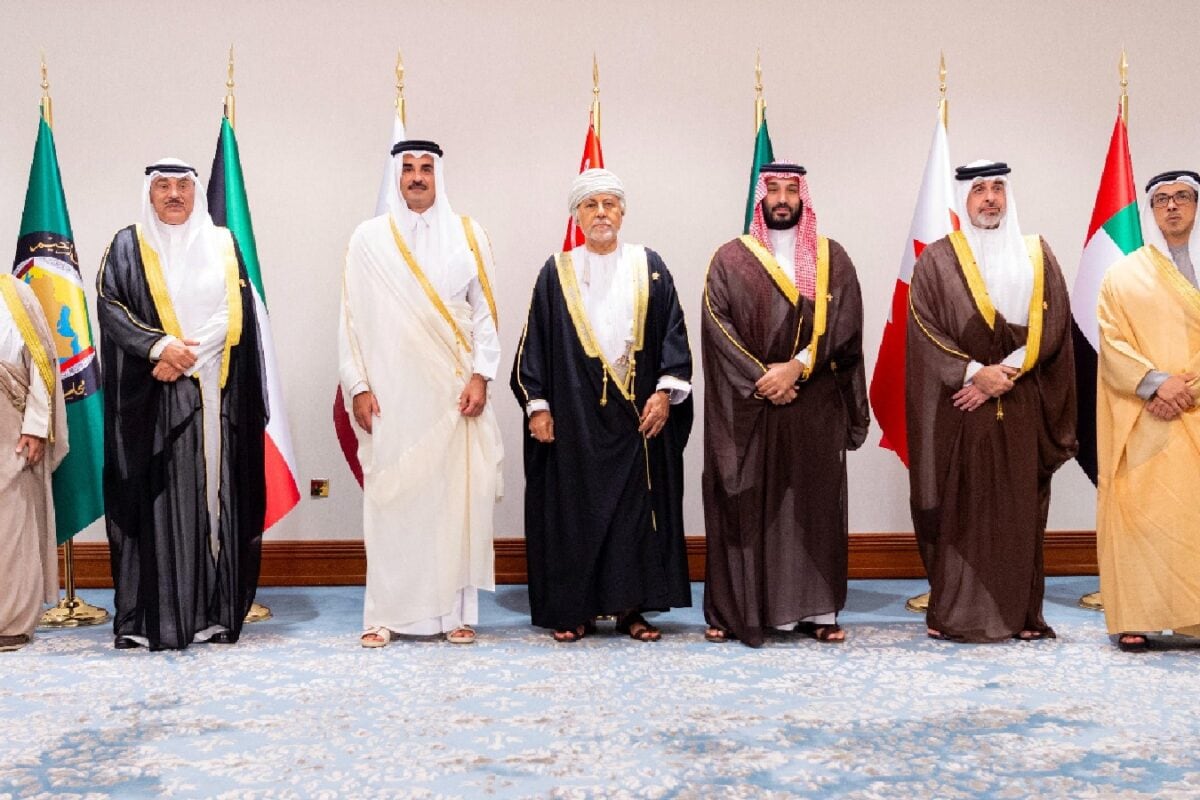
Unwilling Participants: Why Saudi Arabia, Oman And Qatar Can't Afford To Pick Sides In US-Iran War Published By, Last Updated: July 14, 2026, 16:31 IST As the US-Iran conflict escalates, Gulf states hosting American troops are trying to avoid being dragged into a war that could hit their economies. Rapid Read Leaders of Gulf Cooperation Council (GCC) member states pose for a group photograph during a summit. Gulf nations are seeking to avoid being drawn into the escalating US-Iran conflict while pursuing diplomatic efforts to prevent a wider regional war. (IMAGE: Reuters/File) Oman, Saudi Arabia, Qatar, Kuwait, Jordan and the United Arab Emirates find themselves facing a difficult test as tensions between the United States and Iran escalate once again. These countries rely on deep defence and security ties with Washington and host American military bases.
At the same time, they are keen to avoid being drawn into a direct confrontation with Iran that could turn their territory into a battlefield and disrupt their economies. According to Haaretz, which spoke to Arab officials, Gulf states are pinning their hopes on “some form of agreement between Washington and Tehran, even if it is only partial or temporary", believing diplomacy remains the best way to prevent a wider regional conflict. Their strategy has been to balance relations with both sides and encourage mediation. However, officials acknowledge that if the conflict continues to escalate without a diplomatic breakthrough, their room for manoeuvre will shrink significantly. One senior Arab official told the Israeli newspaper that Oman could play a key mediating role. But the effort’s success, the official said, would depend on whether Iran’s Revolutionary Guards are willing to “show flexibility" and whether Washington is prepared to revive negotiations.
“The Gulf states’ strategy currently rests on three pillars: protecting their own security, preventing their territory from becoming a battlefield and continuing to invest in a diplomatic solution. But the success of that strategy depends primarily on the decisions made in Washington and Tehran," the official told Haaretz. Although Iran has said its strikes target only US military facilities, Gulf states fear the broader consequences. Missile debris, disruptions to civilian infrastructure and risks to transport networks underscore how easily neighbouring countries can become caught in the conflict. For regional financial and energy hubs such as Doha, Dubai, Abu Dhabi and Riyadh, any prolonged escalation raises the prospect of greater security risks, economic disruption and pressure to abandon their balancing act. News18 Newsletter Handpicked stories, in your inbox A newsletter with the best of our journalism submit About the Author Shankhyaneel Sarkar Shankhyaneel Sarkar is a senior subeditor at News18.
 The BriefWire