Story of a Kolkata mosque located on runway edge at Dum Dum airport
Ever since the British built the Dum Dum aerodrome in Kolkata in 1924, a mosque abruptly standing right within the premises has remained a point
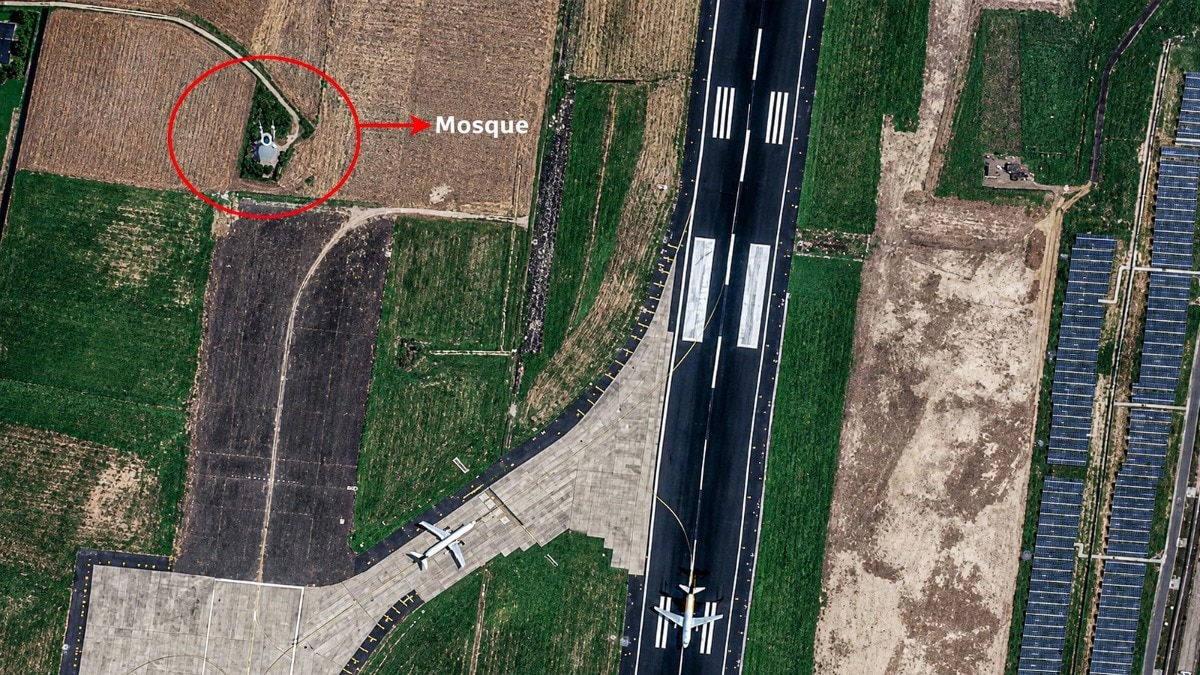
Ever since the British built the Dum Dum aerodrome in Kolkata in 1924, a mosque abruptly standing right within the premises has remained a point of contention. Over the decades, the aerodrome evolved into what is now the Netaji Subhash Chandra Bose International Airport, chief ministers came and went, but the Bankra mosque stayed put despite safety concerns raised by aviation authorities. Now, with the BJP in power at the Centre and at the state, efforts to relocate the mosque have gathered fresh momentum. Read Full Story Over the past week, entry to the 136-year-old Bankra mosque, also known as the Gauripur Jama Masjid, has been stopped by the Suvendu Adhikari-led government due to security concerns. The Bureau of Civil Aviation Security (BCAS) has flagged the issue of allowing devotees access to a high-sensitive zone based only on Aadhaar cards. On normal days, around 50 people are allowed to offer namaz at the mosque after being frisked by the CISF at the airport entry gate. They are required to show only Aadhaar cards. Biometric checks and background verification mandatory for airport entry were not carried out. The devotees are then taken to the mosque by bus. During Friday prayers, the count swells to well above 80. The mosque now stands just 165 metres north of the secondary runway (Google Maps) CHALLENGES POSED BY MOSQUE But, more than security, the bizarre location of the mosque poses an obstacle to the airport's secondary runway. Once surrounded by open land, the mosque now stands just 165 metres north of the secondary runway.
As per rules, any building has to be at a minimum distance of 240 metres from a runway. Moreover, an adjacent pond led to additional complications for aircraft movement. This prevented full utilisation of the second runway, whose operational length became limited to 2,832 metres. In comparison, the primary runway is 3,633 metres. As a stop-gap measure, the issue was circumvented by shifting the runway's touchdown point southward by 88 metres. However, this arrangement was adequate for only narrow-body aircraft like Airbus A320 and Boeing 737. Wide-body aircraft had to rely on the main runway. This proved to be a challenge during foggy winter days. While the primary runway is equipped with CAT III-B instrument landing system, allowing flight operations during dense fog, it was not possible to install the equipment on the second runway due to the mosque's presence. This put additional pressure on the primary runway of the airport, the sixth busiest in the country. The Netaji Subhas Chandra Bose International Airport handles 60,000-70,000 passengers daily. Footfall increases to over 3 lakh during Durga Puja. HOW DID THE MOSQUE END UP INSIDE AIRPORT? But, how did the mosque get there in the first place? The mosque was not built inside the airport premises. In fact, it predates the airport, believed to have been built sometime in the 1890s. At that time, a village existed where the airport currently stands. The mosque was a part of the village. In 1924, the British established the Dum Dum aerodrome.
 The BriefWire