Bidadi Controversy Explained: Why Bengaluru Farmers Are Fighting India's First 'AI City' With Brooms
Bidadi Controversy Explained: Why Bengaluru Farmers Are Fighting India's First 'AI City' With Brooms Published By, Last Updated: July 14, 2026, 12:03 IST Women farmers
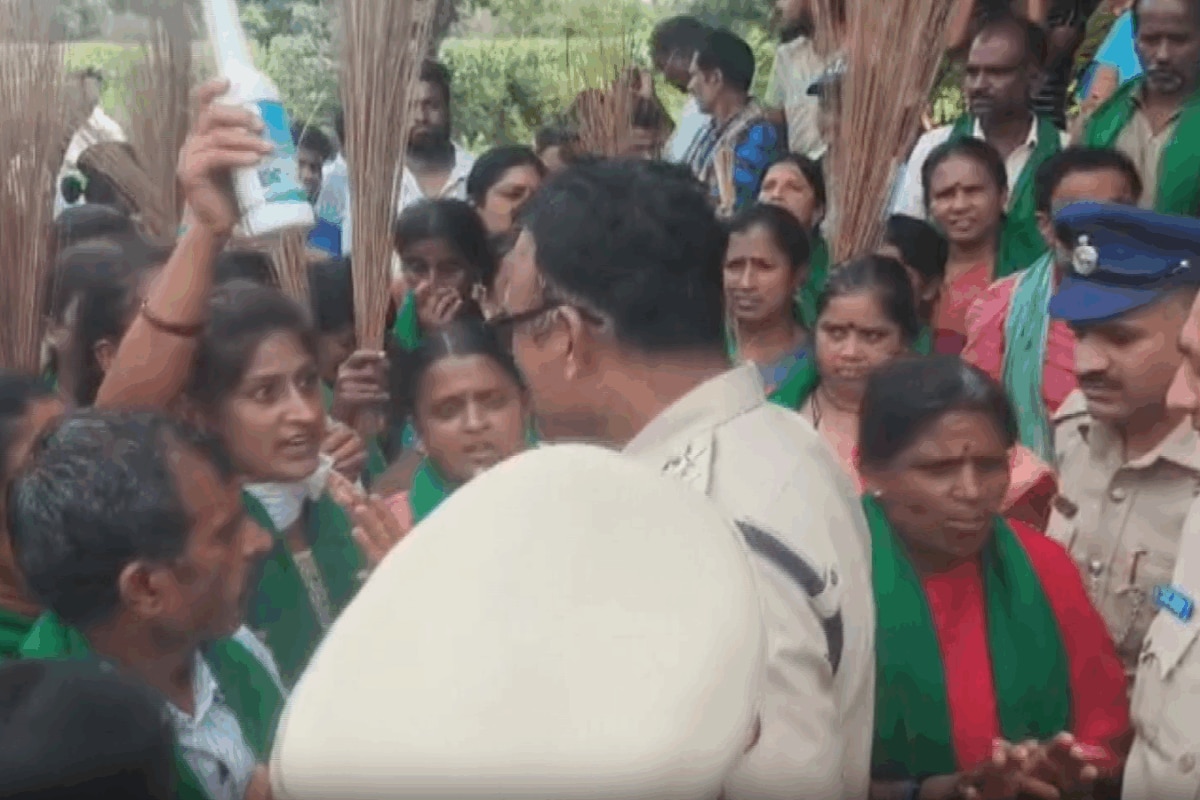
Bidadi Controversy Explained: Why Bengaluru Farmers Are Fighting India's First 'AI City' With Brooms Published By, Last Updated: July 14, 2026, 12:03 IST Women farmers in Bidadi drove off survey officials with broomsticks, the latest flashpoint in a 500-day fight against Karnataka's Rs 18,133-crore 'AI City' Rapid Read The Greater Bengaluru Integrated Township, better known as Bidadi Township, is billed as India's first AI-powered city. (PTI video screengrab) Shocking scenes unfolded in Bidadi town of Karnataka’s Bengaluru South district (formerly Ramanagara district) on Monday when officials who had arrived to survey land for the contentious Greater Bengaluru Integrated Township (GBIT) were chased away by women farmers. The officials had arrived in Mandalahalli village to carry out a Joint Measurement Survey (JMC) for the Bidadi township project when women protesters, several wearing the green shawls associated with Karnataka’s farmer movement, surrounded their vehicles and used broomsticks to drive them off. The rear glass of at least one car was damaged, as per reports. According to Deccan Herlad, a farmer leader demanded written authorisation from the Deputy Commissioner before any survey could proceed. As per local reports, police present at the spot struggled to control the crowd, and the survey team eventually withdrew. Ramanagara city SP Srinivas Gowda confirmed an FIR was registered, saying a Deputy SP and a sub-inspector were injured in the confrontation. The Karnataka Prantha Raitha Sangha, a farmers’ organisation, separately alleged that police assaulted a farmer, Krishnappa, during the standoff. Union Minister and former Karnataka CM HD Kumaraswamy warned police against “anti-farmer" conduct and urged protesters to stay peaceful. What is the Bidadi Township (GBIT)? The Greater Bengaluru Integrated Township, better known as Bidadi Township, is a roughly 9,600-acre project spread across nine revenue and 16 non-revenue villages near Bidadi, about 40km from Bengaluru. The state government calls it India’s first AI-powered city, built on a ‘work-live-play’ model combining housing, industry and green space, with over 2,000 acres reserved for AI and allied industries.
Officials say projected investments exceed Rs 20,000 crore, promising lakhs of jobs. The total project cost, including land acquisition, is pegged at Rs 18,133 crore, to be funded largely through borrowing — a Rs 9,011-crore loan from HUDCO, Rs 3,000 crore from the Bengaluru Development Authority, and Rs 3,500 crore raised by mortgaging civic amenity sites, according to The News Minute. The Greater Bengaluru Development Authority (GBDA), created specifically for this project, is executing it. Bidadi Township Timeline: From 2006 To Now The Bidadi township dream isn’t new. It was one of five satellite townships proposed in 2006 by the then JD(S)-BJP coalition government under Chief Minister HD Kumaraswamy, intended to decongest Bengaluru. Real estate major DLF later backed out of the Bidadi project citing poor market sentiment during the recession, and a sister project at Nandagudi was shelved after farmer protests. During the subsequent BJP government, around 1,000 acres were acquired and allotted through the Karnataka Industrial Areas Development Board. The project was then put on hold under the first Siddaramaiah government pending Parliament’s 2013 land acquisition law, before being revived under the current Congress government via the newly created GBDA. Whose Land Is It And What Is The Compensation? The News Minute reports that the first phase of the project covers 518.45 acres across three villages — Kempayyanapalya (384.22 acres), Mandalahalli (71.13 acres) and Vaderahalli (63.10 acres), affecting around 754 farmers. The Urban Development Department has reportedly fixed minimum compensation at Rs 2.07-2.14 crore per acre, with the government also offering 9,693 sq ft of developed land per acre as an alternative. More than 200 farmers have applied for compensation so far, but many are refusing the offer outright. Farmer groups have threatened a large-scale agitation modelled on farmer movements in Punjab and Uttar Pradesh if the acquisition isn’t withdrawn.
 The BriefWire