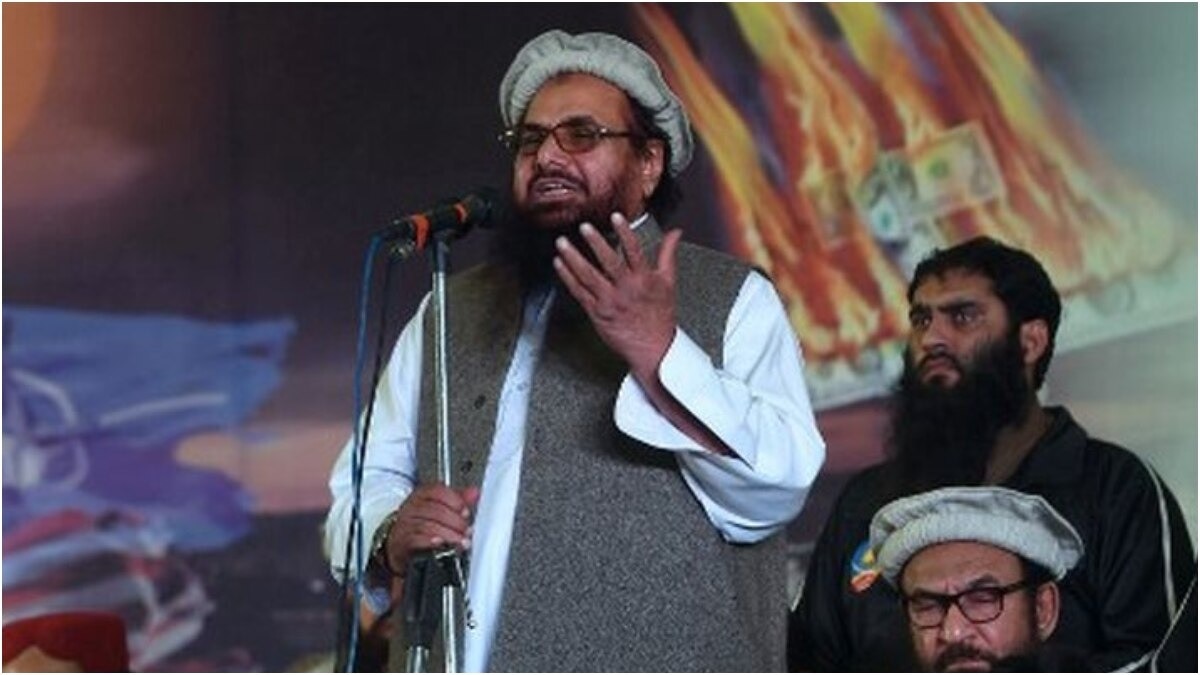
Non-bailable warrant for Hafiz Saeed over Pahalgam attack, trial in absentia looms
In a major development in the 2025 Pahalgam terror attack case, a Jammu court has issued a non-bailable warrant against Hafiz Saeed, the chief of
In a major development in the 2025 Pahalgam terror attack case, a Jammu court has issued a non-bailable warrant against Hafiz Saeed, the chief of Pakistan-based terrorist group Lashkar-e-Taiba (LeT), paving the way for a trial in absentia. The order comes after the Investigation Agency (NIA) filed a supplementary chargesheet on July 6 naming Saeed as an accused and alleging that he was the mastermind behind the April 22, 2025 terror attack, in which 26 people, mostly tourists, were killed. Read Full Story Seeking the warrant, the anti-terror agency told the court: "(The) Accused is deliberately evading his arrest and NIA prays for issuance of an open dated non-bailable warrant against him to initiate further proceedings in the matter and to take legal action against him at any further investigation." In its application, the NIA argued that Saeed is currently in Pakistan and that it was not possible to secure his presence before an Indian court.
The agency told the court that all legal avenues to extradite him from Pakistan had "virtually been exhausted" and that the judicial process should therefore continue without his physical presence. According to the NIA, the Pahalgam attack was planned in Pakistan and Saeed played a central role in orchestrating the conspiracy. The agency has also linked him to several previous terrorist attacks against India. Under the Bharatiya Nagarik Suraksha Sanhita (BNSS), courts can conduct a trial in absentia if an accused is outside India, deliberately avoids appearing before the court and sufficient evidence exists to prosecute them for serious offences.
Before such a trial begins, the court is required to issue summons and warrants. If the accused still fails to appear, they can be declared a proclaimed offender, after which proceedings can continue in their absence. The NIA's first chargesheet named three Pakistani terrorists—Suleman, Jibran and Hamza Afghani—as accused, along with Pakistan-based LeT operative Sajid Saifullah Jatt and Pahalgam residents Bashir Hai Ahmed and Parvez Ahmed. The investigation into the Pahalgam attack remains ongoing, with the NIA continuing to probe the wider cross-border conspiracy behind one of the deadliest terror attacks in Jammu and Kashmir in recent years.
Ends
 The BriefWire