Iran at World Cup 2026: The most dignified team at the most unfair tournament in FIFA history
There is a particular kind of dignity that only becomes visible under pressure. Not the dignity of winners, which is easy to maintain when things
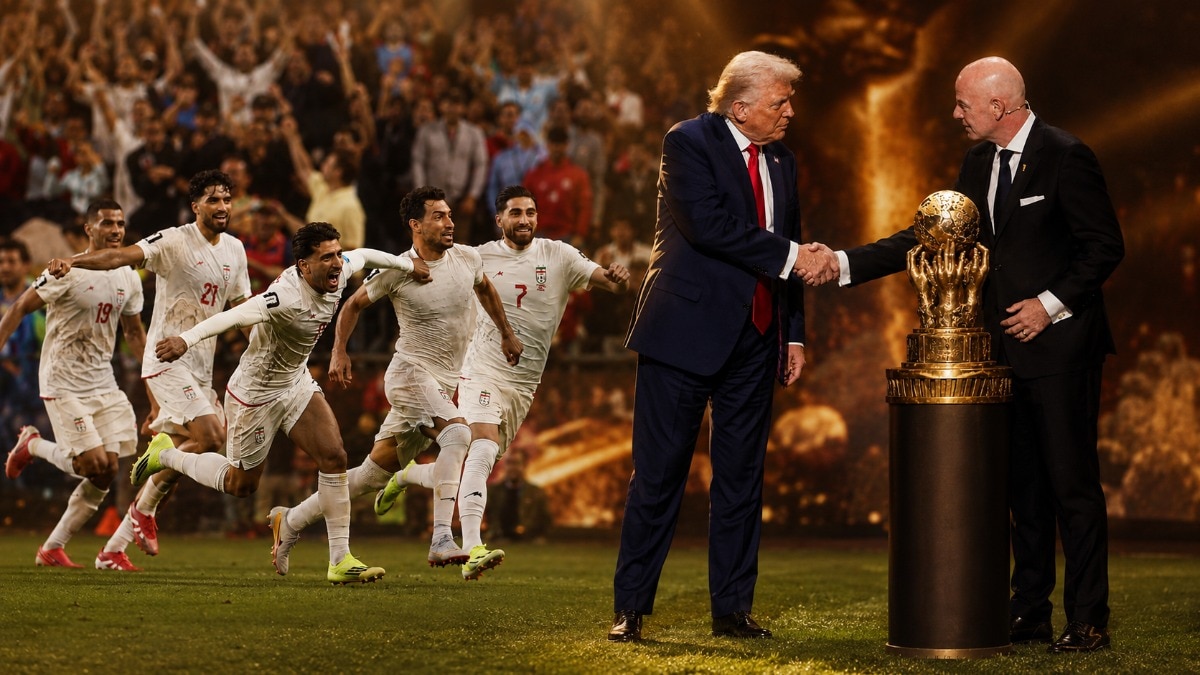
There is a particular kind of dignity that only becomes visible under pressure. Not the dignity of winners, which is easy to maintain when things are going your way, but the dignity of people who have every reason to lose their composure and choose, repeatedly and deliberately, not to. That is the dignity Iran's national football team carried into, through and out of the 2026 FIFA World Cup. And it deserves to be named clearly, because the institutions responsible for this tournament have shown very little interest in doing so. Read Full Story What it actually took to play Iran arrived at a World Cup hosted by a country that had been at war with theirs since February 28th, when the United States launched Operation Epic Fury against Iran. FIFA President Gianni Infantino coordinated with Mexican President Claudia Sheinbaum to designate Mexico as Iran's base camp, a decision that forced players to commute massive distances for every single match. United States authorities required the Iranian delegation to enter the country within 24 hours of each match and leave the same day. Those restrictions were eased only slightly for their final game in Seattle, where they were permitted to arrive two days before kick-off. Despite a nominal U.S. agreement to issue visas, not all members of the Iranian delegation received clearance. A portion of the technical staff and support personnel were denied entry, a decision the Iranian Football Federation condemned as "political." Team captain Mehdi Taremi pointed this out publicly, noting that logistics staff were absent and that Iranian journalists had been unable to attend matches or press conferences. The team originally planned to train in Phoenix but relocated to Tijuana when those plans collapsed. FIFA President Infantino visited the team's dressing room after their first game against New Zealand and told them "it's just the beginning." Taremi recalled this drily at a subsequent press conference: "But the group stage finishes tomorrow." The picture that emerges is of a professional football squad playing at the highest level of international competition while operating without proper logistics support, without their media, without their fans, and without the basic recovery conditions that every other team at this tournament took for granted. The United States government, for its part, argued that it had done a great deal to accommodate a football team representing a country it was simultaneously at war with. That framing, in itself, tells you something about the standards being applied. The VAR and the agony of near-misses Iran's campaign in Group G produced three draws against Belgium, New Zealand and Egypt, leaving them unbeaten but eliminated when the results of other matches did not fall their way.
 The BriefWire