'Ceasefire Over, Full Combat Operations Next': Warfare Expert Warns Of New US-Iran Showdown
'Ceasefire Over, Full Combat Operations Next': Warfare Expert Warns Of New US-Iran Showdown Published By, Last Updated: July 13, 2026, 22:36 IST John Spencer, Executive
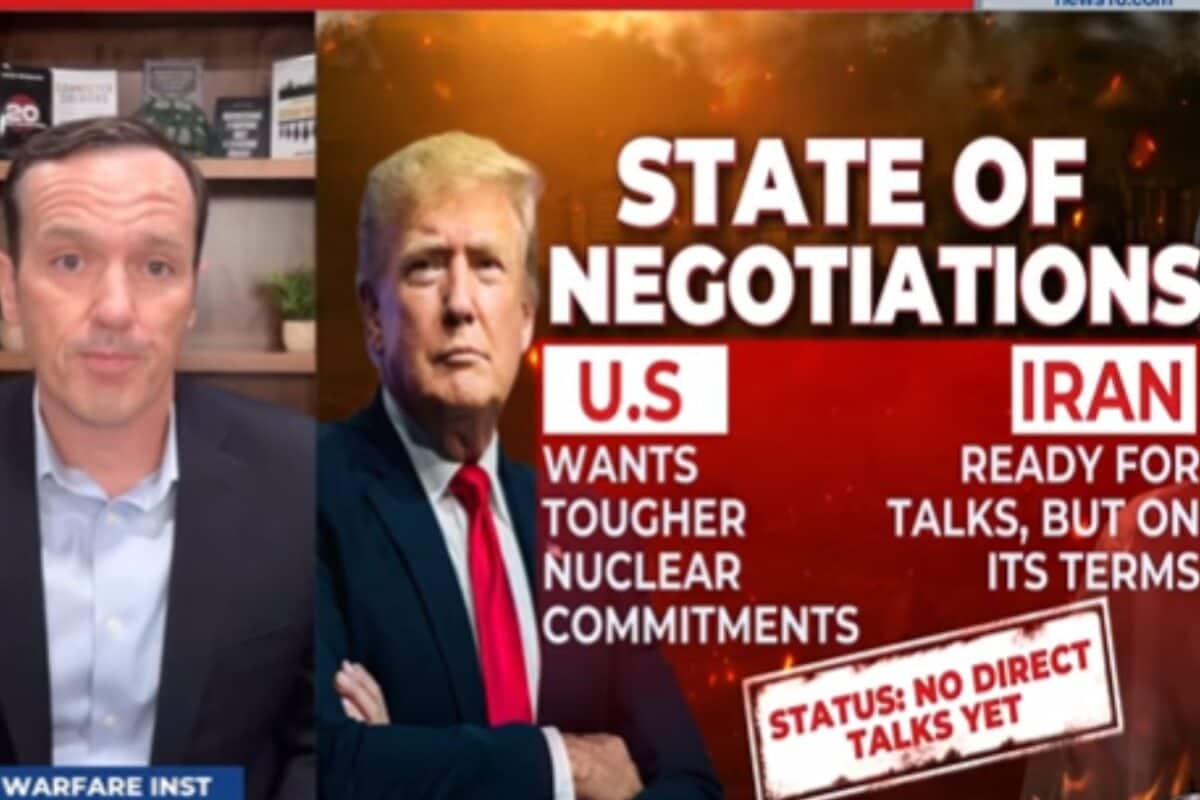
'Ceasefire Over, Full Combat Operations Next': Warfare Expert Warns Of New US-Iran Showdown Published By, Last Updated: July 13, 2026, 22:36 IST John Spencer, Executive Director of the Urban Warfare Institute, said the pause in fighting had not altered the fundamental objectives of Washington's campaign against Iran. Spencer blamed Tehran for the collapse of the ceasefire, pointing to attacks on commercial shipping and subsequent strikes targeting US military installations in the Gulf. The ceasefire between the United States and Iran has effectively ended, and full-scale combat operations are likely to resume, according to John Spencer, Executive Director of the Urban Warfare Institute, who accused Tehran of misreading its strategic position and escalating tensions through attacks on commercial shipping and US interests. Speaking amid growing hostilities in the Gulf region, Spencer said the pause in fighting had not altered the fundamental objectives of Washington’s campaign against Iran. “This pause definitely did not help Iran reconstitute its nuclear program. Ceasefire is over and full combat operations will start again," Spencer said.
He argued that the Iranian leadership was overestimating its leverage in the conflict. “The Iranian regime is miscalculating its position of strength," he added. #WestAsiaWar | This pause definitely did not help Iran reconstitute its nuclear program. Ceasefire is over and full combat operations will start again. Iranian regime is miscalculating their position of strength: @SpencerGuard, Executive director, Urban warfare Institute… pic.twitter.com/IOyTvm0EQ3— News18 (@CNNnews18) July 13, 2026 Earlier this month, US President Donald Trump announced that the memorandum of understanding (MoU) with Iran had effectively collapsed, signalling the end of the brief diplomatic breakthrough between the two countries. Since then, tensions have escalated rapidly, with Washington and Tehran exchanging military strikes over the past week amid growing hostilities in the Gulf region. ‘Iran Started It’ Spencer blamed Tehran for the collapse of the ceasefire, pointing to attacks on commercial shipping and subsequent strikes targeting US military installations in the Gulf. “Iran started attacking commercial shipping and the US responded to that. Iran attacking US bases in the Gulf isn’t justified.
It is not an escalation, it is an end of the ceasefire," he said. The remarks come as tensions continue to rise around the Strait of Hormuz, a critical maritime route that handles a significant share of global oil shipments. ‘Not A Regime Change War’ Spencer maintained that the US objective was not to overthrow the Iranian government but to alter its behaviour, particularly with regard to Tehran’s nuclear ambitions. “The endgame is what the goals were set. It is not a regime-change war for the US; it is a change in the behaviour of the Iranian regime. You can’t have nuclear weapons," he said. US Has Resources For Prolonged Operations Addressing concerns about the sustainability of military operations, Spencer said the United States possesses sufficient military resources to continue its campaign if required. “The US can absolutely continue the operations against Iran. The US has enough of a stockpile," he said. The comments come at a time of heightened uncertainty in the Middle East, with both Washington and Tehran accusing each other of violating ceasefire commitments and raising concerns about a broader regional conflict.
 The BriefWire