Can Trump 'Take Over' The Strait Of Hormuz? What Four Decades Of US Naval Missions Reveal
Can Trump 'Take Over' The Strait Of Hormuz? What Four Decades Of US Naval Missions Reveal Published By, Last Updated: July 13, 2026, 19:53 IST
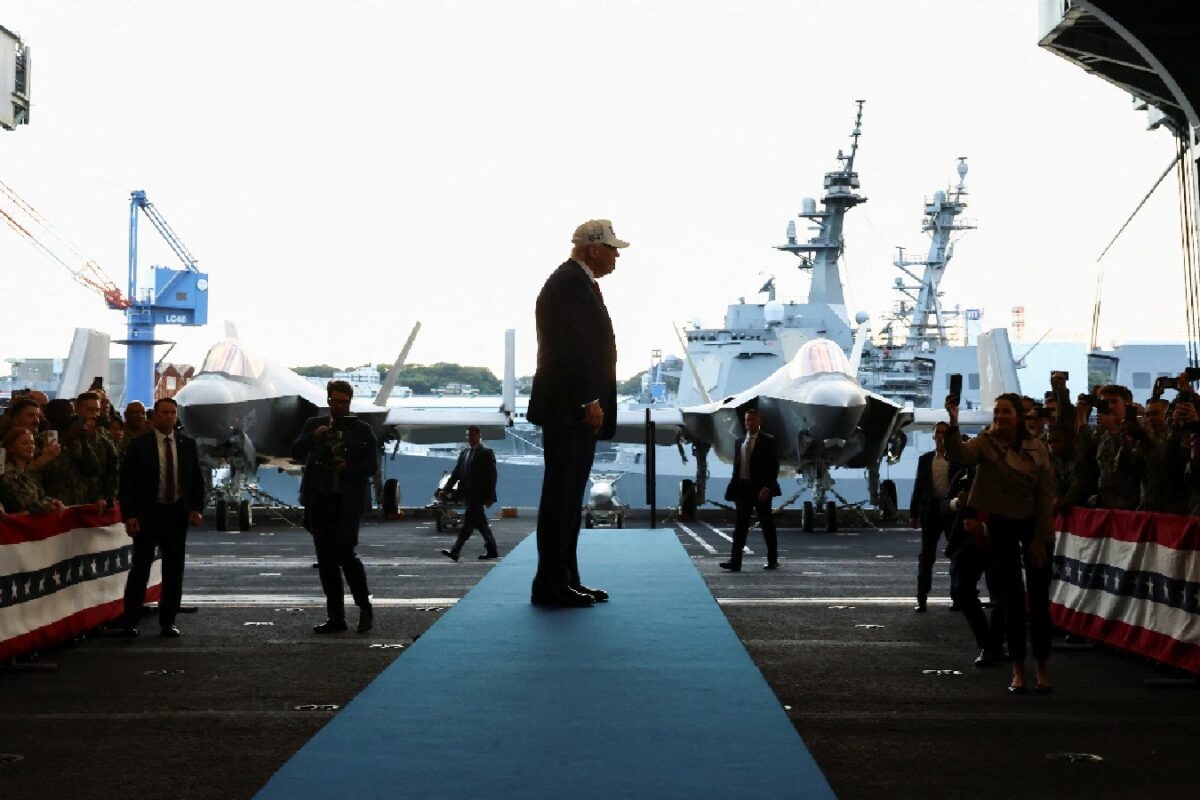
Can Trump 'Take Over' The Strait Of Hormuz? What Four Decades Of US Naval Missions Reveal Published By, Last Updated: July 13, 2026, 19:53 IST The Strait of Hormuz carries roughly one-fifth of the world's oil and liquefied natural gas (LNG) exports during peacetime, making it one of the most critical energy corridors. Rapid Read From Operation Earnest Will to Operation Praying Mantis, the US has protected commercial shipping in the Gulf for decades. But could it really "take over" the Strait of Hormuz? (IMAGE: REUTERS) US President Donald Trump’s declaration that America would “take over" the Strait of Hormuz goes beyond reopening one of the world’s busiest maritime chokepoints. He has also said Washington would become the “guardian of the Strait" and seek compensation from other countries for protecting global shipping. “We’ll become the guardian of the Strait," Trump told Fox & Friends, adding that the United States had been guarding it “for nothing" but would now be reimbursed by wealthy nations. “We’re going to get paid for guarding it. A lot of money, but we just want to be reimbursed for doing all of this, for putting our people in danger," he said. Trump’s remarks came after the sharpest exchange of attacks between the United States and Iran since an April ceasefire, fuelling fresh concerns over the conflict and its impact on shipping through one of the world’s most strategically important waterways. Why Trump’s Remark Matters The Strait of Hormuz carries roughly one-fifth of the world’s oil and liquefied natural gas (LNG) exports during peacetime, making it one of the most critical energy corridors on the planet.
Even limited disruptions can send oil prices soaring and ripple through global supply chains. Before the latest escalation, commercial vessels transited the waterway through the International Maritime Organization’s Traffic Separation Scheme, a two-way routing system adopted in 1968. In peacetime, around 120 vessels passed through the strait every day. However, shipping patterns have changed amid fears of sea mines, missile attacks and drone strikes. Has The US Ever Controlled The Strait? Not in the literal sense. While the United States has maintained a dominant naval presence in the Gulf for decades and repeatedly intervened to protect commercial shipping, it has never exercised sovereign control over the Strait of Hormuz. During the recent conflict, Washington tightened maritime security measures targeting Iranian-linked shipping before easing them following a memorandum of understanding reached after talks in Lucerne, Switzerland. That interim agreement has since unravelled, with both sides accusing each other of violating its terms. Operation Earnest Will (1987–88) Trump’s proposal has echoes of one of America’s largest naval missions in the Gulf. During the Iran-Iraq War, the United States launched Operation Earnest Will, escorting reflagged Kuwaiti oil tankers through the Gulf after repeated attacks on commercial shipping. The operation marked the largest US naval convoy mission since World War II and was aimed at ensuring oil exports continued despite mounting attacks on tankers. Whether such an operation could succeed under today’s conditions is another question. “The major difference is in the scope and scale of military capabilities of both sides," Jonathan Schroden, chief research officer at the Center for Naval Analyses, told AFP earlier this year. “Iran didn’t have drones, for example, they didn’t have nearly the missile capacity that they have now," he said, adding that US forces today possess “much, much greater" capabilities in the air, space and cyber domains than they did in the 1980s.
 The BriefWire