Siddaramaiah's Exit, Shivakumar's Rise: 7 Reasons Behind Congress's Calculated Karnataka Gamble
Siddaramaiah's Exit, Shivakumar's Rise: 7 Reasons Behind Congress's Calculated Karnataka Gamble Written By, Last Updated: May 29, 2026, 11:37 IST For now, the Congress believes
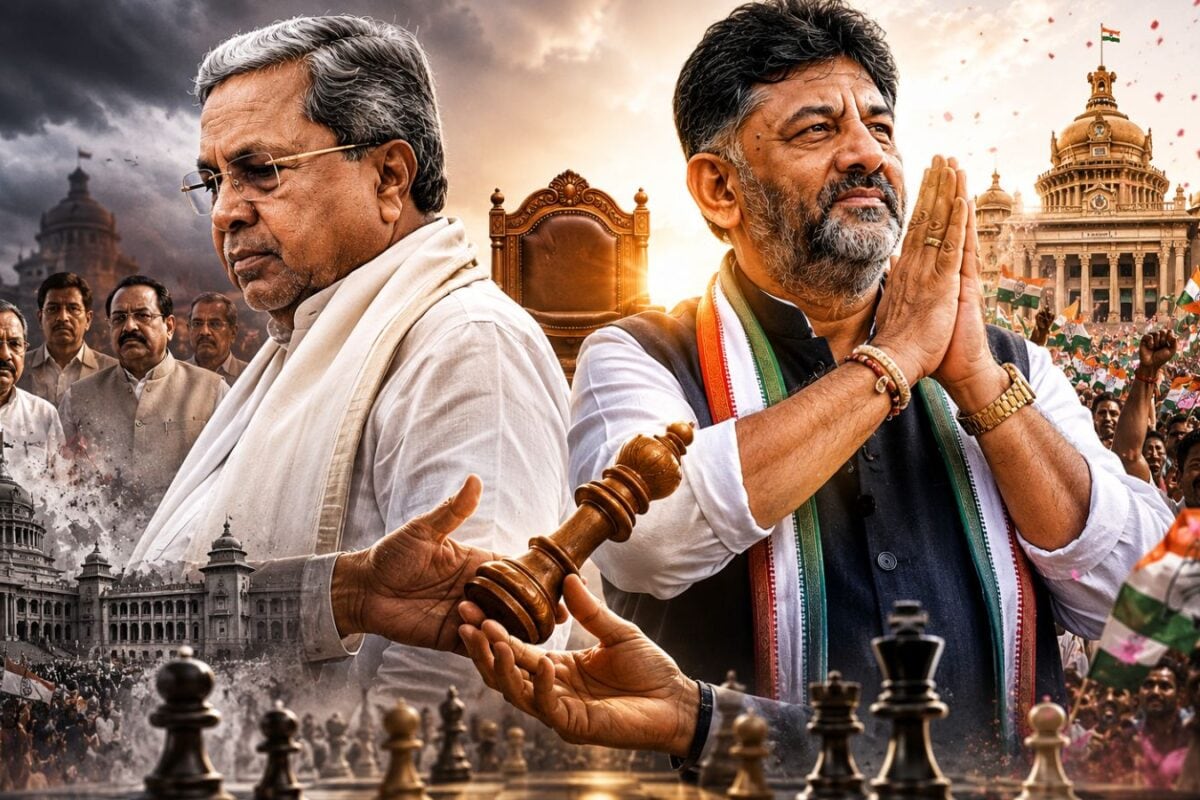
Siddaramaiah's Exit, Shivakumar's Rise: 7 Reasons Behind Congress's Calculated Karnataka Gamble Written By, Last Updated: May 29, 2026, 11:37 IST For now, the Congress believes it has solved its immediate problem: preventing a damaging split between its two tallest Karnataka leaders Rapid Read In Karnataka, the change of guard was the culmination of a balancing act that the high command had been attempting ever since the party swept the 2023 polls. (AI-Generated Image) The long-running power struggle inside the Karnataka Congress has finally reached its decisive moment. After months of speculation, denials and carefully choreographed public unity, Siddaramaiah has stepped down as chief minister, paving the way for his deputy, DK Shivakumar, to take over. While the leadership transition appears settled on paper, the Congress knows the real challenge begins now: preventing Karnataka from slipping into the factional instability that has repeatedly hurt the party in the state. In Karnataka, the change of guard did not happen overnight. It was the culmination of a balancing act that the Congress high command had been attempting ever since the party swept the 2023 assembly elections. Why Siddaramaiah Had To Go 1. The “Rotational CM" Conundrum The biggest reason behind the transition was the unresolved understanding reached after the 2023 election victory. Shivakumar had agreed to Siddaramaiah becoming chief minister first after being assured that a leadership change would eventually happen. ALSO READ | Kerala Model In Karnataka? Congress Mulls Mix Of Young And Experienced Faces For New Cabinet For nearly three years, the Congress leadership tried to avoid reopening the issue. But as speculation intensified and Shivakumar loyalists grew restless, delaying the transition further risked triggering a larger internal revolt. The Congress was also wary of repeating mistakes seen in Rajasthan and Chhattisgarh, where leadership rivalries weakened the organisation ahead of elections.
By finally acting, the high command appeared to be signalling that internal commitments made after the Karnataka win still carried weight. 2. The 2028 Calculation Siddaramaiah remained one of Karnataka’s tallest mass leaders, particularly among AHINDA communities—minorities, backward classes and Dalits. However, Congress leaders increasingly viewed the question through the lens of the next assembly election rather than the last one. By 2028, Siddaramaiah would be closer to 80. According to Indian Express, the leadership believed the party needed a younger, more aggressive political face capable of leading a full election cycle against the BJP and JD(S). The transition, therefore, became as much about succession planning as governance. Hindustan Times reported that Siddaramaiah’s exit was seen internally as a way to end the prolonged uncertainty that had paralysed sections of the state unit and distracted the government from administration. 3. Too Politically Important For the Congress, Karnataka is no ordinary state. It is the party’s only major southern stronghold and one of the few large states where it directly defeated the Bharatiya Janata Party (BJP) in recent years. ALSO READ | Karnataka Power Shift: How Congress Convinced Siddaramaiah To Make Way For Shivakumar The leadership feared that prolonged infighting could hand the BJP an opportunity to rebuild before 2028. This explains why the Congress top brass closely managed the transition, with Siddaramaiah and Shivakumar repeatedly travelling to Delhi for consultations even in the final days before the announcement. The party’s calculation appears clear: a controlled transition now is safer than a chaotic rebellion closer to elections. Why Shivakumar Got The Elevation 1. Rebuilt Karnataka Congress Within the party, Shivakumar has long argued that he earned the top post through organisational work. As Karnataka Congress president, he played a central role in rebuilding the party after its 2019 collapse, holding the organisation together during defections, and helping engineer the massive 2023 victory.
Congress leaders privately acknowledge that Shivakumar’s political management, fundraising ability and booth-level mobilisation were critical to the comeback. This argument, that the “organisation man" deserved his turn, steadily gained strength within the party. 2. Gandhi Family’s Backing Shivakumar’s standing with the Gandhi family strengthened significantly over the years. His loyalty during difficult political phases, including central agency investigations and his imprisonment in the ED-linked money laundering case, is said to have deepened the trust between him and the Congress leadership. That political capital mattered during the succession battle. Even when Siddaramaiah retained the chief minister post in 2023, Shivakumar was made deputy chief minister with substantial influence in government and organisation, widely seen as a compromise arrangement rather than a final settlement. 3. An Aggressive Political Operator The Congress leadership appears convinced that Shivakumar is best positioned to take on an increasingly aggressive BJP campaign in the state. Unlike Siddaramaiah’s welfare-heavy governance model, Shivakumar is viewed as an organisational strategist and election manager who thrives in high-pressure political battles. The leadership also believes his Vokkaliga base could help Congress consolidate support in southern Karnataka, where the BJP and JD(S) alliance hopes to expand. But that same aggressive style also explains why many within the Congress remain cautious about the transition.’ 4. Generational Shift While not exactly “young", Shivakumar represents the post-Siddaramaiah leadership era. Congress appears to be preparing for a future where regional satraps, rather than older ideological heavyweights, anchor state politics. An Uneasy Truce Despite publicly projecting unity for years, Siddaramaiah and Shivakumar represented two distinct power centres inside Karnataka Congress. The Hindu described their relationship as one marked by “public bonhomie" that masked deeper competition for control of the party and government. Siddaramaiah drew strength from AHINDA social coalitions and his mass appeal across regions.
Shivakumar built influence through organisational control, financial clout and dominance in the Old Mysuru belt. The rivalry rarely exploded openly because both leaders understood the risks of destabilising a Congress government after years in opposition. Yet the tension never fully disappeared. That is why Congress leaders remain worried that the transition may not automatically end factionalism. Will Karnataka’s ‘Nataka’ Finally End? That remains the biggest question. The Congress leadership has tried to project the handover as a smooth and consensual transition. Siddaramaiah publicly endorsed Shivakumar and party leaders repeatedly emphasised “collective leadership". But The Times of India noted that old cracks could easily reopen if cabinet positions, organisational control or ticket distribution become contentious. For now, the Congress believes it has solved its immediate problem: preventing a damaging split between its two tallest Karnataka leaders. Whether it has actually resolved the rivalry, or merely postponed its next phase, will become clear in the months ahead. News18 Newsletter Handpicked stories, in your inbox A newsletter with the best of our journalism submit First Published: May 29, 2026, 11:37 IST News explainers Siddaramaiah's Exit, Shivakumar's Rise: 7 Reasons Behind Congress's Calculated Karnataka Gamble Disclaimer: Comments reflect users’ views, not News18’s. Please keep discussions respectful and constructive. Abusive, defamatory, or illegal comments will be removed. News18 may disable any comment at its discretion. By posting, you agree to our Terms of Use and Privacy Policy Loading comments...
 The BriefWire