Trump Wants US Control Over Strait Of Hormuz: 5 Reasons Why It Can't Happen Without Iran's Support
Trump Wants US Control Over Strait Of Hormuz: 5 Reasons Why It Can't Happen Without Iran's Support Written By, Last Updated: July 13, 2026, 18:34
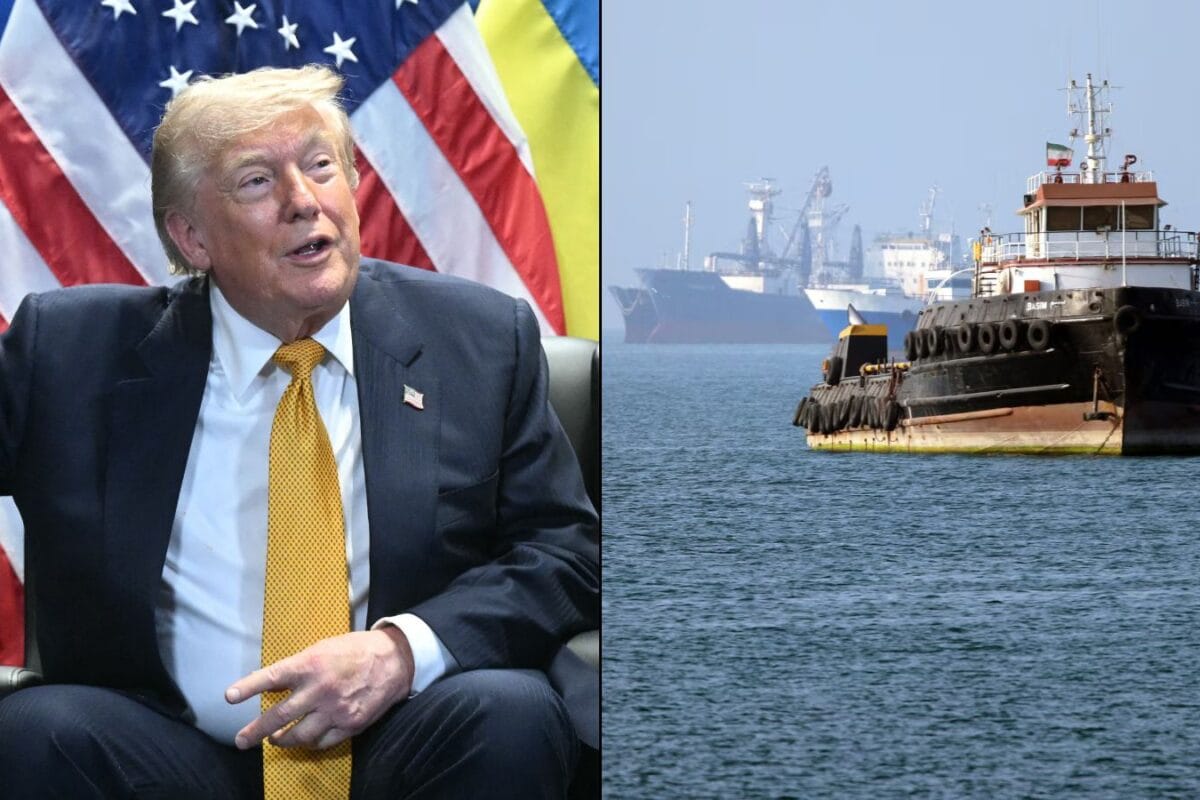
Trump Wants US Control Over Strait Of Hormuz: 5 Reasons Why It Can't Happen Without Iran's Support Written By, Last Updated: July 13, 2026, 18:34 IST Trump says the US will 'take over' the Strait of Hormuz. Here's why controlling the world's most critical oil chokepoint without Iran's support is virtually impossible. The United States can project military power in the Gulf, escort commercial vessels and help secure freedom of navigation. However, controlling the Strait of Hormuz is a far more complicated task. US President Donald Trump on Monday said the United States would take control of the Strait of Hormuz and be compensated for managing the strategically important waterway through which nearly 25% of the world’s seaborne oil trade passes. Trump’s remarks came amid ongoing diplomatic engagement between Washington and Tehran, even as tensions between the two sides have escalated in recent days with exchanges of military strikes. “We’re taking over the Strait. They have nothing… yesterday, they had an 11-hour meeting… and everything was agreed to yesterday, and they leave the room, and they call back and they say, ‘we had to make a couple of changes’… for 47 years, they’ve been tapping people along… this should’ve been done 47 years ago," Trump said. The comments were met with a swift response from Iran. Ali Akbar Velayati, a senior adviser to Iran’s Supreme Leader Ayatollah Ali Khamenei, rejected the idea of any foreign control over the waterway, saying that relinquishing Iran’s role in the Strait of Hormuz was unthinkable. “Retreating from this strait does not even cross the mind of any Iranian who loves his country," Velayati said. He further asserted that Iran’s presence in the Strait was essential to safeguarding its national interests. “Iran is defending the Strait now so that it won’t have to make concessions to the enemy in the future to ensure its ships can pass through it," he added.
The exchange underscores the continuing strategic importance of the Strait of Hormuz, a vital maritime corridor that serves as the primary export route for oil producers across the Persian Gulf and remains central to global energy security. Why Strait Of Hormuz Matters? The Strait of Hormuz is a narrow waterway between Iran and the Arabian Peninsula that connects the Persian Gulf to the Gulf of Oman and the Arabian Sea. At its narrowest point, it is just 29 nautical miles (54 km) wide, with shipping traffic moving through two navigable channels that are only 2 miles (3.7 km) wide each. Despite its small size, the Strait of Hormuz is one of the world’s most important energy chokepoints. In 2025, an average of 20 million barrels per day (mb/d) of crude oil and petroleum products passed through the strait, accounting for roughly a quarter of global seaborne oil trade. The waterway serves as the main export route for major oil-producing countries, including Saudi Arabia, the United Arab Emirates, Kuwait, Qatar, Iraq, Bahrain and Iran. Because alternative export routes are limited, any disruption to shipping through the strait could have significant consequences for global energy markets. A prolonged closure would not only affect oil exports from Gulf producers but could also limit access to much of the world’s spare oil production capacity, most of which is concentrated in Saudi Arabia. Such a scenario could trigger supply shortages and sharp increases in global oil prices. According to data for 2025, nearly 15 mb/d of crude oil—around 34% of global crude oil trade—transited the Strait of Hormuz. Most of these exports were destined for Asia, underscoring the region’s dependence on the waterway. China and India alone accounted for 44% of the crude oil shipped through the strait, making its uninterrupted operation crucial for the energy security of both countries. 5 Reasons Why US Control of the Strait of Hormuz Is Unlikely Without Iran’s Support President Donald Trump’s suggestion that the United States could take control of the Strait of Hormuz may grab headlines, but turning that idea into reality would face enormous military, geographic and political obstacles.
 The BriefWire