US-Iran conflict: Can India shrug off impact? RBI confident of domestic resilience — key takeaways
Growth was primarily supported by robust private consumption and sustained investment activity. RBI’s Assessment of Indian Economy Amid US-Iran Conflict “Geopolitical risk has re-emerged as
Growth was primarily supported by robust private consumption and sustained investment activity. RBI’s Assessment of Indian Economy Amid US-Iran Conflict “Geopolitical risk has re-emerged as the dominant drag on global growth in 2026. The adverse impact of the outbreak of the conflict in West Asia in end-February 2026 is reflected in the forecasts of global growth and inflation,” says RBI. Under its baseline assessment, the IMF now expects the global economy to grow by 3.1% in 2026, lower than the 3.3% forecast issued in January 2026.
Global trade in goods and services is also expected to slow, with growth in trade volumes projected at 2.8% during the year. Any escalation, prolonged duration or wider geographical spread of the conflict remains a significant downside risk to the global outlook. Persistent geopolitical uncertainty is also expected to keep inflationary pressures elevated. Higher energy prices and disruptions to major shipping routes could worsen supply-side constraints. Reflecting these developments, the IMF has revised its global inflation forecast for 2026 to 4.4%, up from the 3.8% estimate released earlier in January.
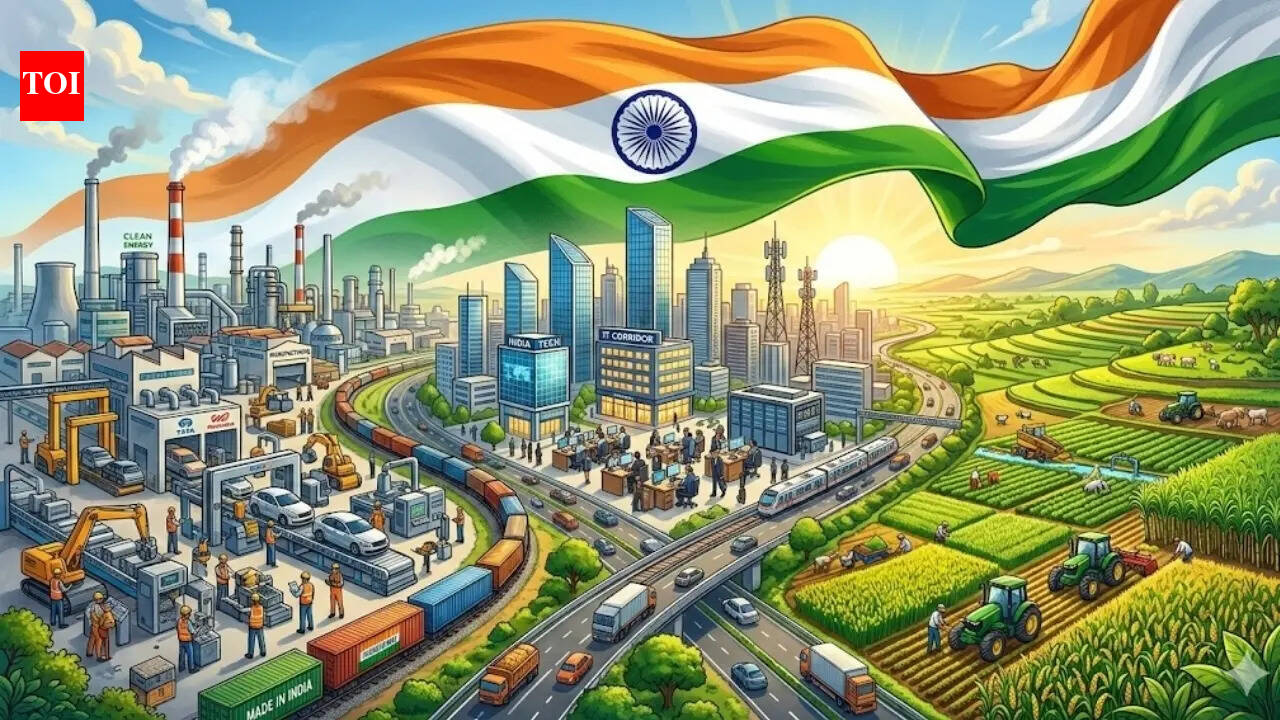
“Financial markets may exhibit higher volatility with tighter macroeconomic conditions and broader risk-off sentiment. Elevated valuations in technology sectors may undergo reassessment, raising the risk of corrections in equity markets. With increased protectionism and debt sustainability concerns, the escalating geopolitical risk calls for coordinated policy actions across fiscal, monetary and multilateral fronts,” the central bank said. “The outlook for the Indian economy in 2026-27 remains positive, supported by strong macroeconomic fundamentals, although a prolonged West Asia conflict may pose downside risk,” the central bank’s annual report says.
Importantly, the RBI notes that agriculture’s dependence on rainfall has gradually reduced over the years due to expanding irrigation coverage, better farming practices and advances in agricultural technology.
 The BriefWire