Why America’s Renewed Strikes On Iran Carry A Bigger Weapons Risk Than Before
Why America’s Renewed Strikes On Iran Carry A Bigger Weapons Risk Than Before Published By, Last Updated: July 13, 2026, 15:47 IST The US has
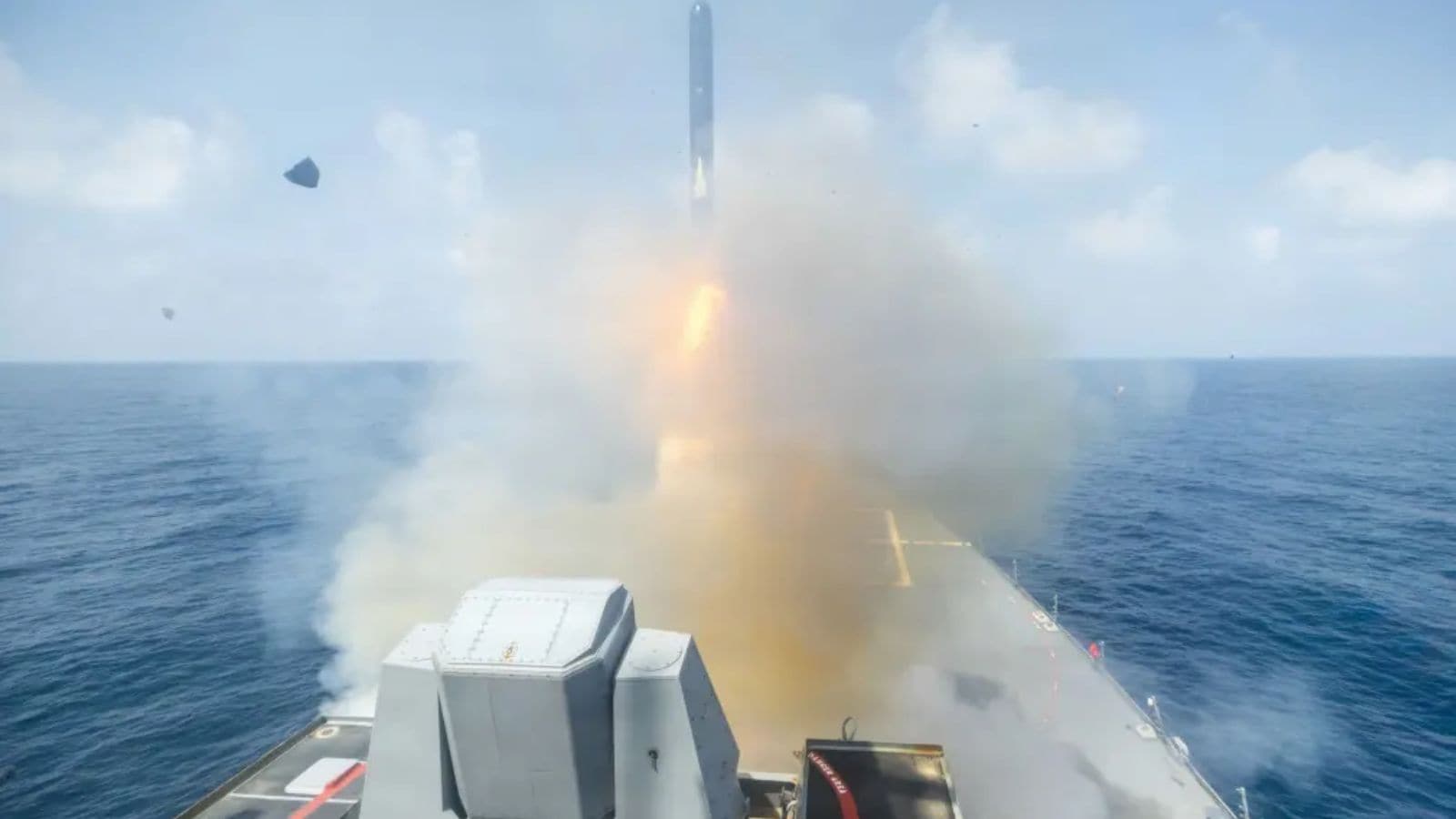
Why America’s Renewed Strikes On Iran Carry A Bigger Weapons Risk Than Before Published By, Last Updated: July 13, 2026, 15:47 IST The US has entered its renewed campaign against Iran with key missile and interceptor stockpiles still heavily depleted from the earlier phase of the war. Rapid Read Arleigh Burke-class guided-missile destroyer USS Spruance (DDG 111) fires a Tomahawk Land Attack Missile | File Image/Reuters The latest US strikes on Iran carry a greater military risk than the opening phase of the war because Washington is no longer firing from full weapons stockpiles. The United States used thousands of missiles and interceptors in under two months during the earlier fighting under Operation Epic Fury, sharply reducing inventories of weapons needed both to attack distant targets and defend American forces from missiles and drones, according to The Hill. A period of lower-intensity exchanges after the April ceasefire gave the Pentagon some breathing space. But with US President Donald Trump now saying the ceasefire is “over" and US forces again conducting strikes, the military is returning to intensive operations before those depleted stocks have been rebuilt. Every additional missile fired could reduce the margin available for another major conflict, particularly one involving China or North Korea. How Much Did The US Use In The Earlier Iran War? By the time full-scale fighting stopped in April, the Pentagon had used at least half of its Terminal High Altitude Area Defense, or THAAD, ballistic missile interceptors, nearly half of its Patriot air-defence interceptors and around 30 per cent of its Tomahawk land-attack missiles, according to an analysis by the Center for Strategic and International Studies. The Hill also reported that the US had used nearly all of the long-range stealth cruise missiles remaining in its stockpile during the earlier phase of the war.
The Pentagon has not publicly disclosed how many munitions it has used during the Iran war, making it difficult to determine how quickly the renewed strikes are further depleting those inventories. The ceasefire subsequently reduced the pressure because the more limited exchanges that followed required fewer American missiles. That pause, however, was not long enough to restore the inventories consumed during the initial fighting. Mark Cancian, a retired US Marine Corps colonel and defence analyst at CSIS, told CNN that if the current rate of operations continued, it would create “a new, higher level of risk" in the Indo-Pacific. The pressure on US stockpiles had already begun affecting arms supplies elsewhere. The Hill reported that the administration paused a $14 billion arms sale to Taiwan, with Acting Navy Secretary Hung Cao telling lawmakers that the move was intended to ensure the US retained the munitions needed for the Iran war. Why Can’t America Simply Produce More Missiles? The central problem is the gap between the speed at which missiles are used in war and the rate at which American industry can manufacture replacements. According to current financial-year delivery schedules cited by Cancian, the Pentagon is receiving roughly 15 new Tomahawks and 20 Patriot missiles every month. No THAAD deliveries are forecast for 2026. CSIS has estimated that rebuilding the affected inventories to their pre-Iran war levels could take at least three years. Elaine McCusker, a former Pentagon deputy and acting comptroller, told CNN that replenishment timelines for most munitions would be measured in years, generally between two and five. The difficulty is not merely a shortage of funding. Advanced interceptors and cruise missiles rely on specialised components, skilled labour and production lines that cannot be expanded quickly. Jerry McGinn, director of the Center for the Industrial Base at CSIS, told The Hill that systems such as the Patriot, Tomahawk, Joint Air-to-Surface Standoff Missile and THAAD are designed primarily for performance rather than mass production.
 The BriefWire