Thousands of dog-owners had to put pets to death in Punjab; a terrorism horror story
Diljit Dosanjh's film Satluj tells the story of nameless Sikhs killed in Punjab due to alleged police excesses during the 1990s, and of Jaswant Singh
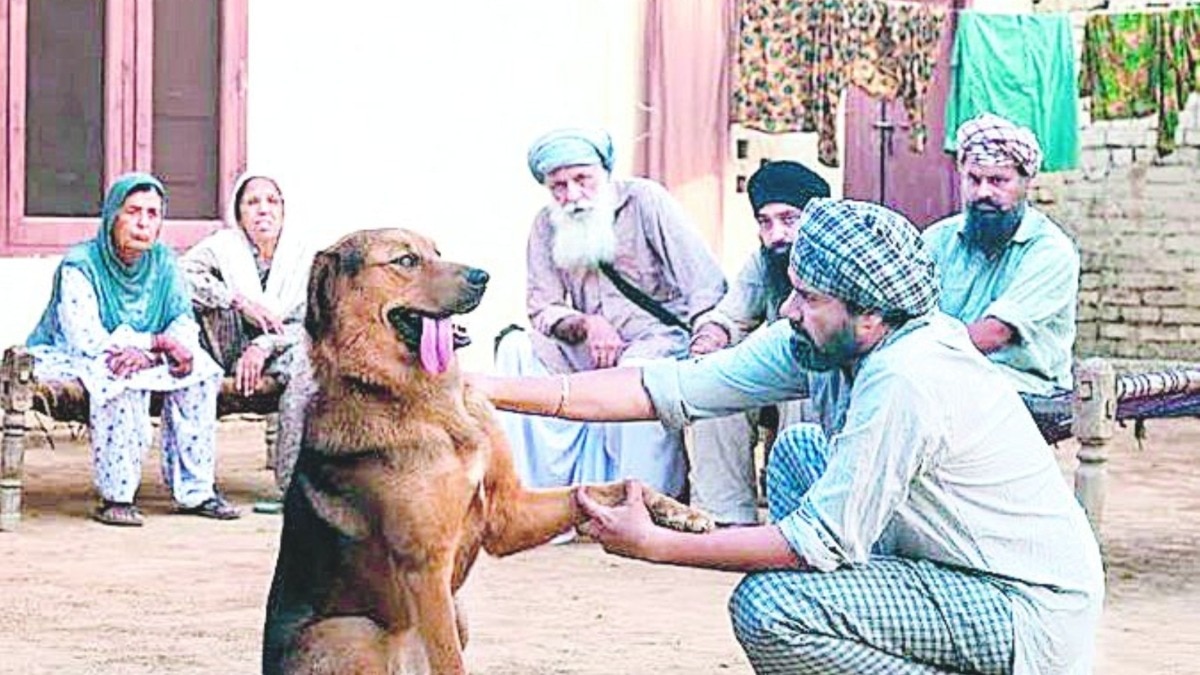
Diljit Dosanjh's film Satluj tells the story of nameless Sikhs killed in Punjab due to alleged police excesses during the 1990s, and of Jaswant Singh Khalra, who demanded justice for them. In the era of Khalistani terrorism, casualties are broadly accounted for under three categories: civilians, police personnel, and terrorists. Then come further sub-categories, such as how many Hindus died, how many Sikhs, how many Namdharis, how many journalists, politicians, or judges. Read Full Story However, in this fight for justice, an innocent creature is always left out -- the dogs of Punjab. Innumerable dogs were slaughtered in Punjab following Khalistani decrees. The terrorists' enmity with dogs remains one of the most painful chapters of human cruelty. That horrific scene It is a terrifying night in a Punjab village enduring the peak of Khalistani terrorism. Sandwiched between terrorist attacks and police operations, even the silence of the village triggers fear. Every passing second is heavy with the apprehension of some impending doom. In such a tense environment, a village dog begins to bark. Its barking does not seem normal. The villagers are terrified that the noise might draw the police or the CRPF into the village. On the other hand, there is an equal dread that if the terrorists suspect the dog is signalling their movements, they will brand the villagers as enemies. Thus, in that atmosphere, the simple barking of a dog is perceived as an invitation from Yama, the god of death. The villagers initially try to silence it. Someone scolds it, someone throws stones, and someone tries to coax it. But the dog, true to its nature, keeps barking. It remains blissfully unaware that in the human world, fear has altered the basic rules of its normal life. The villagers' anxiety mounts. The dog no longer appears to be a loyal companion but a threat. Ultimately, attempts are made to drive it away from the village or get rid of it by any means necessary, so that its voice does not bring catastrophe upon the village.
But this is where the story delivers its deepest message. The dog takes no sides. It belongs neither to the police nor to the terrorists. It is merely doing what nature designed it to do -- barking at an unfamiliar sound. In the end, it falls victim to this environment of violence and mistrust. This scene is from Chauthi Koot (The Fourth Direction), a famous short story by Punjabi writer Waryam Singh Sandhu. Citation of a true story Chauthi Koot was awarded the Sahitya Akademi Award. Based on this very story, director Gurvinder Singh made a Punjabi film of the same name in 2015. This narrative is not a work of fiction; it is based on a deeply painful and true incident involving Sandhu Sahab’s own brother's family. Recalling that era in an interview, Waryam Singh Sandhu says, "My brother, his wife, and their children deeply loved their two pet dogs. But one day, a decree arrived from the Khalistanis to kill these dogs immediately. To make the task 'easier,' they left cyanide capsules with the family, which had to be mixed with curd and fed to the dogs. In this brutal choice between human and animal life, the animal ultimately lost. The pain this incident caused me went far beyond politics and battles over communal identity—it was the pain of humanity fading away." Witnessed by a ground report A special ground report titled 'The Rule of the Gun' by veteran journalist Shekhar Gupta, who was covering the Punjab militancy for India Today magazine in 1991, confirms this tragedy. In the June 15, 1991 issue, he wrote "TERROR. Often it is synonymous with sundown, palpable in the eerie, dark silence. The television sets are off on the diktat of the militants. The radios and two-in-ones are quiet as most music has been decreed to be decadent. The dogs are quiet too. Some have been shot, some poisoned. Mostly by their own masters. If the militants say kill your dogs, you kill them.
 The BriefWire