Why is Delhi feeling like a sauna if the monsoon is just on a break?
Delhi is sweating again, but this time the thermometer isn't telling the whole story. Although daytime temperatures have largely stayed between 32°C and 37°C, the
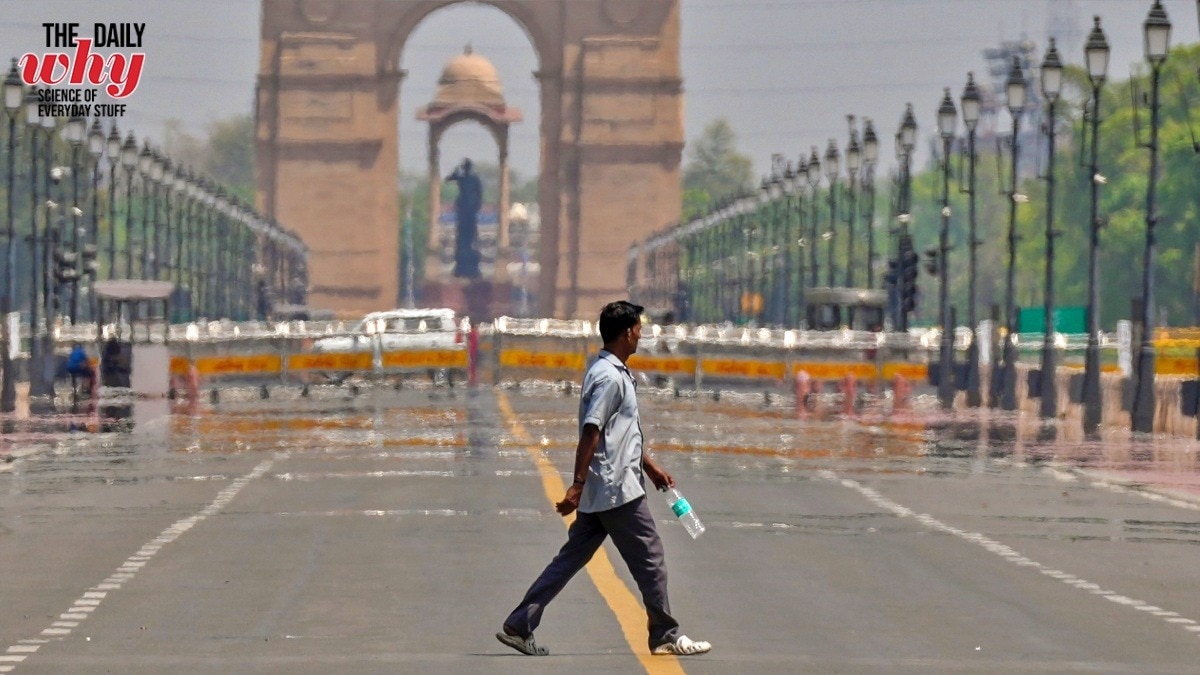
Delhi is sweating again, but this time the thermometer isn't telling the whole story. Although daytime temperatures have largely stayed between 32°C and 37°C, the city's apparent temperature, or what it actually feels like, has climbed close to 45°C. The reason is a sharp rise in humidity during a break in the southwest monsoon, transforming the capital into a hot, moisture-filled chamber. Read Full Story With relative humidity touching 61% on Sunday and remaining around 58% on Monday, the air has become saturated enough to make even routine outdoor activities feel exhausting. WHAT EXACTLY IS HUMIDITY? Humidity is simply the amount of water vapour present in the air. Meteorologists often express it as relative humidity, the percentage of moisture in the air compared to the maximum amount the air can hold at a given temperature.
Warm air can hold much more moisture than cool air. During the monsoon, winds blowing inland from the Bay of Bengal and the Arabian Sea carry enormous amounts of water vapour into northern India, causing humidity levels to soar even when it is not raining. WHY DOES HUMIDITY MAKE IT FEEL HOTTER? The human body relies on sweat to cool itself. As sweat evaporates from the skin, it removes heat from the body. But when the air is already saturated with moisture, sweat evaporates much more slowly. Instead of cooling you down, it simply stays on your skin, making you feel sticky, exhausted and much hotter than the thermometer suggests.
To better reflect this discomfort, scientists use a measure called the heat index, also known as the apparent temperature. It combines air temperature and humidity to estimate how hot conditions actually feel to the human body. This is why a temperature of 36°C with high humidity can feel closer to 48–50°C, while the same temperature in a dry city would feel significantly more comfortable. WHY IS DELHI SO HUMID IF THE MONSOON IS DISAPPEARING? The southwest monsoon has entered a break phase, during which widespread rainfall shifts away from central and northwest India toward the Himalayan foothills and Northeast India. However, a break in the monsoon does not mean moisture disappears.
Easterly winds continue to transport humid air from the Bay of Bengal into the Indo-Gangetic plains, including Delhi. At the same time, reduced rainfall means there is little cooling from showers, allowing heat and humidity to build together. The result is a city trapped under warm, moisture-laden air, a combination that makes even ordinary summer temperatures feel oppressive. With the monsoon break expected to persist through the week, Delhi residents are likely to continue experiencing sultry, uncomfortable conditions despite the absence of an official heatwave. #TheDailyWhy Ends
 The BriefWire