'As Bright As 100 Full Moons': US Startup Plans Giant Mirror In Space To Reflect Sunlight After Dark
'As Bright As 100 Full Moons': US Startup Plans Giant Mirror In Space To Reflect Sunlight After Dark Published By, Last Updated: July 12, 2026
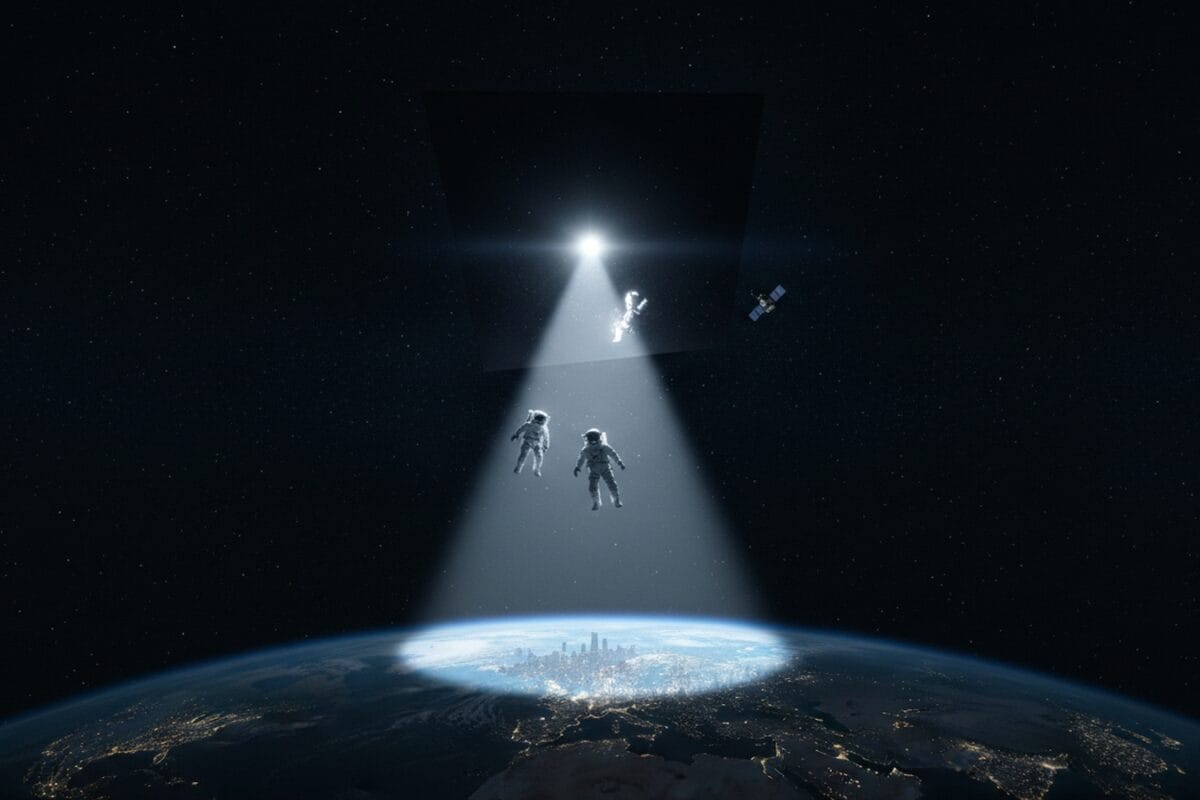
'As Bright As 100 Full Moons': US Startup Plans Giant Mirror In Space To Reflect Sunlight After Dark Published By, Last Updated: July 12, 2026, 21:23 IST The company hopes to deploy around 1,000 satellites by 2028 before eventually expanding the constellation to as many as 50,000 by 2035. Rapid Read News18 Will nights on Earth one day appear as bright as 100 full moons? The question sounds like something straight out of a science-fiction novel, but it could soon inch closer to reality as an American startup plans to launch a satellite carrying a giant mirror designed to reflect sunlight back to Earth after dark. California-based startup Reflect Orbital has received approval from the US Federal Communications Commission (FCC) for its first demonstration mission, clearing the way for one of the most unusual space experiments ever attempted. Later this year, the company plans to launch its prototype satellite, Eärendil-1, into low Earth orbit. Brightness Of 100 Full Moons? Reflect Orbital’s ambitions extend well beyond a single demonstration satellite. The company hopes to deploy around 1,000 satellites by 2028 before eventually expanding the constellation to as many as 50,000 by 2035.
Its long-term vision is to build mirrors measuring nearly 180 feet (55 metres) across, capable of producing illumination comparable to the brightness of around 100 full moons. According to the company, such technology could extend daylight for solar farms, provide emergency lighting during disasters and illuminate construction sites long after sunset. First Steps The prototype satellite is roughly the size of a household refrigerator and will deploy a square mirror measuring nearly 60 feet (18 metres) across once it reaches an altitude of around 400 miles (640 kilometres). The mirror will redirect sunlight onto a circular area roughly three miles (five kilometres) wide on Earth’s surface. Reflect Orbital says the reflected sunlight could keep solar farms generating electricity after sunset, assist rescue teams during emergencies and enable construction work to continue safely through the night. Scientists Aren’t Convinced Not everyone is convinced the technology is a bright idea. The American Astronomical Society has urged the FCC to reconsider the proposal, arguing that the project does not serve the public interest and could significantly interfere with astronomical observations.
Astronomers fear the intense reflections from the mirrors could overwhelm highly sensitive telescopes, making it difficult to observe faint stars, galaxies and other distant celestial objects. Samantha Lawler, an astronomer at the University of Regina in Canada, warned that the disappearance of naturally dark skies would severely hamper astronomical research. Scientists have also expressed concerns about the broader environmental consequences. Artificial light at night is known to disrupt circadian rhythms that govern sleep, feeding, flowering and migration in humans, animals and plants. Researchers have additionally warned that flashes generated while the mirrors are repositioned could distract aircraft pilots and motorists. Why Did The FCC Approve It? The FCC has maintained that its authority is limited to regulating satellite communications and radio frequencies rather than evaluating wider environmental impacts. In its approval order, the commission described the mission as a potentially groundbreaking technology that could strengthen American leadership in space, adding that existing US regulations do not require environmental reviews for activities conducted in outer space. Not An Entirely New Idea The concept of reflecting sunlight from space is not new.
 The BriefWire