EU defense remains heavily reliant on the United States
There are many obstacles as EU governments seek to reduce their dependence on the US. DW looks at the European Unions's attempts to develop counterparts
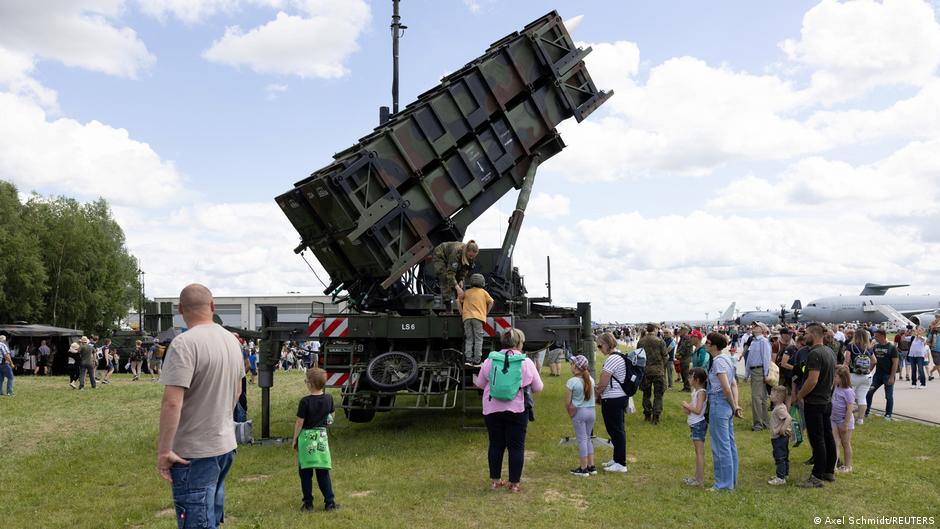
There are many obstacles as EU governments seek to reduce their dependence on the US. DW looks at the European Unions's attempts to develop counterparts to Patriot and Tomahawk missiles, F-35 jets, and Starlink internet. EU militaries continue to rely heavily on US weaponry. This was again evident at July's NATO summit in Turkey's capital, Ankara, which also included the high-level Defense Industry Forum, at which US companies were able to secure lucrative contracts. It was also decided that European governments would play a bigger role in producing and maintaining the missiles that are so crucial to the continent's defense. Lockheed Martin and Rheinmetall signed a memorandum of understanding to jointly produce ATACMS missiles in Germany. This is one step towards increasing stockpiles without upsetting the United States, but in the long term Europe is aiming for greater independence. Patriot air and missile defense systems best symbolize the dependence of European NATO members on the United States. For decades, the missiles have been used in NATO countries, and more recently they have been used to protect strategically important targets in Ukraine. European governments have opted to develop several systems to decrease dependence on Patriots. France and Italy have created the SAMP/T NG system to intercept threats at high altitudes. The new generation will be capable of detecting ballistic missiles thanks to additional sensors. The first units are scheduled to be available from 2027. The IRIS-T, developed by the German company Diehl, is one of the systems intended for medium-range defense. It is already in use in Ukraine, operating at a maximum range of 40 kilometers (approx. 25 miles) and altitude of 20 kilometers.
The IRIS-T SLX, which is slated to be available from 2029, will have a range of 80 kilometers at an altitude of 30 kilometers. Though European governments cannot replace the US Patriots yet, in the long term they hopes to be able to use EU systems to protect the bloc's airspace, for example from Russia. Germany's IRIS-T SLM is part of EU plans to reduce dependence on the US Image: Sebastian Gollnow/dpa/picture alliance Germany to buy more Tomahawks from US European governments are not only considering defense. When European militaries plan deep precision strikes behind enemy lines, they currently also rely on US systems, such as Tomahawk cruise missiles. As became clear at the NATO summit, Germany is banking on precisely this solution in the short term. The German government has brokered a memorandum of understanding with Washington regarding the purchase of Tomahawk cruise missiles and ground-based Typhoon launch systems. German Chancellor Friedrich Merz said that it would "close an important strategic gap in our defenses." But once again, it highlighted the fact that Europe will continue to depend on the US so long as European systems remain in development. The European Long-Range Strike Approach (ELSA) is an international project, involving six governments, including France, Germany and Britain, to develop a conventional ground-launched missile system. Apart from the Euro Multi Missile Launcher, several highly complex cruise missiles, as well as more affordable long-range drones with a range of 500 to 2,000 kilometers are being developed. Though efforts toward interim solutions are underway, true independence on the battlefield is not expected to be achieved until the 2030s. Germany recently agreed to buy several Tomahawks from the US Image: U.S Navy/U.S. Navy/Planet Pix/ZUMA/picture alliance Optimism for DECODER When it comes to the "kill chain," a military concept that identifies the structure of an attack, which comprises the identification of a target, dispatching forces to it, initiating an attack and destroying the target, the EU is also dependent on the US.
 The BriefWire