Thai youth leaders push for inclusion, partnership and lasting change
Nearly 400 youth recently participated in a national dialogue which marked the 80th year of Thailand’s membership of the United Nations. The anniversary provided an
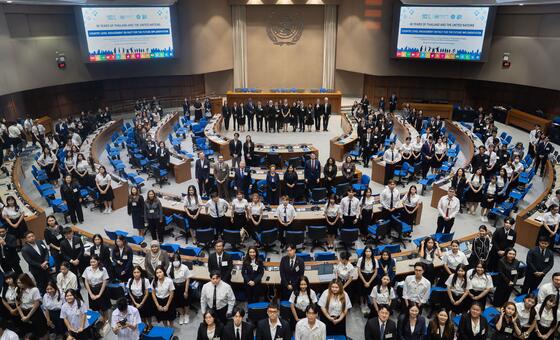
Nearly 400 youth recently participated in a national dialogue which marked the 80th year of Thailand’s membership of the United Nations. The anniversary provided an opportunity to look ahead, with young people taking centre stage in discussions on implementing the Pact for the Future, the UN's global blueprint for tackling today's challenges while protecting the interests of future generations. © UN Thailand/Kittiphong Boonprakhom UN Resident Coordinator in Thailand Michaela Friberg-Storey said turning the Pact’s ambitions into meaningful results would depend on “strong partnerships across society, driven by the energy, creativity and leadership of young people.” The Pact, adopted by UN Member States in September 2024, rests on a simple but important distinction. Future generations, those not yet born, cannot speak for themselves. Young people can. Six youth panellists told UN News what it takes to make young people's voices count in practice. For Rattanachart Paengkum, strengthening youth participation is less about creating new institutions than making existing ones work better. As Assistant President of the Children and Youth Council of Thailand, he works to bring young people's perspectives into public decision-making. “Built in silence, heard by the world. That is how I see youth participation in Thailand today. We already have a mechanism that could be one of the strongest in Southeast Asia.
The task now is to strengthen it and make it genuinely participatory again.” His advice to other young people is simple: Every cause starts somewhere. What matters is taking the first step. Once you act, you learn, improve and bring others with you. If you never begin, the outcome is already decided. © UN Thailand/Kittiphong Boonprakhom Earlier this year, Soonyata Panurat represented Thailand at the ECOSOC Youth Forum at UN Headquarters in New York. He said meaningful participation depends on trust and shared decision-making. “Young people are living the challenges policymakers are trying to solve. Giving us a platform to speak is only the beginning. If nothing follows, nothing changes. Policies should be co-designed with young people, not presented to us after decisions have already been made.” Growing up in Omkoi District, in Thailand’s Northern Chiang Mai Province, Chairat Dipho took local environmental action to the global stage, from school initiatives to representing ethnic minority youth at COP30 in Belém, Brazil. He said recognising young people as equal partners begins with giving them the resources to act. “Resources are not only funding. They are knowledge, mentors, and opportunities that allow young people to take action. Young people are not only future leaders.
 The BriefWire