Delhi's First 'Solar Tree' Is Coming—And It Could Change How The City Generates Power
Delhi's First 'Solar Tree' Is Coming—And It Could Change How The City Generates Power Written By, Last Updated: July 11, 2026, 20:32 IST The Rekha
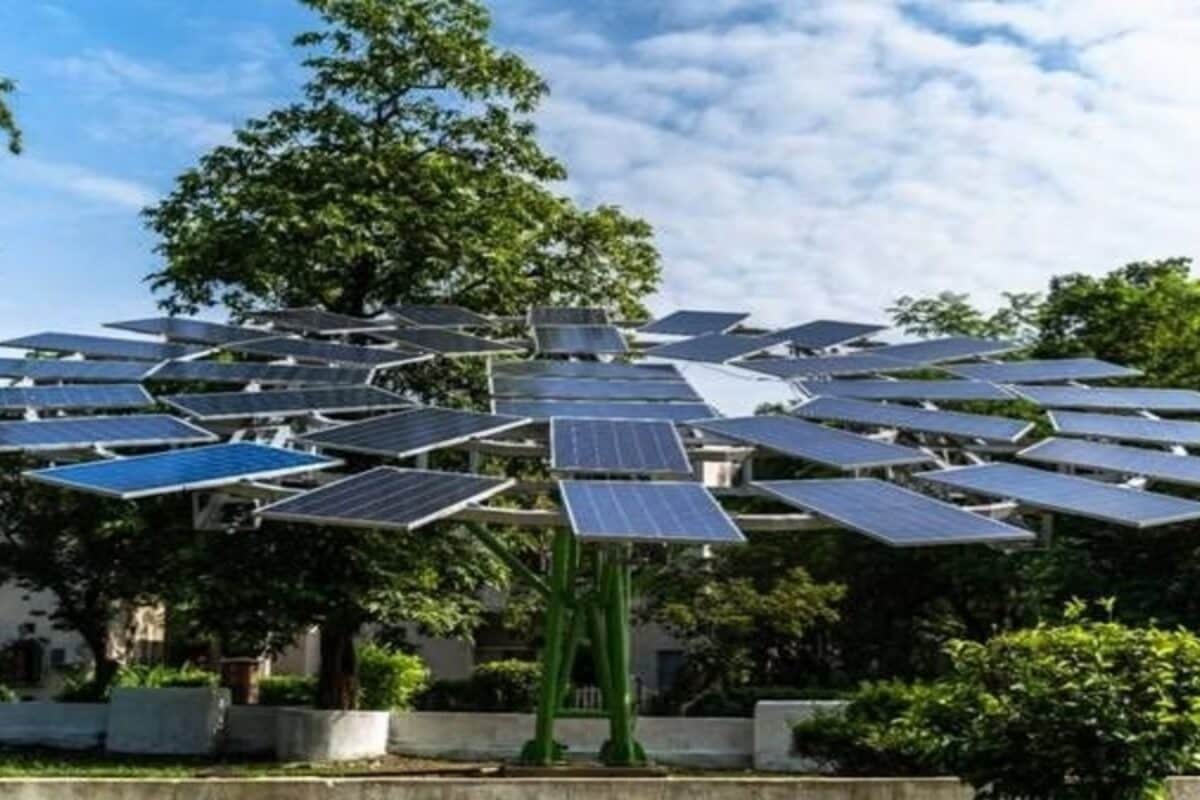
Delhi's First 'Solar Tree' Is Coming—And It Could Change How The City Generates Power Written By, Last Updated: July 11, 2026, 20:32 IST The Rekha Gupta government is set to install the capital’s first 'solar tree' at the Delhi Secretariat Unlike conventional rooftop or ground-mounted photovoltaic systems that demand vast horizontal expanses, a solar tree leverages vertical space. The structure features a centralised metal trunk with branch-like extensions angled precisely to support solar panels. Representational pic/PIB In a bid to accelerate clean energy adoption and address urban land constraints, the Rekha Gupta government is set to install the capital’s first “solar tree" at the Delhi Secretariat. The pilot initiative, spearheaded by the power department in coordination with multiple civic agencies, will serve as a high-profile prototype to test the efficacy of vertical solar infrastructure before a wider city-wide rollout. The choice of location holds significant administrative weight.
The Delhi Secretariat houses the core offices of Chief Minister Rekha Gupta, cabinet ministers, and top bureaucrats. Officials confirmed on Friday that if this trial proves successful, the visually distinct structures will be replicated at prominent traffic intersections, public squares, and commercial districts across the city to generate green power without sacrificing valuable urban real estate. Designing for Dense Urban Footprints Unlike conventional rooftop or ground-mounted photovoltaic systems that demand vast horizontal expanses, a solar tree leverages vertical space. The structure features a centralised metal trunk with branch-like extensions angled precisely to support solar panels. Space Efficiency: The vertical blueprint allows the installation of multiple high-efficiency solar panels while occupying a minimal ground footprint, making it ideal for a heavily congested metropolis like Delhi. Sun Tracking Technology: Some advanced designs under discussion incorporate smart mechanical elements that enable the panels to rotate automatically, tracking the sun’s movement through the day to optimise energy generation.
Civic Integration: The proposed metal setup will feature integrated seating arrangements at its base, transforming the energy generator into a shaded resting spot for pedestrians. Powering Public Utilities and Local Infrastructure The solar energy captured by the panels will be channelled into specialised battery storage systems integrated directly into the base of the tree. The primary objective is to utilise this decentralised electricity to power critical localised public infrastructure, reducing the burden on the city’s main grid. The captured green energy will be primarily used to run nearby streetlights, public electric vehicle charging points, and local civic amenities. As the city scales up its clean energy targets under its updated solar framework, innovative micro-generation projects like the solar tree are increasingly being viewed as vital components of urban planning. By blending architectural design with environmental utility, the government aims to demonstrate that green energy can seamlessly integrate into public spaces, enhancing both local sustainability and civic visual appeal.
 The BriefWire