Where retirement goes to die: Inside America’s geriatric government
US Capitol, home to Congress, where average age of lawmakers is among highest in modern American history The TOI correspondent from Washington Mystery surrounds the
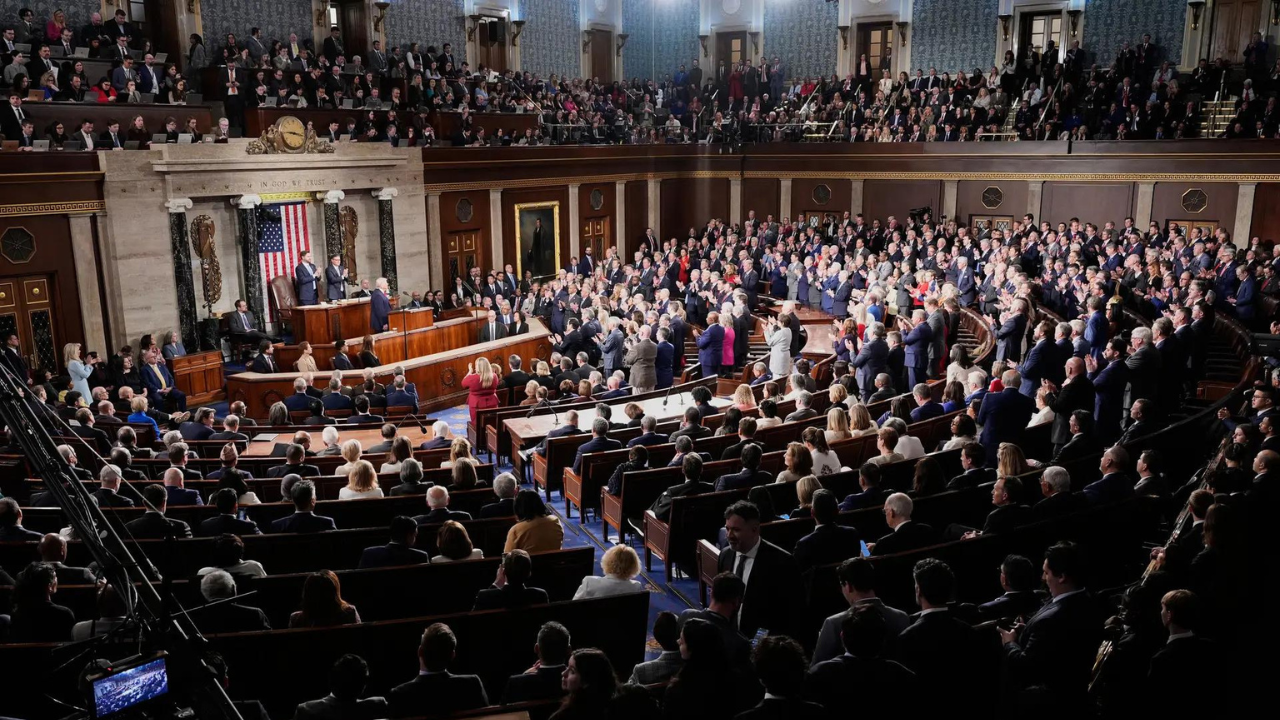
US Capitol, home to Congress, where average age of lawmakers is among highest in modern American history The TOI correspondent from Washington Mystery surrounds the health condition of powerful US Senator Mitch McConnell, whose prolonged absence from the Senate after a hospitalization has once again revived an old Washington joke: the United States Senate is less a legislative chamber than an elite retirement community that can still shake the world.While political gadabouts like Laura Loomer are already pronouncing McConnell, 84, “brain dead” even before he was loaded on to an ambulance stretcher this week for another round of hospitalisation, his current status has prompted another round of national soul-searching over a peculiar feature of American democracy: the world's most powerful legislature is also one of its oldest.The median age of US senators in the current Congress is 64. More than half of senators are older than 65, a quarter older than 75. The average age of Congress (Senate+House) as a whole is about 59 years, among the highest in modern history. In most workplaces, 65 is the retirement age; in the Senate, it is practically an internship.The chamber still features Iowa Republican Chuck Grassley, who at 92 is old enough to remember WW II.
Socialist Bernie Sanders is 84, Illinois Democrat Dick Durbin is 81, as is Idaho Republican Jim Risch, and Maine independent Angus King is 82.The Senate has long been governed by men who treated their offices rather like hereditary estates. Strom Thurmond, who ran for president on the pro-segregation Dixiecrat ticket in 1948, served into the 1990s until age 100; Robert Byrd remained in office until his death at 92 and Jesse Helms retired at 80 after three decades in the chamber. Ted Kennedy was 77 when he died in office after half a century in the Senate. Washington folklore has it that senators typically achieve a state of political permanence and eventually become part of the architecture.The phenomenon extends beyond the Senate. House Speaker Nancy Pelosi is 86 and remains one of the Democratic Party's most influential figures. President Trump himself is now 80 and, upon returning to the White House, became the oldest person ever sworn in as US president. President Biden left office at 83 after enduring persistent questions about age and stamina.Then there is the Supreme Court, whose members enjoy life tenure and therefore have every incentive to think in geological rather than electoral time.
Justice Clarence Thomas is 78, Justice Samuel Alito is 76, while Sonia Sotomayor is 72. Chief Justice John Roberts is a youthful 71. The average age of the current court is late 60s.Unlike senators, however, justices face neither reelection nor voters periodically wondering whether they can still climb a flight of stairs before hearing arguments. In comparison, the average age of the Supreme Court Justices in India is around 60 years old, because they are typically appointed close to 60 and are required by Article 124 of the Constitution to retire at age 65.Collectively, America's governing institutions increasingly resemble a family reunion where everybody remembers where they were when Kennedy was assassinated. For a country that celebrates youth in nearly every other domain, the US appears curiously comfortable entrusting immense political power to leaders who qualify for senior discounts and assisted living.The contrast with much of Europe is difficult to miss. French President Emmanuel Macron is 48, the incoming British Prime Minister Andy Burnham is 56, and Italy's Giorgia Meloni is 49. Finnish leaders in recent years have included prime ministers in their 30s, and Iceland and the Netherlands currently have leaders below 40. European politics has its share of elderly statesmen, but the upper reaches of government generally look more like a board meeting than a reunion of WWII veterans.Political scientists say there are structural reasons for America's gerontocracy.
 The BriefWire