How trains running at 160 kmph aim to transform Delhi-NCR and cities around it
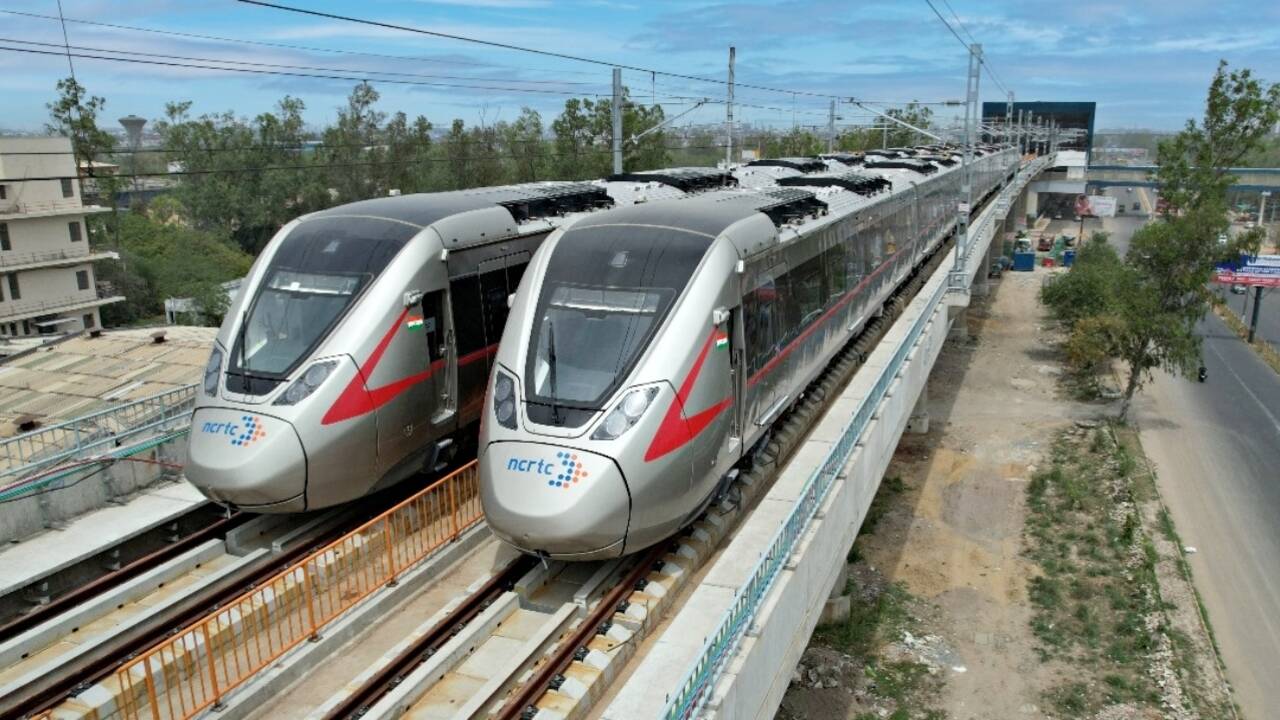
Namo Bharat trains are completing a journey between Delhi and Meerut in just under an hour, with maximum operational speeds of 160 kmph. Delhi-Meerut RRTS
Namo Bharat trains are completing a journey between Delhi and Meerut in just under an hour, with maximum operational speeds of 160 kmph. Delhi-Meerut RRTS route map and stations Namo Bharat RRTS train interior Several more RRTS corridors are in the planning stage and once approved, will see the light of the day in the coming years.
Let’s take a look Delhi-Panipat-Karnal Namo Bharat Corridor Delhi-Karnal RRTS route Delhi-Gurgaon-Bawal Namo Bharat Corridor Delhi-Bawal RRTS route Ghaziabad-Jewar Namo Bharat Corridor Gurgaon-Faridabad-Noida- Gr. Noida Namo Bharat Corridor How RRTS corridors aim to transform cities Why RRTS project matters Expands the labour market by allowing people to commute from satellite cities without relocating. Reduces congestion on highways such as NH-9, NH-44 and the Delhi-Gurugram Expressway by encouraging a modal shift from private vehicles.
Promotes transit-oriented development (TOD) around stations, creating new commercial, residential and mixed-use hubs. Improves regional productivity, as shorter and more reliable commute times translate into higher economic efficiency. Supports environmental goals by lowering vehicular emissions and reducing dependence on private transport. Challenges ahead Namo Bharat train Road ahead Bengaluru Region – Bengaluru–Mysuru, Bengaluru–Tumakuru, Bengaluru–Hosur. Chennai Region – Chennai–Sriperumbudur–Kanchipuram–Vellore and Chennai–Chengalpattu.
Hyderabad Region – Hyderabad–Warangal and Hyderabad–Nizamabad corridors. Pune Region – Pune–Chakan–Talegaon and Pune–Nashik in the longer term. Ahmedabad–Gandhinagar with potential extensions towards Sanand and Mehsana. Kolkata Metropolitan Region, connecting emerging satellite towns. NCRTC Managing Director tells TOI
 The BriefWire