The Englishwoman who sketched India before photography took hold
Long before photography became the visual language of empire, one Englishwoman was sketching the people she encountered across India with unusual curiosity and precision. Emily
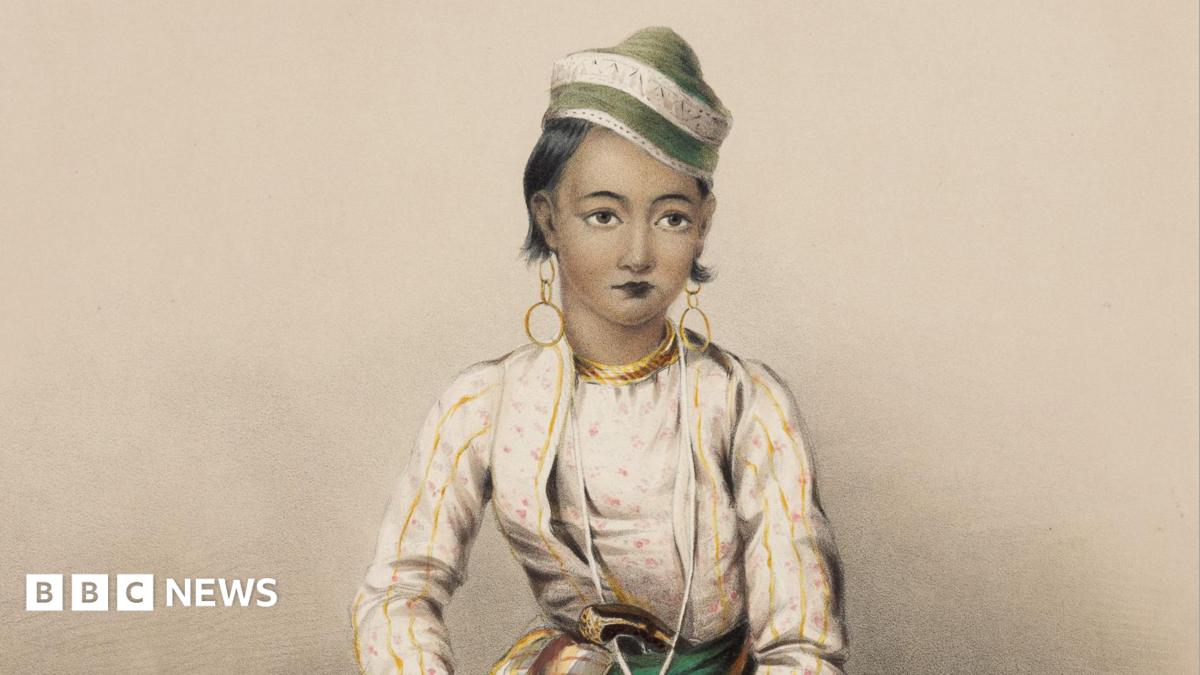
Long before photography became the visual language of empire, one Englishwoman was sketching the people she encountered across India with unusual curiosity and precision. Emily Eden, a gifted artist and writer, belonged to one of Britain's most influential political families. She travelled across northern India in the 1830s while accompanying her brother, George Eden, first Earl of Auckland, the governor-general of India. Alongside princes, generals and courtiers, she drew servants, attendants, travellers, fakirs, Afghan and Sikh nobles, Akali warriors, hill communities and even the animals that accompanied imperial journeys. Her remarkably broad gaze set her apart from many contemporaries. More than two dozen of her sketches were published in 1844 as Portraits of the Princes and People of India. They now form the heart of Princes & People, an exhibition at DAG in Delhi curated by art historian Mary Ann Prior, bringing together the complete published series of hand-coloured lithographs made from Eden's original sketches. Eden arrived in Calcutta (now Kolkata) in March 1836 to a whirlwind of official engagements and an unfamiliar world. Homesick and struggling to adjust, she did not sketch for three weeks or complete a painting for two months.
But her spirits were buoyed by her travelling party, which included her nephew William, sister Fanny, maids, an ayah, a cook, a valet, a physician and an assortment of pets. Even before reaching India, the voyage had begun to broaden her outlook as she encountered new people, cultures and ways of life, notes art historian and author Mary Ann Prior. "The diversity of people and places motivated and improved Emily's artistic output, and her natural curiosity sought out the unusual. She meticulously documented her observations through her sketches and paintings." Instead of castles, churches and English landscapes, Eden increasingly turned her attention to the strangers, costumes, architecture and unfamiliar landscapes she encountered. Between 1836 and 1842, that curiosity took her across a region on the cusp of profound political change. Her sketches offer a rare glimpse of the court of Maharaja Ranjit Singh, whose Punjab kingdom was one of the subcontinent's most powerful states, capturing it at the twilight of his reign and the dawn of the Victorian era. Eden was as engaging a writer as she was an artist.
Her lively journals brim with humour and observation, with names and places often spelled exactly as they sounded to her. On arriving in the holy city of Benares (now Varanasi), the Eden party sailed along the Ganges before continuing to nearby Ramnagar, where the king had a country house. The scene so captivated Emily that she wrote: "We mean to keep our steamer here and to go out sketching in it." Her enthusiasm had not come immediately. At first, the cultural gulf between England and India left Eden deeply homesick. She fretted over women attending church without bonnets, ravenous mosquitoes, relentless heat, the cacophony of dogs, crows, jackals and Brahminy kites, and being confined indoors for much of the day. But as the months passed, she drew prolifically, and her paintings soon became a success, selling briskly at charity fairs in Shimla, winning admiration from the British in India and being copied by Indian artists. Prior ranks Eden's Indian sketches among the finest produced by any British woman artist of the Regency and Victorian eras. Only Charlotte Canning, celebrated for her botanical paintings, and later Marianne North rivalled her achievement.
 The BriefWire