World News in Brief: UN spotlights education aid solution, Sri Lanka prison violence, humanitarian aid to Venezuela
At the same time, low and middle-income countries are projected to lose 30 per cent of aid to education between 2023 and 2027. Development assistance
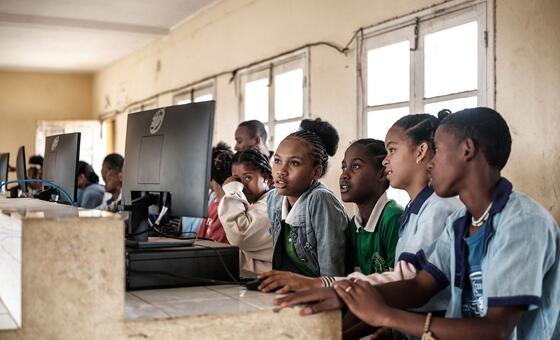
At the same time, low and middle-income countries are projected to lose 30 per cent of aid to education between 2023 and 2027. Development assistance to education has decreased for several years after the US heavily scaled back foreign aid and other countries prioritized debt payments and military spending. Tweet URL Because foreign aid for education is decreasing, UNESCO highlighted debt-for-education swaps as a potential alternative for developing countries. A debt-for-education swap is a form of debt relief where a lender forgives a portion of a country’s debt. In exchange, the borrowing country must spend that amount of money on domestic education projects, allowing countries to protect education spending during periods of fiscal constraint. “Education is the most powerful investment countries can make,” UNESCO Director-General Khaled El-Enany said. Education aid plummets Aid to education fell by eight per cent between 2023 and 2025, and aid to basic education fell by 15 per cent over the same period. The US cut total foreign aid by 57 per cent, the EU by 14 per cent and Japan by six per cent in 2025, according to UNESCO’s Counting the Loss report, released on Friday.
Much of the decrease can be attributed to the dismantling of the US’s main aid agency, USAID, ongoing consequences from the COVID-19 pandemic, energy price shocks and the prioritization of investments in clean energy, UNESCO said. The countries most affected by the decrease in aid include Nicaragua, Vietnam, Afghanistan, Mauritania and Honduras, according to the report. Although debt-for-education swaps may not be suitable in all contexts, UNESCO said they have been successful in Peru, Egypt and Côte d’Ivoire. In addition to this financing method, UNESCO recommended lowering the costs of borrowing, building resilience in education systems and increasing domestic education spending whenever possible. Sri Lanka prison violence must be investigated The UN human rights office (OHCHR) on Friday urged a prompt, independent and transparent investigation into the recent outbreak of deadly violence at a jail in Negombo, Sri Lanka, which killed at least 23 people and critically injured at least 15. “The families of the dozens killed and injured – both inmates and prison officers – deserve to know the truth and see accountability,” OHCHR spokesperson Ravina Shamdasani said in a statement.
The riots took place over two days beginning Sunday at Negombo city jail, around 22 miles north of the capital city, Colombo. According to reports, poor detention conditions such as overcrowding may have played a role in prompting the violence. Calls to monitor conditions OHCHR noted that the deadly incident highlights the need for Sri Lanka to address issues including prolonged pre-trial detention, overcrowding and other inadequate conditions in prisons. Many people in Sri Lanka are detained for drug-related offences who would instead benefit from health-centred responses as opposed to incarceration, Ms. Shamdasani said. OHCHR is encouraging Sri Lankan authorities to allow the independent Human Rights Commission of Sri Lanka to access Negombo and other detention facilities to monitor conditions, especially amid accusations of torture and ill treatment. Tweet URL UN airlifts supplies to Venezuela The UN migration agency (IOM) has airlifted relief supplies including jerry cans, solar lamps and indoor privacy partitions to Venezuela to support communities affected by the 24 June earthquake. “For families dealing with the aftermath of an earthquake, whether and when they receive initial assistance can make a big difference for how they are able to recover,” said Kim Eling, IOM Senior Director for Strategy and External Engagement.
 The BriefWire